
8 Ping Identity-Alternativen für die Unternehmens-Identitätssicherheit im Jahr 2026
8 Ping Identity-Alternativen für die Unternehmens-Identitätssicherheit im Jahr 2026
Jul 22, 2026
Ping Identity deckt das Enterprise Access Management ab: SSO, MFA, Föderation und Customer Identity and Access Management (CIAM), wobei Identitätslebenszyklus-Governance, Active Directory-Sicherheit und privilegiertes Zugriffsmanagement nicht enthalten sind. Die passende Alternative hängt davon ab, welche Lücke bewertet wird: ein direkter IdP-Ersatz, eine Governance-Schicht oder eine Sicherheitsplattform für die Identitätsinfrastruktur unterhalb der Zugriffsebene.
According to The Netwrix 2026 Data and Identity Security Report, 76% of organizations don't immediately or automatically remove access when it's no longer needed, a governance gap that Ping Identity's access management architecture doesn't address. Ping handles SSO, MFA, federation, and CIAM well, and that scope is deliberate.
Die Neubewertung beginnt meist mit einem von drei Druckpunkten. Der erste ist das Risiko der Anbieter-Konzentration: Thoma Bravo hat Ping Identity im Oktober 2022 privatisiert, im August 2023 mit ForgeRock fusioniert und besitzt auch Imprivata. Der zweite sind die kurzfristigen Supportzyklen von PingFederate, die häufige, störende Updates erzwingen, ohne eine Identitäts-Governance-Schicht hinzuzufügen. Der dritte ist ein Compliance-Audit-Befund, der die Lücke in der Identitäts-Governance aufdeckt. Die Architektur von Ping wurde nicht dafür gebaut, diese zu schließen.
Ein Wechsel des IdP schließt keine Lücken in Governance, Active Directory Sicherheit oder PAM. Die folgenden Alternativen reichen von direkten Zugriffsmanagement-Ersatzlösungen bis hin zu Identitäts-Governance- und Sicherheitsplattformen, die die von Ping offen gelassenen Bereiche abdecken.
Warum Organisationen Alternativen zu Ping Identity prüfen
Die meisten Ping-Bewertungen werden durch einen von fünf Faktoren ausgelöst. Zu wissen, welcher zutrifft, entscheidet, ob die Organisation einen Ersatz für das Zugriffsmanagement, eine Governance-Schicht oder beides benötigt.
- Lieferantenkonzentrationsrisiko: Die gemeinsame Eigentümerschaft von Thoma Bravo an Ping Identity, ForgeRock und Imprivata unterscheidet sich von einem einzelnen Anbieter, der eine integrierte Plattform aufbaut. Die drei Produkte bleiben separate Akquisitionen, die als gebündeltes Portfolio und nicht als einheitliche Suite bewertet und verhandelt werden. Organisationen mit aktiven Verlängerungen oder mehrjährigen Ausbauplänen sollten mit geringerer Verhandlungsmacht rechnen, da der Verzicht auf ein Produkt eine Neuverhandlung mit demselben Eigentümer für alle drei bedeutet.
- PingFederate EOL-Zeitpläne: PingFederate läuft mit kurzfristigen Supportzyklen und festen End-of-Life-Daten, und die Roadmap von Ping lenkt Kunden auf das Cloud-Produkt PingOne. Organisationen, die vor Ort bleiben müssen, haben von Ping selbst keinen klaren Migrationspfad.
- Ergebnisse der Compliance-Prüfung: Die Zugriffsverwaltungsarchitektur von Ping verfügt weder über eine Governance des Identitätslebenszyklus, Zugangszertifizierung noch eine SoD-Durchsetzungsschicht; Prüfergebnisse zu SOX ITGC-, HIPAA- oder CMMC-Anforderungen decken diese Lücke oft erstmals in formellen Prüfzyklen auf.
- Sicherheitslücken in Active Directory: Ping verbindet sich mit Active Directory, verwaltet es aber nicht, prüft es nicht und erkennt keine Bedrohungen darin; die Angriffsfläche von AD (DCSync, Kerberoasting, Golden Ticket) bleibt unabhängig vom verwendeten IdP offen. Das liegt daran, dass Ping nur eine Kerberos- oder SAML-Authentifizierung beim Login validiert. Ein kerberoasteter Service-Account-Hash, ein per DCSync replizierter Passwort-Hash oder ein gefälschtes Golden Ticket sehen für den IdP wie gültige Anmeldedaten aus, da der Diebstahl innerhalb von AD unterhalb der von Ping überwachten Ebene erfolgt.
- Keine Verwaltung privilegierter Zugriffe: Ping verfügt nicht über PAM-Funktionen; Organisationen, die neben Ping eine separate PAM-Plattform betreiben, haben fragmentierte Lösungen, während eine einheitliche Governance- und Sicherheitsplattform die Lücken schließen könnte.
Worauf man bei Ping Identity-Alternativen achten sollte
Die richtige Alternative hängt davon ab, ob Sie einen gleichwertigen Austausch im Zugriffsmanagement, eine Governance-Schicht, die Ping nie bot, oder eine Plattform benötigen, die die Identitätsinfrastruktur unter Ihrem IdP stärkt.
- Umfang der Zugriffsverwaltung: Prüfen Sie, ob die Alternative Ihre wichtigsten Ping-Anwendungsfälle abdeckt: Workforce-SSO und MFA, CIAM, B2B-Föderation und API-Zugriffsverwaltung. Nicht jede Alternative deckt alle vier ab.
- Unterstützung für hybride Bereitstellung: PingFederate-On-Premises-Kunden sollten prüfen, ob die Alternative On-Premises-Anwendungen nativ oder über einen Proxy unterstützt; eine erzwungene SaaS-Migration ist möglicherweise wegen Datenstandort- oder Air-Gap-Anforderungen nicht machbar.
- Tiefe der Identitätsverwaltung: Ping bietet Authentifizierung und Zugriffspolitik, jedoch keine Identitätsverwaltung und -administration (IGA); wenn Compliance-Ergebnisse die Bewertung bestimmen, stellen Sie sicher, dass die Alternative Lebenszyklusautomatisierung, Zugriffsbestätigungen und Durchsetzung der Aufgaben-Trennung (SoD) abdeckt.
- Active Directory-Sicherheit: Ping verbindet sich mit Active Directory, verwaltet oder schützt es jedoch nicht; prüfen Sie, ob die Alternative AD-Änderungsprüfungen abdeckt, Erkennung und Reaktion auf Identitätsbedrohungen (ITDR) sowie die Überwachung privilegierter Konten unabhängig vom IdP.
- Verwaltung privilegierter Zugriffe: Ping verfügt nicht über eine Ebene für privilegiertes Zugriffsmanagement (PAM); prüfen Sie, ob die Alternative Just-in-Time-Zugriff (JIT) und Sitzungsüberwachung nativ abdeckt oder eine separate PAM-Plattform benötigt.
Netwrix Identity Manager automatisiert den Joiner-Mover-Leaver-Lifecycle, Zugriffszertifizierungen und SoD über hybrides Active Directory und Entra ID ohne Code. Demo anfordern
Ping Identity Alternativen auf einen Blick
Die folgende Tabelle ordnet jedes Tool nach den wichtigsten Bewertungskriterien: Umfang des Zugriffsmanagements, IGA-Tiefe, hybride Sicherheit von AD und Entra, PAM-Fähigkeiten und Bereitstellungsmodell.
Tool | Primary focus | SSO / MFA / federation | IGA depth | AD / Entra hybrid security | PAM | Deployment model |
|---|---|---|---|---|---|---|
|
Identity governance and security: configure-not-code IGA, PAM, ITDR, AD/Entra hardening, compliance auditing |
Not a direct IdP replacement: complements existing SSO/MFA |
Strong: configure-not-code JML automation, access certifications, SoD via Netwrix Identity Manager |
Very strong: change auditing, ITDR, and behavioral threat detection; Netwrix PingCastle for AD security posture (unrelated to Ping Identity) |
Strong: Netwrix Privilege Secure (Zero Standing Privilege (ZSP), JIT, session recording) |
On-prem, SaaS, hybrid |
|
|
Microsoft Entra ID |
Cloud IAM and native governance for Microsoft ecosystems |
Very strong: SSO and MFA, conditional access, federation |
Moderate: lifecycle workflows, access reviews, entitlements; lighter SoD |
Moderate: cloud-native security; hybrid via Entra Connect introduces sync delays |
Limited: Entra PIM covers cloud roles only |
Cloud-native; hybrid via Entra Connect |
|
Okta Workforce Identity |
Cloud IAM and SaaS access management |
Very strong: 8,000+ integrations, adaptive MFA, SAML/OIDC/OAuth |
Moderate: Okta Identity Governance add-on; lighter SoD enforcement |
Moderate: Access Gateway for hybrid; cloud-first architecture |
None natively |
Cloud-only |
|
CyberArk Identity |
Enterprise identity security: IAM and PAM convergence |
Strong: SSO, adaptive MFA, lifecycle management |
Moderate: Zilla Security IGA (acquired Feb 2025) adds governance; maturing post-acquisition |
Moderate: intelligent privilege controls across AD/Entra |
Strong: CyberArk PAM offerings (vaulting, JIT, session recording) |
Cloud, SaaS, hybrid |
|
Omada Identity Cloud |
IGA-first: lifecycle, certifications and SoD |
None: must deploy alongside Entra ID or Okta |
Strong: full IGA lifecycle, certifications, SoD enforcement |
Moderate: AD and Entra ID directory connectors; not an AD security platform |
None |
SaaS, on-prem, Docker |
|
Saviynt Identity Cloud |
Cloud-native IGA with converged PAM |
None: must deploy alongside Entra ID or Okta |
Strong: lifecycle, certifications, preventive and detective SoD |
Limited: SaaS-first; native on-prem AD connector not confirmed |
Moderate: converged IGA+PAM; PAM depth lighter than enterprise-grade |
SaaS-only |
|
JumpCloud |
Cloud directory, device management, mid-market IAM |
Strong for mid-market: SSO, adaptive MFA, SCIM, SAML/OIDC |
Basic: group-based access; no certification campaigns or SoD |
Moderate: bidirectional AD sync; not an AD security platform |
None |
Cloud-native |
|
Cisco Duo |
MFA and access security |
Strong for MFA: adaptive MFA, device trust, ZTNA; SSO via SAML/OIDC IdP |
None: MFA and access security only |
Moderate: deployable alongside any directory; directory sync for MFA policy |
None |
Cloud-native |
1. Netwrix Identity Manager
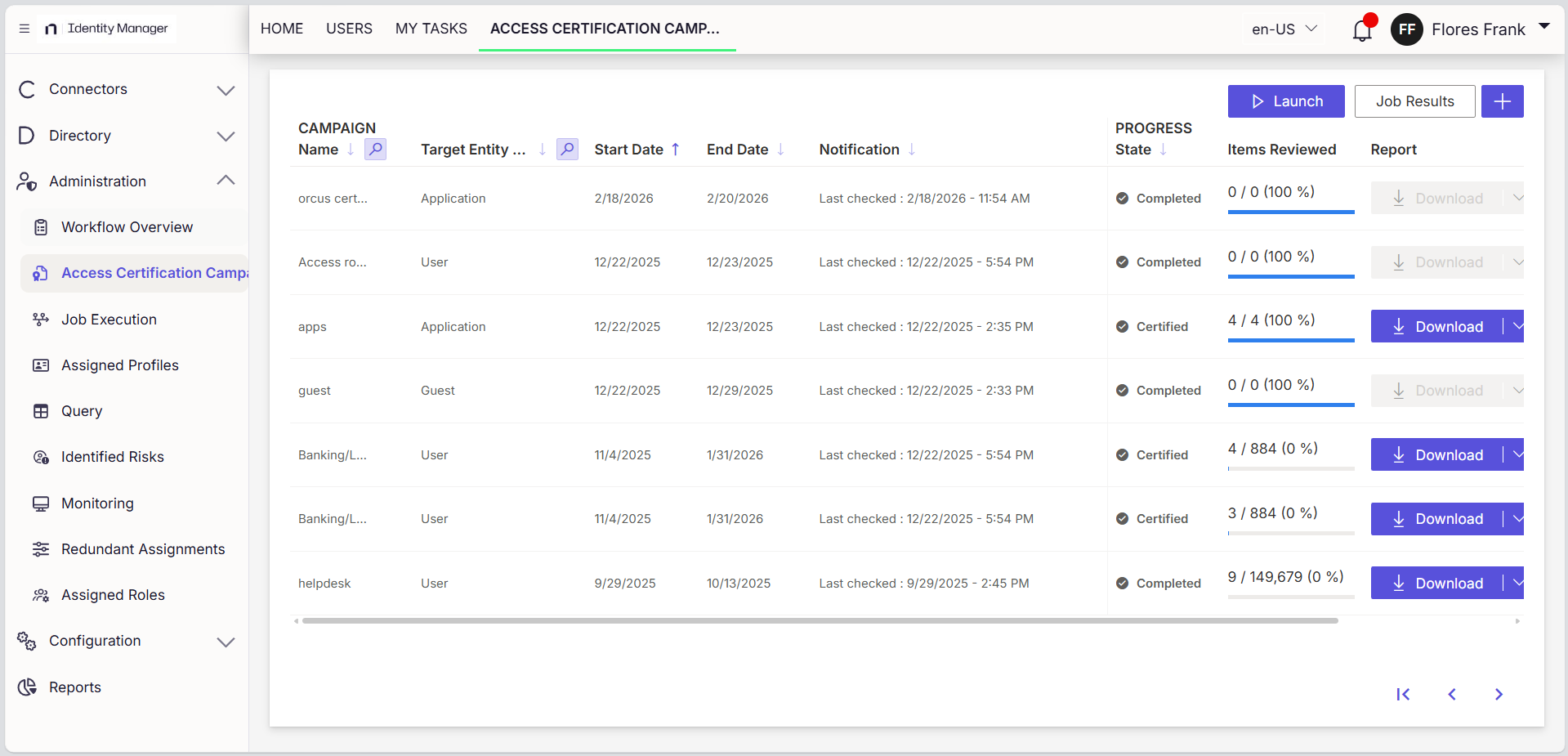
Netwrix Identity Manager ist eine konfigurationsbasierte Plattform für Identitätsverwaltung und -steuerung (IGA), die auf Active Directory und Entra ID als primäre Identitätsspeicher aufbaut. Sie schließt die Lücke bei Lebenszyklus-Governance und Compliance, die durch die auf Authentifizierung fokussierte Architektur von Ping Identity offen bleibt.
Was auffällt:
- Codefreie JML-Automatisierung: Bereitstellung, Rücknahme, Zugriffsanfragen und Genehmigungsketten laufen über vorgefertigte AD-, Entra ID- und Workday-Connectoren sowie generische SQL-, CSV- und PowerShell-Connectoren für Systeme wie Oracle, mit REST-API-Erweiterungen bei Bedarf.
- HR-gesteuerte Lifecycle-Automatisierung: Rollen werden bei Einstellung zugewiesen, bei Versetzung aktualisiert und bei Beendigung entzogen – über inkrementelle Synchronisationen mit Workday, SAP SuccessFactors oder anderen HRIS-Plattformen, etwa alle 15 Minuten, ohne individuelle Connectoren.
- Zugriffs-Zertifizierungen und SoD-Durchsetzung: Zertifizierungskampagnen nach Abteilung, Rolle oder Objekttyp, leite jeden Punkt an den zuständigen Manager oder Eigentümer weiter und entziehe den Zugriff, wenn er nicht bis zum Stichtag bestätigt wurde. SoD-Nachweise entsprechen SOX ITGC Logikzugriffskontrollen, HIPAA-Zugriffsanforderungen und PCI DSS Anforderung 7.
- Rollenbasierte Zugriffskontrolle: Role Mining analysiert bestehende Berechtigungen, um Rollenregeln anhand von Attributen wie Standort oder Berufsbezeichnung vorzuschlagen. Die RBAC-Durchsetzung wendet sie wie vorgeschlagen automatisch oder mit Validierung für eine schrittweise Einführung an, statt alles oder nichts.
- Native AD- und Entra-ID-Abdeckung: Active Directory verbindet sich über einen nativen Lese-/Schreib-Connector; Entra ID nutzt die Microsoft Graph API mit delta-basierter inkrementeller Synchronisierung, sodass Änderungen in beiden Verzeichnissen ohne separates Tool weitergegeben werden.
Was zu beachten ist:
- Netwrix Identity Manager verwaltet Lebenszyklus und Governance, nicht die Authentifizierung; behalten Sie einen bestehenden IdP für SSO und MFA der Mitarbeiter bei.
- Die Abdeckung ist am größten in hybriden Microsoft-Umgebungen; prüfen Sie die Connector-Tiefe für Nicht-Microsoft-Systeme vor der Umsetzung.
- Die lokale Bereitstellung erfordert eine dedizierte SQL Server-Datenbank und ein vom DBA verwaltetes Servicekonto, was mehr Infrastruktur benötigt als reine SaaS-IGA-Plattformen.
Ingerop, ein Ingenieurbüro mit 1.900 Mitarbeitern, das durch Übernahmen wuchs, verwaltete Identitäten manuell per Skript, was mit Neueinstellungen, Freelancern und übernommenen Teams nicht Schritt halten konnte.
Netwrix Identity Manager ersetzte Skripte durch automatisierte Bereitstellung und Entfernung, wodurch die IT sofort sieht, wer Zugriff auf was hat, und manueller Aufwand zur Erkennung verwaister Konten reduziert wird.
Am besten geeignet für: Hybride AD-Unternehmen, die Pings Lifecycle-Governance- und SoD-Lücke neben einem bestehenden IdP schließen.
2. Microsoft Entra ID
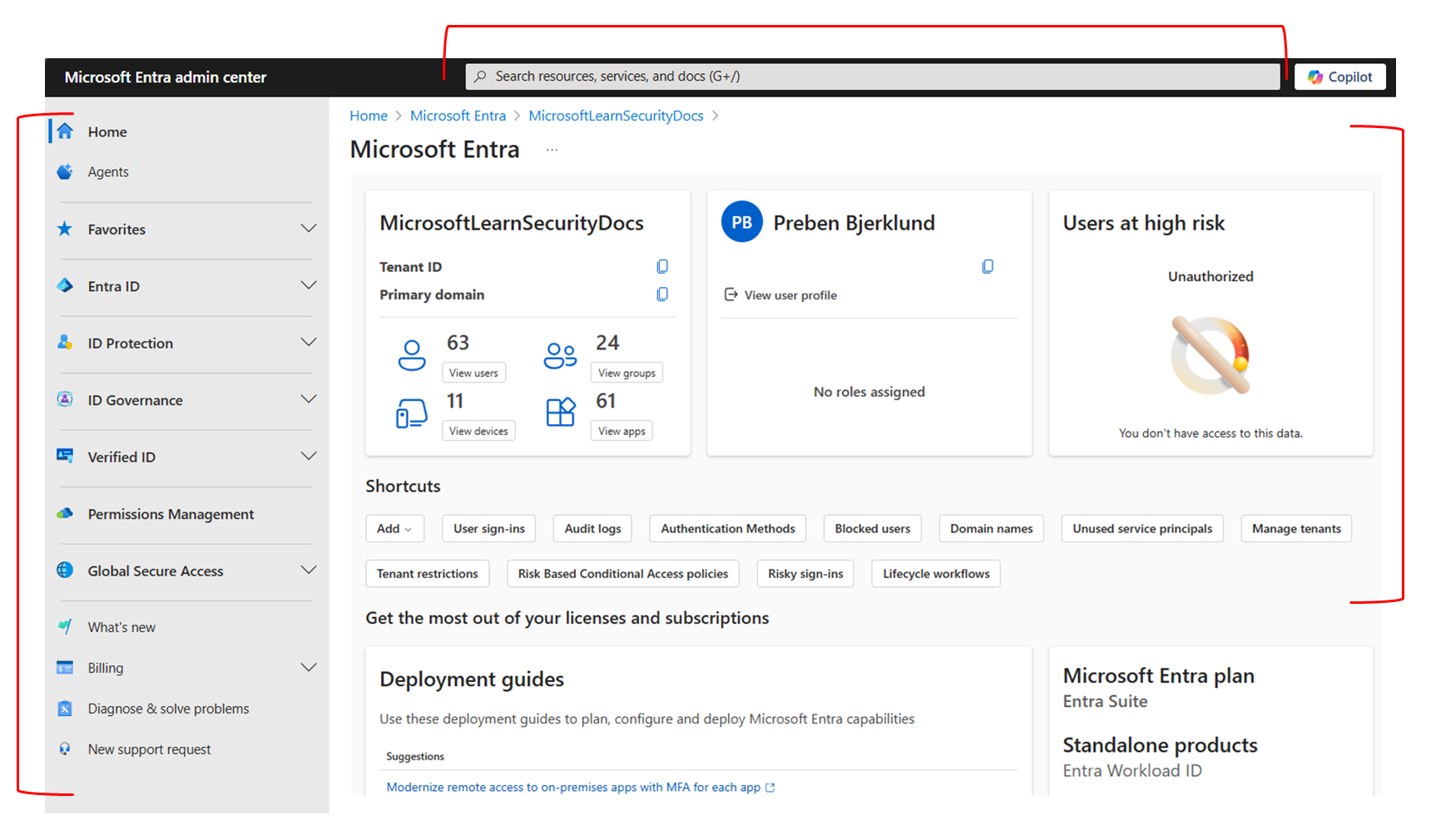
Microsoft Entra ID ist die native Cloud-IAM- und Governance-Plattform für Microsoft 365, Azure und Entra ID, die Standardlösung für Organisationen im Microsoft-Umfeld. Es ersetzt direkt Ping Identitys Workforce-SSO, MFA und bedingten Zugriff in Microsoft-zentrierten Umgebungen, wobei Entra ID Governance Lifecycle-Workflows und Zugriffsüberprüfungen ergänzt.
Quelle: learn.microsoft.com
Was auffällt:
- SSO, MFA und bedingter Zugriff für Microsoft 365, Azure und SaaS-Anwendungen.
- Unterstützung für SAML 2.0- und OpenID Connect-Föderation.
- Lebenszyklus-Workflows, Zugriffspakete und Berechtigungsverwaltung über Entra ID. Governance.
- Erkennung von Identitätsrisiken und bedingte Zugriffsrichtlinien über Microsoft Entra ID Protection.
- Microsoft 365 E5 enthält Entra ID P2, einige Governance-Funktionen sind separat lizenziert.
Was zu beachten ist:
- Entra Connect synchronisiert hybride AD-Änderungen standardmäßig alle 30 Minuten über einen lokalen Server, daher werden Änderungen nicht sofort angezeigt.
- Die SoD-Durchsetzung ist eine Konfiguration zur Unvereinbarkeit von Zugriffspaketen, kein systemübergreifendes SoD auf Transaktionsebene; komplexe SOX-IT-General-Controls (ITGC) Programme benötigen ein speziell entwickeltes IGA.
- Entra PIM deckt nur Cloud- und Azure-Ressourcenrollen ab; für lokalen AD-Privilegienzugang und ITDR ist eine separate Plattform nötig.
Am besten geeignet für: Microsoft-zentrierte Teams, die Ping für natives SSO, MFA und bedingten Zugriff ersetzen.
3. Okta Workforce Identity
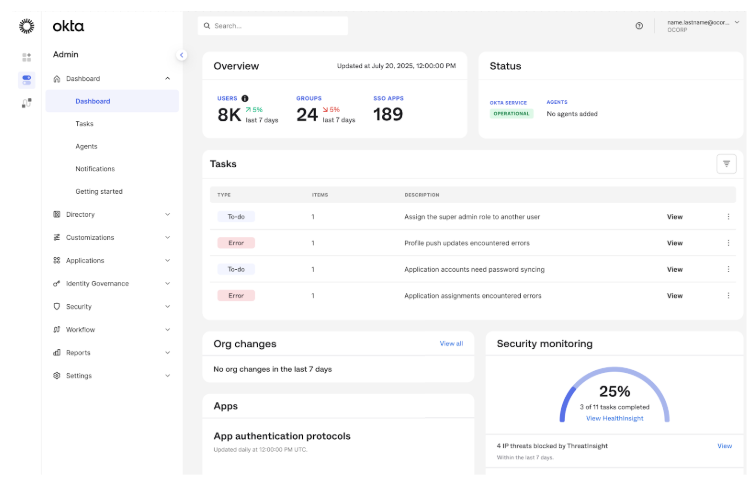
Okta Workforce Identity ist die direkteste cloud-native Alternative zu Ping Identity für Organisationen, die PingFederate verlassen wollen, ohne sich an das Microsoft-Ökosystem zu binden. Der Katalog mit über 8.000 Integrationen verringert deutlich die Connector-Hürden, die viele PingFederate-Abgänge verursachen.
Quelle: support.okta.com
Was auffällt:
- Zentralisiertes SSO und MFA für SaaS- und lokale Anwendungen, mit SaaS-Integrationen über das Okta Integrationsnetzwerk.
- Umfassende Single-Sign-On-Integrationen im Okta Integrationsnetzwerk.
- Adaptive MFA mit Gerätevertrauen, Verhaltensrisikosignalen und richtliniengesteuerter Step-up-Authentifizierung.
- Lebenszyklus-Automatisierung basierend auf HR-Informationssystem-(HRIS)-Ereignissen über Workday- und SuccessFactors-Connectoren.
- Okta Identity Governance Add-on für Zugriffsbestätigungen, Zugriffsanfragen und Berechtigungsverwaltung.
Was zu beachten ist:
- Die reine Cloud-Bereitstellung erfordert das Okta Access Gateway für lokale Anwendungen und fügt eine Komponente hinzu, die PingFederate nicht braucht.
- Die hybride AD-Integration läuft über einen leichten Agenten auf einem Windows-Server, einer lokalen Komponente für Patching und Überwachung neben dem Cloud-Mandanten.
- Die umfassende Durchsetzung von SoD ist schlecht dokumentiert; komplexe SOX ITGC-Programme benötigen ergänzende IGA-Tools.
Am besten geeignet für: PingFederate- oder PingOne-Migranten, die cloudnativen SSO/MFA mit breiter SaaS-Abdeckung wünschen.
4. CyberArk Identity
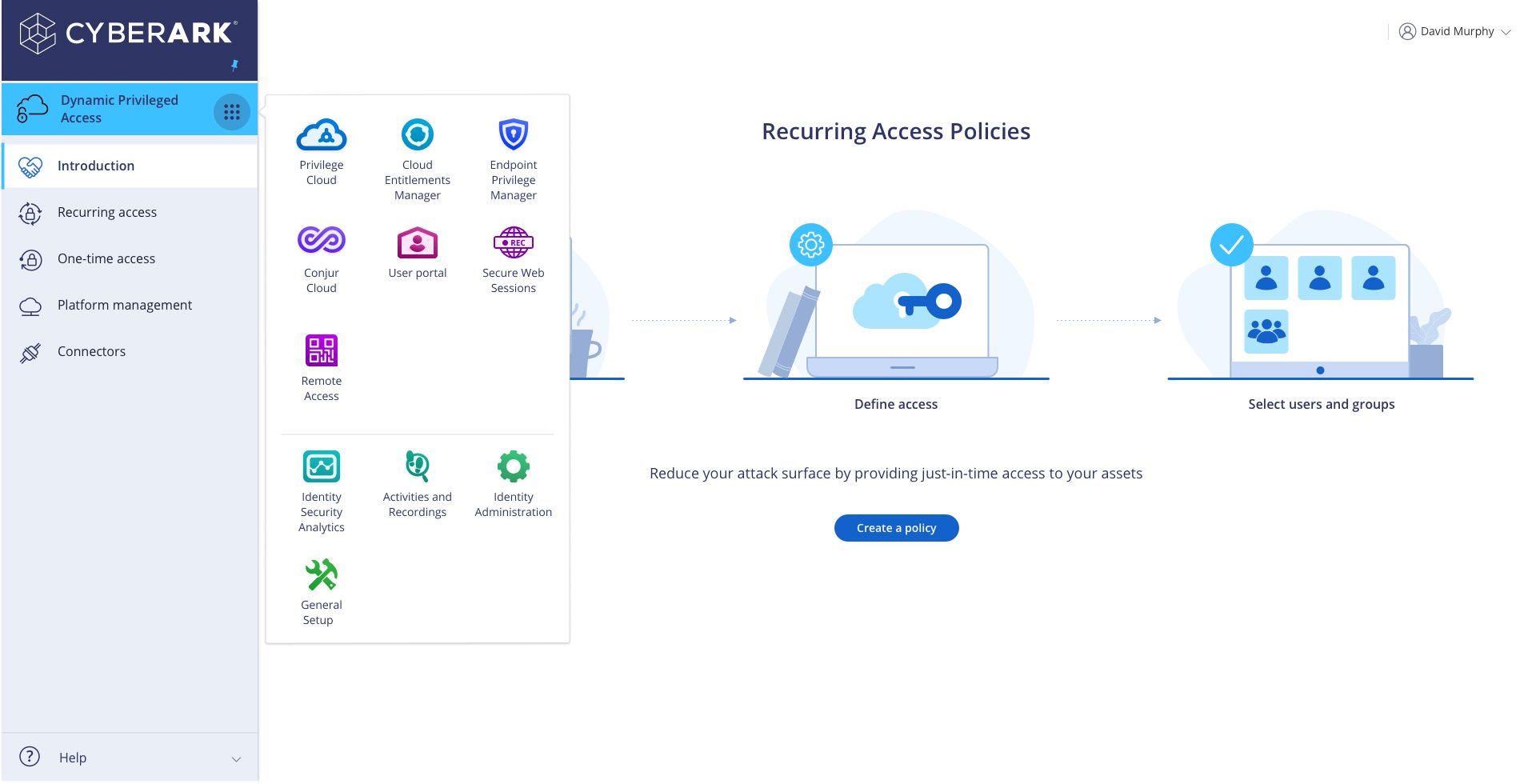
CyberArk Identity (jetzt Teil von Palo Alto Networks) ist eine Unternehmens-Identitätssicherheitsplattform, die Workforce-IAM mit intelligenten Berechtigungskontrollen kombiniert und die stärkste gleichwertige Alternative zu Ping Identity darstellt, wenn der Käufer auf Unternehmens-Identitätssicherheit statt nur auf Zugangskomfort setzt. Palo Alto Networks schloss die Übernahme von CyberArk am 11. Februar 2026 für rund 25 Milliarden US-Dollar ab.
Quelle: cybersecurity-excellence-awards.com
Was auffällt:
- SSO, adaptive MFA und Lifecycle-Management für Mitarbeiter-, Drittanbieter-, Maschinen- und KI-Identitäten.
- Endpoint Privilege Manager entfernt lokale Administratorrechte und erzwingt Anwendungssteuerung auf Windows-, Mac- und Windows Server-Endpunkten und überträgt das Prinzip der geringsten Rechte auf Infrastruktur-, Cloud- und Anwendungsebenen.
- Der IGA-Lebenszyklus, automatisierte Zugriffsprüfungen und KI-gesteuertes Rollenmanagement durch die Übernahme von Zilla Security (Februar 2025) befinden sich noch in der Nachakquisitionsphase; prüfen Sie die Tiefe vor einer Verpflichtung.
- Vault-zentrierter Enterprise Privileged Access Manager (Vaulting, JIT, Sitzungsaufzeichnung), CyberArks ausgereifteste Funktion.
Was zu beachten ist:
- CyberArks Kernkompetenz liegt im PAM; prüfen Sie zuerst die Tiefe des Zugriffsmanagements im Vergleich zum CIAM- und B2B-Föderationsumfang von Ping.
- Vollständige Implementierungen dauern meist 12 bis 18 Monate und erfordern erhebliche Infrastruktur und Ressourcen, bevor Wert entsteht.
- Die Übernahme von Palo Alto Networks bringt Unsicherheit im Fahrplan und Beschaffungsrisiken vor dem Abschluss mehrjähriger Verträge.
- CyberArk speichert und rotiert Zugangsdaten für dauerhaft privilegierte Konten zwischen den Rotationen; Plattformen ohne dauerhafte Privilegien wie Netwrix Privilege Secure erzeugen temporäre Konten, die am Sitzungsende gelöscht werden.
Am besten geeignet für: Sicherheitsteams, die Workforce-IAM und PAM bei einem einzigen Unternehmensanbieter zusammenführen.
5. Omada Identity Cloud
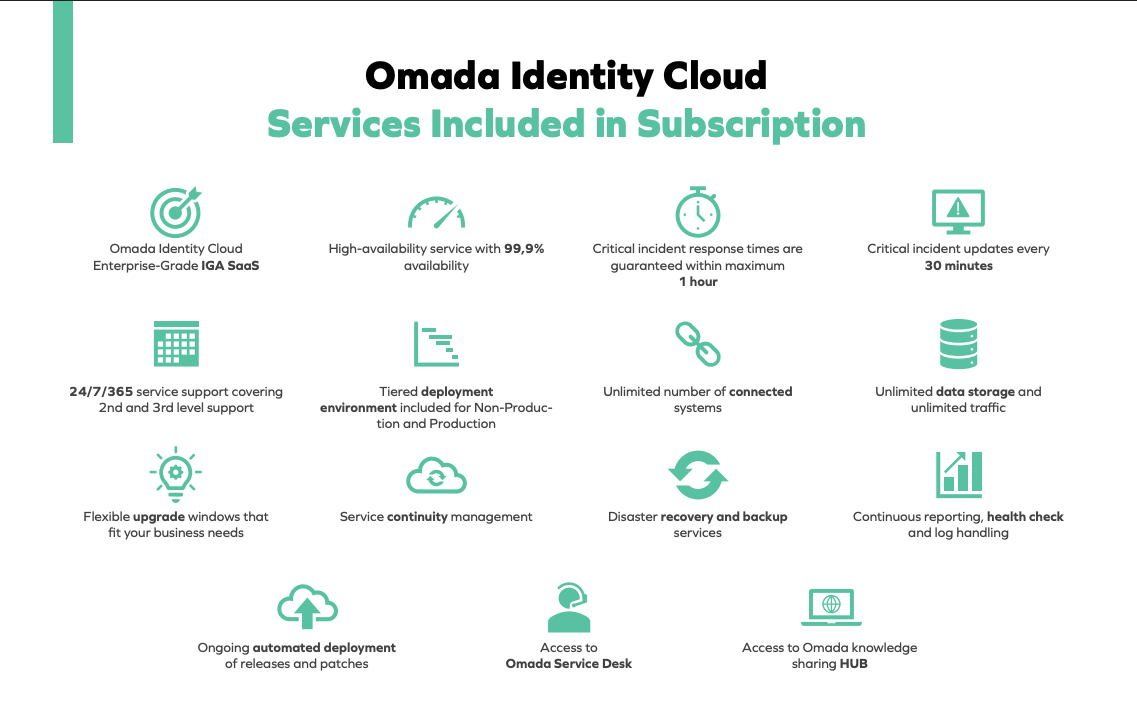
Omada Identity Cloud ist eine IGA-first-Plattform, die Lebenszyklusautomatisierung, Zugriffsprüfungen, Rollenverwaltung und SoD-Durchsetzung abdeckt und die Governance-Lücke schließt, die Ping Identity offenlässt, mit einem strukturierten 12-wöchigen Erstbereitstellungspaket.
Quelle: omadaidentity.com
Was auffällt:
- Vollständiges IGA-Lifecycle-Management mit automatischer Bereitstellung, Zugriffsanfragen und Genehmigungsabläufen.
- Greifen Sie auf Zertifizierungen und SoD-Richtlinien mit bereichsübergreifenden Berechtigungskontrollen zu.
- Rollenbasiertes Zugriffsmodell mit Rollenanalyse und -erkennung.
- Hybride und SaaS-Bereitstellungsoptionen mit AD- und Entra-ID-Konnektoren.
- Vorgefertigte Audit-Berichtsvorlagen für Governance- und Compliance-Nachweise.
Was zu beachten ist:
- Omada ersetzt nicht Pings SSO, MFA oder Federation; setzen Sie es zusammen mit einem IdP für vollständigen Schutz ein.
- Die Bereitstellung erfolgt standardmäßig über geplante oder ausgelöste Import-/Exportaufträge, nicht durch kontinuierliche Synchronisation; die nahezu Echtzeit-Übertragung hängt von der Konnektorkonfiguration ab.
- Der 12-wöchige Implementierungszeitraum setzt einen kontrollierten Umfang voraus; Erweiterungen verlängern die Zeit und erfordern professionelle Dienstleistungen.
- Die CMMC-Abdeckung ist in der offiziellen Produktdokumentation nicht bestätigt; prüfen Sie direkt mit Omada, bevor Sie für CMMC-Programme auswählen.
Am besten für: IGA-orientierte Prüfer, die Pings Governance-Lücke für SOX- oder HIPAA-Konformität schließen.
6. Saviynt Identity Cloud
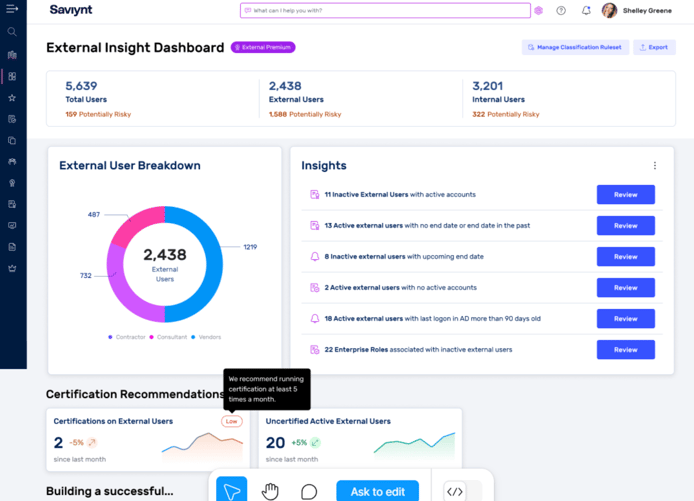
Saviynt Identity Cloud ist eine cloudnative SaaS-IGA-Plattform mit integrierten PAM-Funktionen, die eine Governance-Tiefe bietet, die Ping Identity nicht hat, sowie starke Analysen von Berechtigungen auf Anwendungsebene und eine kombinierte IGA+PAM-Architektur, die die Verbreitung von Einzellösungen reduziert.
Quelle: saviynt.com
Was auffällt:
- Identitätslebenszyklus, Zugriffsanfragen, Zertifizierungen und SoD in einer einzigen SaaS-Plattform.
- Mikrozertifizierungen für Anwendungen, Berechtigungsinhaber, Servicekonten und Rollenverantwortliche.
- Anwendungszentrierte Berechtigungsanalysen für Cloud-ERP und SaaS.
- Kombiniertes IGA und PAM, das Governance und privilegierten Zugriff auf einer einzigen Plattform abdeckt.
- Fertige Connectoren für wichtige Unternehmensanwendungen und HR-Systeme.
Was zu beachten ist:
- Nur SaaS-Bereitstellung ohne lokale Option; Organisationen mit Datenresidenz-Anforderungen sollten prüfen, ob das Modell praktikabel ist.
- Ein nativer On-Premises Active Directory Connector wurde nicht bestätigt; bitte vor Einsatz in hybriden AD-Umgebungen direkt prüfen.
- Konvergentes PAM fehlt die Enterprise-Skalierung und Tiefe der Sitzungsaufzeichnung für On-Premises- und OT-Systeme; separat prüfen, wenn dediziertes PAM erforderlich ist.
Am besten für: Cloud-first-Unternehmen, die integrierte IGA und PAM ohne lokale Infrastruktur benötigen.
7. JumpCloud
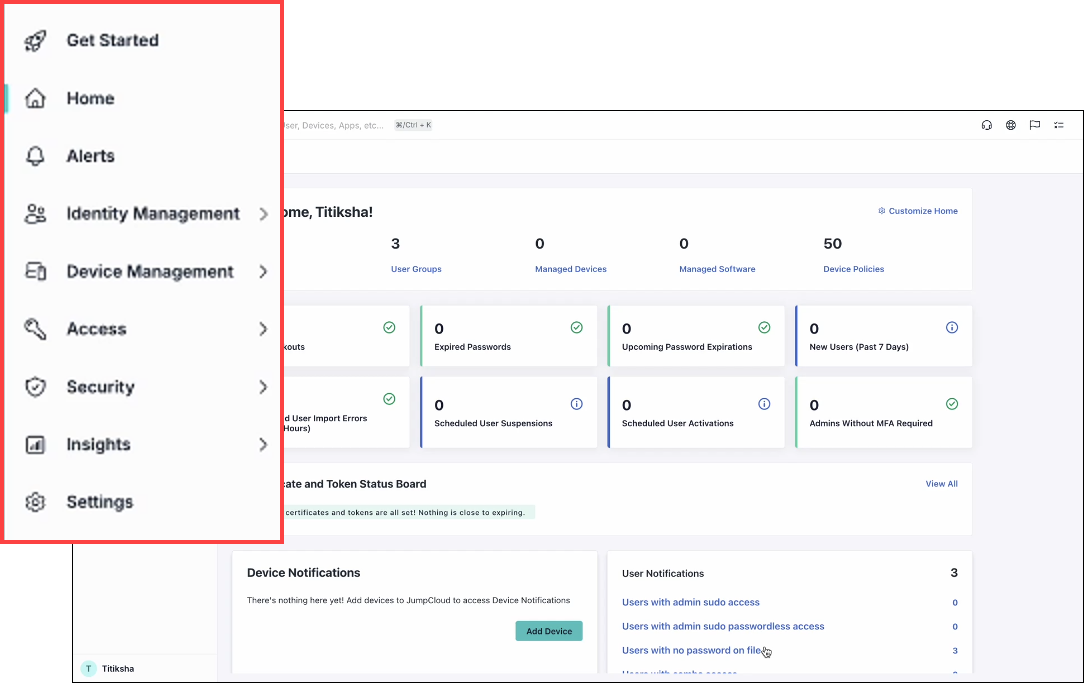
Das JumpCloud Cloud-Verzeichnis ist eine Plattform für Verzeichnis- und Zugriffsverwaltung, die Active Directory vor Ort für cloud-native mittelständische Unternehmen ersetzt. Es dient als Alternative zu Ping für Organisationen, die Ping hauptsächlich für Mitarbeiterverzeichnis und SSO nutzen, nicht für unternehmensweite Föderation oder CIAM.
Quelle: jumpcloud.com
Was auffällt:
- Cloud-Verzeichnis für Nutzer, Gruppen und Richtlinien auf Geräten und SaaS-Anwendungen.
- SSO über SAML 2.0 und OIDC mit SCIM-basierter Bereitstellung.
- Integriertes Gerätemanagement und bedingter Zugriff für Windows, macOS, Linux, iOS und Android.
- Bidirektionale AD-Synchronisierung für Benutzer, Gruppen und Passwörter.
- Klare Abdeckung für Mitarbeiterverzeichnis, SSO, MFA und Geräteverwaltung.
Was zu beachten ist:
- Nicht geeignet für komplexe B2B-Föderation, CIAM oder API-Zugriffsverwaltung; dafür ist eine vollständige IAM-Plattform erforderlich.
- Die bidirektionale AD-Synchronisation benötigt auf jedem Domänencontroller einen Agenten plus einen weiteren, der alle 5 Sekunden abfragt – mehr Aufwand als bei reinen Cloud-Verzeichnissen.
- Zugriffsüberprüfungen sind im Fahrplan für das erste Halbjahr 2026; regulierte Unternehmen benötigen ergänzende IGA für Zertifizierungskampagnen und SoD-Durchsetzung.
Am besten für: Mittelständische Teams, die Ping für SSO, MFA und Geräteverwaltung ersetzen.
8. Cisco Duo
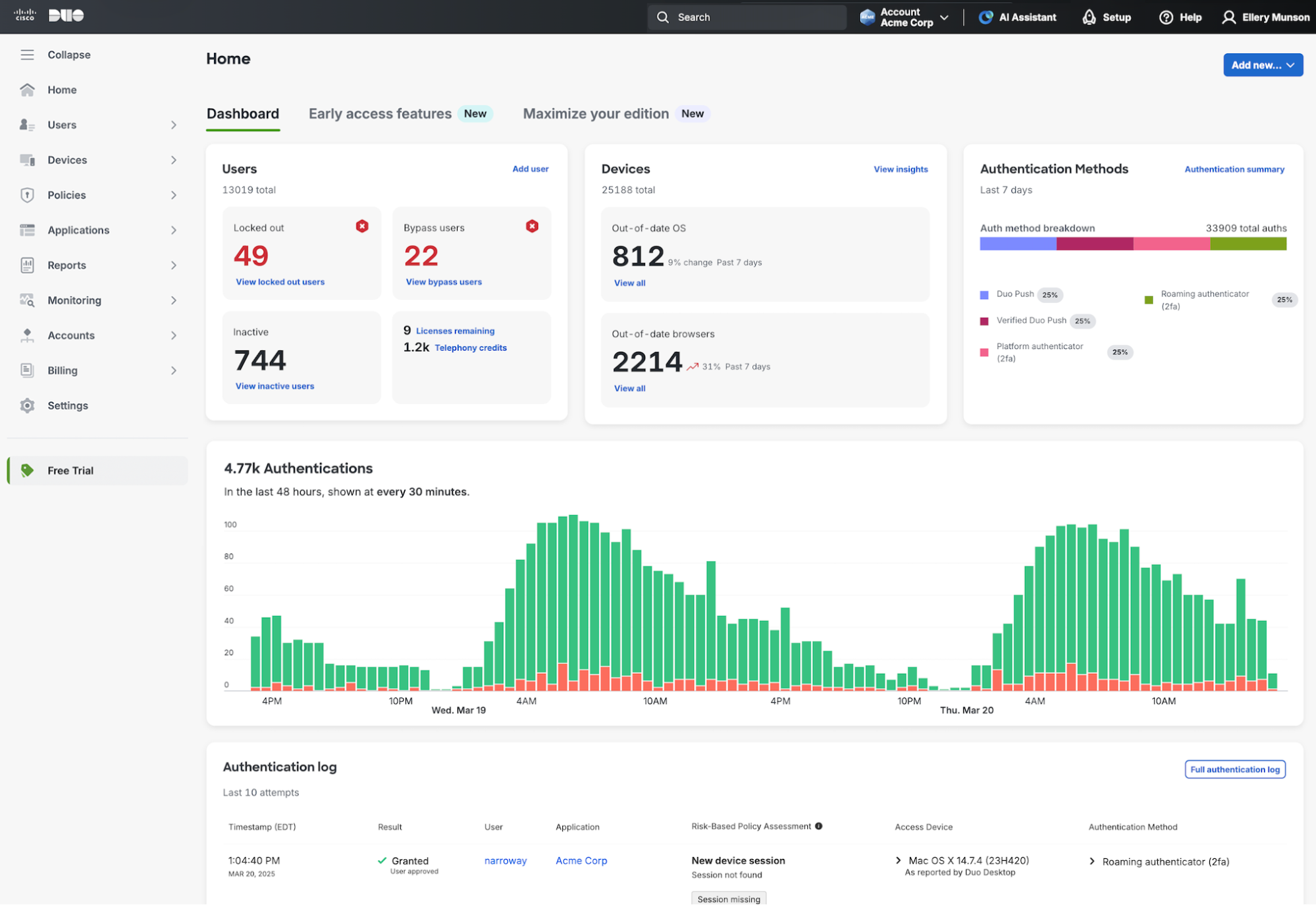
Cisco Duo ist eine MFA- und Zugriffssicherheitsplattform, die adaptive Authentifizierung, Gerätevertrauen und Zero-Trust-Netzwerkzugang (ZTNA) über jedem bestehenden IdP oder Verzeichnis schichtet, als Ergänzung zu Ping Identity oder Ersatz für Organisationen, deren Hauptanwendungsfall bei Ping MFA und sicherer Zugriff ist.
Quelle: duo.com
Was auffällt:
- Adaptive MFA mit Gerätegesundheitsprüfungen und risikobasierter Step-up-Authentifizierung.
- Fernzugriff über Duo Network Gateway für Web-Apps, Remote-Desktop und sichere Shell.
- Anwendungsunabhängiger Schutz für Altsysteme, VPNs, Remote-Desktops und SaaS.
- Universelle Integrationen für Prompt- und Auth-APIs.
- Durchsetzung der Trusted Endpoints-Richtlinie für nicht verwaltete oder nicht konforme Geräte.
Was zu beachten ist:
- Duo bietet kein SCIM-basiertes Lifecycle-Provisioning oder IGA; setzen Sie es zusammen mit Entra ID oder Okta für vollständiges Zugriffsmanagement ein.
- Duo Network Gateway benötigt einen dedizierten Linux-Server in der DMZ mit geöffneten spezifischen Firewall-Ports; eine cloud-native MFA-Lösung bräuchte diese Infrastruktur nicht.
Am besten geeignet für: Organisationen, die während einer Ping-Migration umfassenden MFA-Schutz für Legacy- und Cloud-Systeme benötigen.
Wählen Sie die passende Ping Identity-Alternative für Ihre Umgebung
Die Ergebnisse der Compliance-Prüfung zeigen, dass Sie mit dem Druck beginnen sollten, der Ihre Bewertung ausgelöst hat.
Wenn es sich um Compliance-Audit-Ergebnisse handelt, liegt die Lücke in der Governance, nicht bei Ihrem IdP. Netwrix Identity Manager automatisiert den Joiner-Mover-Leaver-Lebenszyklus und führt Zugriffszertifizierungskampagnen auf Ihrer bestehenden Authentifizierungsplattform durch, um die von Prüfern geforderten Nachweise zu liefern.
Bei einer Active Directory-Exposition liegt die Lücke hinter dem IdP, da Ping die Authentifizierung verwaltet, aber das Verzeichnis selbst nicht sichert. Netwrix Threat Manager erkennt Diebstahl von Zugangsdaten, laterale Bewegungen und Privilegieneskalation in AD und Entra ID, und Netwrix Privilege Secure ersetzt dauerhafte Admin-Konten durch Just-in-Time-Zugriffe, die nach Abschluss der Arbeit enden.
Ob es das Risiko der Anbieter-Konzentration oder das End-of-Life-Datum von PingFederate ist – das ist ein echter IdP-Wechsel. Bewerten Sie die oben genannten Alternativen bezüglich Protokollabdeckung, Bereitstellungsmodell und CIAM-Umfang.
Fordern Sie eine Demo an und sehen Sie, wie Identity Manager, Threat Manager und Privilege Secure die von Ping Identity offen gelassenen Lücken in Governance, AD-Sicherheit und privilegiertem Zugriff schließen.
Wettbewerbsinformationen Stand Juli 2026. Produktfunktionen, Roadmaps und Preise können sich ändern. Prüfen Sie vor dem Kauf direkt bei jedem Anbieter.
Häufig gestellte Fragen zu Ping Identity-Alternativen
Teilen auf
Erfahren Sie mehr
Über den Autor

Netwrix Team
Erfahren Sie mehr zu diesem Thema
Bring Your Own Vault: Warum „Rip and Replace“ nicht die einzige Option ist
Jenseits des Tresors: Zero Standing Privilege schützt vor mehr als nur Passwortangriffen
Das Passwort war nie das einzige Problem: Klassisches PAM vs. modernes PAM
Aufdeckung indirekter Angriffswege zu virtualisierten Domänencontrollern in Azure
Intune kann immer noch kein Bare-Metal-Image eines Geräts erstellen, und andere Dinge, die niemand der IT gesagt hat