
Netwrix data security posture management (DSPM)
Find and protect sensitive data, prioritize and root out compliance risks, and shut down risky behavior before it becomes a breach. Only 25% of security leaders are fully confident they can detect toxic access combinations before they’re exploited.

Read their Stories
Trusted by




































































Netwrix research found 74% of organizations don’t have a single, unified view of sensitive data and which identities can reach it. That's the gap DSPM tools are built to close.
Proliferation of GenAI
64% say their ability to govern data access is falling behind the pace of AI adoption, and 72% report identity-related data exposure risk has increased as a result.
Scattered shadow data
57% of organizations don’t continuously maintain a sensitive data inventory, and 74% can’t get a single, unified view of where their sensitive data resides.
Blind spots in data protection
71% of organizations can’t immediately identify which identities can access sensitive data, and 76% can’t immediately revoke standing access once it’s no longer needed.
Unknown risk exposure
51% of data exposure traces back to excessive permissions or misconfigured access controls, yet only 25% of organizations are confident they can detect risky or toxic access combinations, according to the 2026 Data and Identity Security Report.
What is DSPM?
Data Security Posture Management (DSPM) is a security discipline that continuously discovers, classifies, and monitors an organization's sensitive data, then identifies and remediates the access and exposure risks most likely to lead to a breach. Unlike infrastructure-focused tools, DSPM starts with the data itself: where it lives, how sensitive it is, and who or what can reach it, across cloud, hybrid, and on-premises environments.
A DSPM program moves through four stages: discover where sensitive data lives, classify it by type and sensitivity, assess who and what can reach it, and remediate the exposure before it turns into a breach.
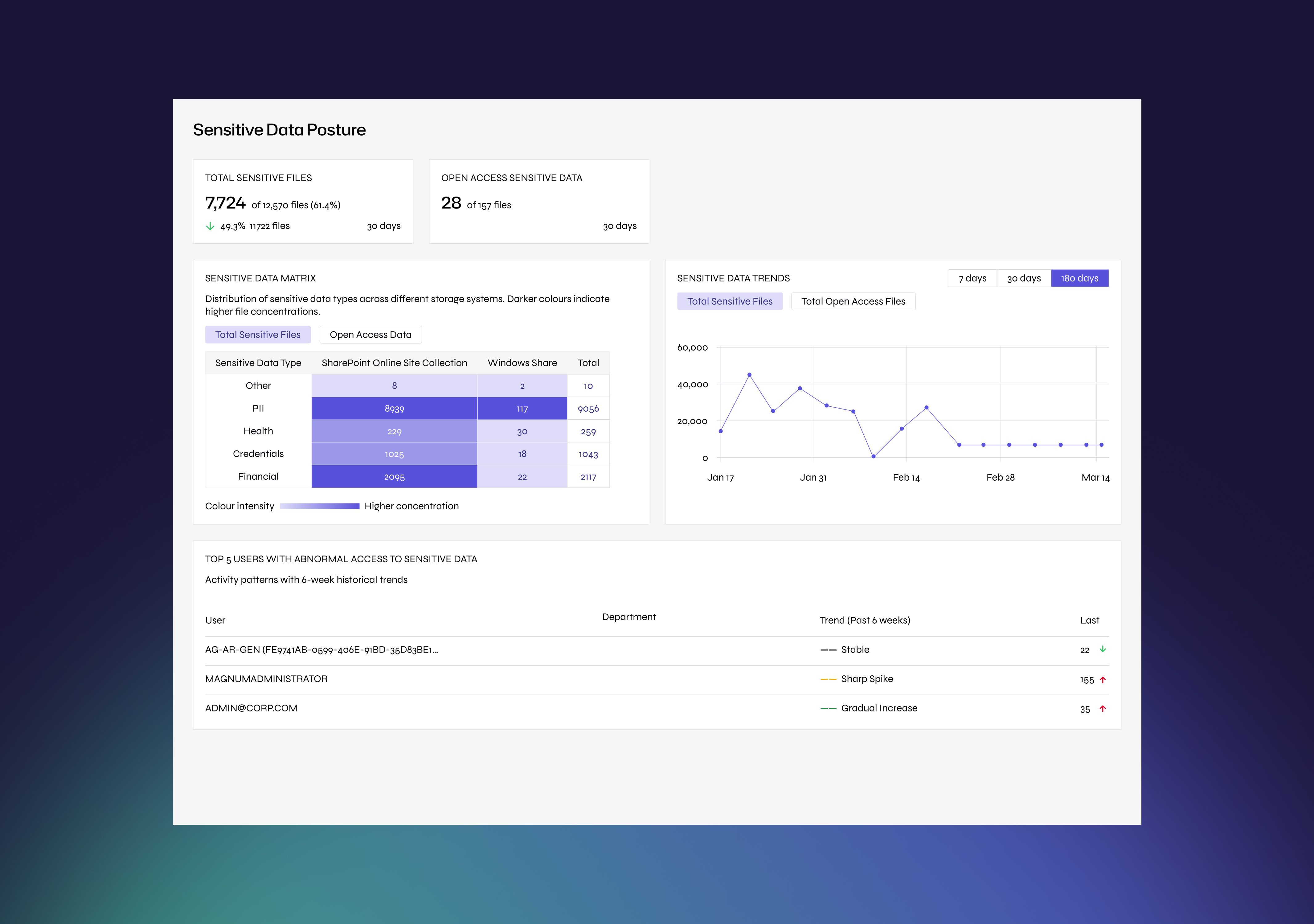
A mature DSPM program typically includes:
Data discovery and classification
Across structured and unstructured sources.
Permissions and access visibility
Mapping who (or what agent) can reach sensitive data.
Continuous risk assessment
Prioritizing overexposed or misconfigured data.
Automated remediation
Fixing exposure before it's exploited.
DSPM vs CSPM: how they differ
Both address cloud security, but at different layers, and work best together.
Focus
CSPM
Cloud infrastructure configuration
Netwrix DSPM
The sensitive data itself
Primary question
CSPM
Is the environment configured securely?
Netwrix DSPM
Is sensitive data exposed or at risk?
Netwrix advantage
CSPM
No identity context
Netwrix DSPM
Identity-aware: connects data risk to who can actually reach it
Use cases
Go beyond data security with DSPM solutions
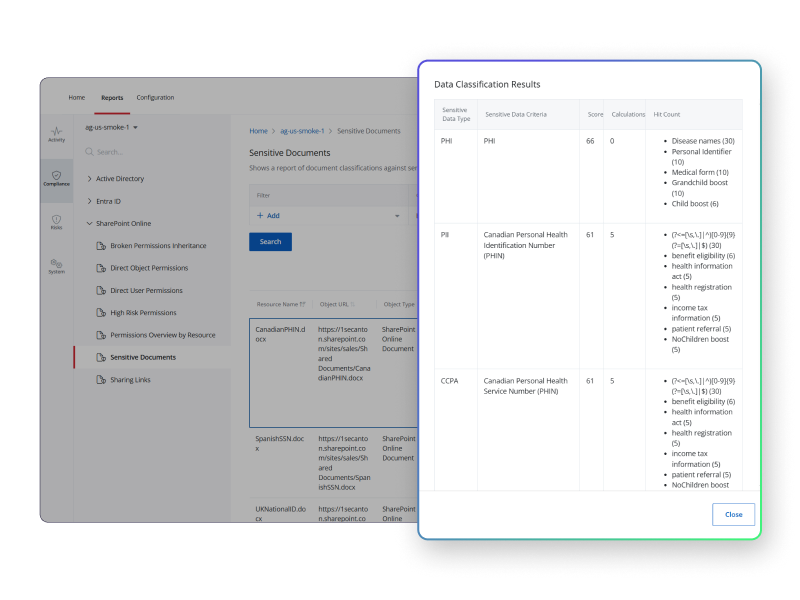
Discover and classify sensitive data
Locate data and perform accurate data classification based on sensitivity, privacy, and compliance requirements. Enhance DLP by accurately tagging sensitive data.
Monitor activity and detect threats
Track and analyze activities to detect unauthorized access, insider threats, or compromised accounts. Automatically fix conditions that put sensitive data at risk.
The Netwrix approach
A powerful DSPM solution that secures your data and identities
Get in touch
Let’s talk security
Continuous control of your data wherever it lives
Visibility into data in hybrid environments is impossible without a solid tracking and tagging strategy. The Netwrix Data Security Posture Management solution puts you in charge. Automatically discover and classify hidden data, monitor for threats and suspicious access patterns, and remediate excessive user access issues.
Connect identity and data
Link identity security and data risk management to shore up access privileges and remediate risks through automation.
Netwrix 1SecureFull protection across all environments
Deploy full protection for structured and unstructured data, whether you’re cloud, on-premises, or both.
Scalable security for all organizations
Flexibly deploy to any data environment at a level that fits your business size and needs.
Manage data throughout its lifecycle
Identify data types and their sensitivity levels for the implementation of appropriate data retention, data archiving, and data deletion policies.
Trusted by professionals
Don’t just take our word for it


Data Security Posture Management FAQs
Have DSPM questions? We’ve got answers.
See DSPM in action