
8 best access review tools for mid-market teams in 2026
Jul 22, 2026
Access review tools differ more than their marketing suggests: standalone certification platforms, full identity governance suites, and compliance automation tools all call themselves access review solutions and solve different problems at different costs and with varying implementation overhead. Matching governance maturity and compliance framework to the right category matters more than comparing feature lists, especially when audit evidence must prove that rejected access was actually removed.
According to The Netwrix 2026 Data and Identity Security Report, 76% of organizations can't revoke standing access quickly enough when an employee changes roles or leaves. Access review tools address that gap, but the category encompasses three distinct approaches that are often conflated: standalone access certification platforms, full identity governance and administration (IGA) suites, and compliance automation platforms.
Standalone certification platforms, such as ConductorOne and YouAttest, run user access reviews (UAR): periodic campaigns that route entitlements to reviewers and capture timestamped attestation evidence at a lower cost and faster deployment than full IGA.
Full IGA suites, such as Netwrix Identity Manager, Microsoft Entra ID Governance, and Saviynt, bundle certification with provisioning, deprovisioning, and role-based access control, often including segregation-of-duties (SoD) enforcement to block toxic access combinations before they're granted.
Compliance automation platforms, such as Vanta, consolidate audit evidence for frameworks such as SOC 2 and ISO 27001, but often rely on identity systems to enforce the access changes that reviewers approve.
Regulated mid-market organizations should weigh governance depth, integration breadth, and the quality of compliance evidence against their own governance maturity, compliance obligations, and identity environment before comparing feature lists.
Access review tools at a glance
The table below maps each tool to its governance category and review scope.
Tool | Review category and scope | Best for |
|---|---|---|
|
Full IGA; hybrid AD, Entra ID, file servers, SharePoint, NAS |
Hybrid organizations with AD and on-premises data governance needs |
|
|
Microsoft Entra ID Governance |
Full IGA (cloud-only); Entra ID and SaaS; no on-premises AD group management |
Microsoft-first cloud organizations are accepting the on-premises limitation |
|
Saviynt |
Full IGA + PAM; SaaS-native; 300+ connectors |
Enterprises consolidating IGA and privileged access management |
|
ConductorOne |
Standalone user access review (UAR); SaaS-native; 300+ agentless connectors |
SaaS-first mid-market teams needing fast, low-overhead certification |
|
YouAttest |
Standalone UAR; Azure AD, Okta, Entra ID, PingOne, AWS, Salesforce |
Mid-market DoD contractors needing no-code CMMC-aligned certification |
|
Console |
Information Technology Service Management (ITSM) + access review workflows; ticketing, Slack, Teams, Jira |
IT teams wanting ITSM operations with integrated access reviews |
|
Pathlock |
Application GRC; 150+ ERP connectors (SAP, Oracle, Dynamics) |
SAP, Oracle, and Dynamics 365 environments under SOX or PCI DSS |
|
Vanta |
Compliance-automation; dozens of SaaS connectors |
Early-maturity SOC 2 and ISO 27001 programs building an evidence layer |
Why organizations are evaluating access review tools
Access review programs fail for reasons that go beyond tool selection. Understanding where current practices break down narrows the scope of the evaluation before feature comparisons begin.
- Audit findings on manual processes: Spreadsheet-based attestation records often fail audit inspection because they lack timestamps, approval chains, and proof that rejected access was removed in the underlying system after reviewers signed off.
- Closed-loop enforcement gaps: Tools that generate certification evidence without automating revocation leave a gap between the attested decision and actual access, a distinction auditors test directly in SOX ITGC and PCI DSS access control assessments.
- Hybrid identity coverage limits: SaaS-native certification platforms don't reach on-premises Active Directory groups, file servers, SharePoint, or NAS, leaving access to regulated on-premises data entirely outside the review scope.
- Regulatory tightening: PCI DSS v4.0 Requirement 7.2.4 made periodic access reviews mandatory (no longer a best practice) after March 31, 2025, and CMMC Level 2 extends similar access control documentation requirements to DoD contractors.
- Reviewer fatigue and rubber-stamp approvals: Reviewers, presented with only a username and a group name, approve most access requests by default. Tools that surface last sign-in, risk scores, and entitlement ownership increase meaningful revocation rates.
What to look for in an access review tool
Four capabilities differentiate the tools in this guide from spreadsheet-based processes and documentation-only compliance platforms.
- Integration breadth: The tool should connect across Active Directory, Entra ID, SaaS applications, and on-premises file-layer access. Reviews scoped only to identity-provider data miss applications outside single sign-on and unstructured data on file servers, NAS, and SharePoint.
- Reviewer context: Tools that surface the last sign-in, peer comparisons, risk scores, and entitlement ownership give reviewers a basis for revoking access rather than approving everything by default.
- Closed-loop de-provisioning: The tool must revoke access, not only flag it. Certification processes in which reviewers click "revoke" but access removal still requires manual action in the underlying system leave a gap between attestation and the reality auditors test.
- Compliance evidence mapping: Pre-built, timestamped evidence mapped to SOX, HIPAA, PCI DSS, and CMMC supports audit readiness without requiring manual reformatting of raw access data into framework-specific exhibits.
Netwrix Identity Manager automates joiner-mover-leaver workflows across hybrid Active Directory and Entra ID without code. Request a demo
8 best access review tools for mid-market teams in 2026
These platforms span the three categories described above and are evaluated on governance depth, integration breadth, and the quality of compliance evidence for organizations in the 250- to 5,000-employee range.
1. Netwrix Identity Manager
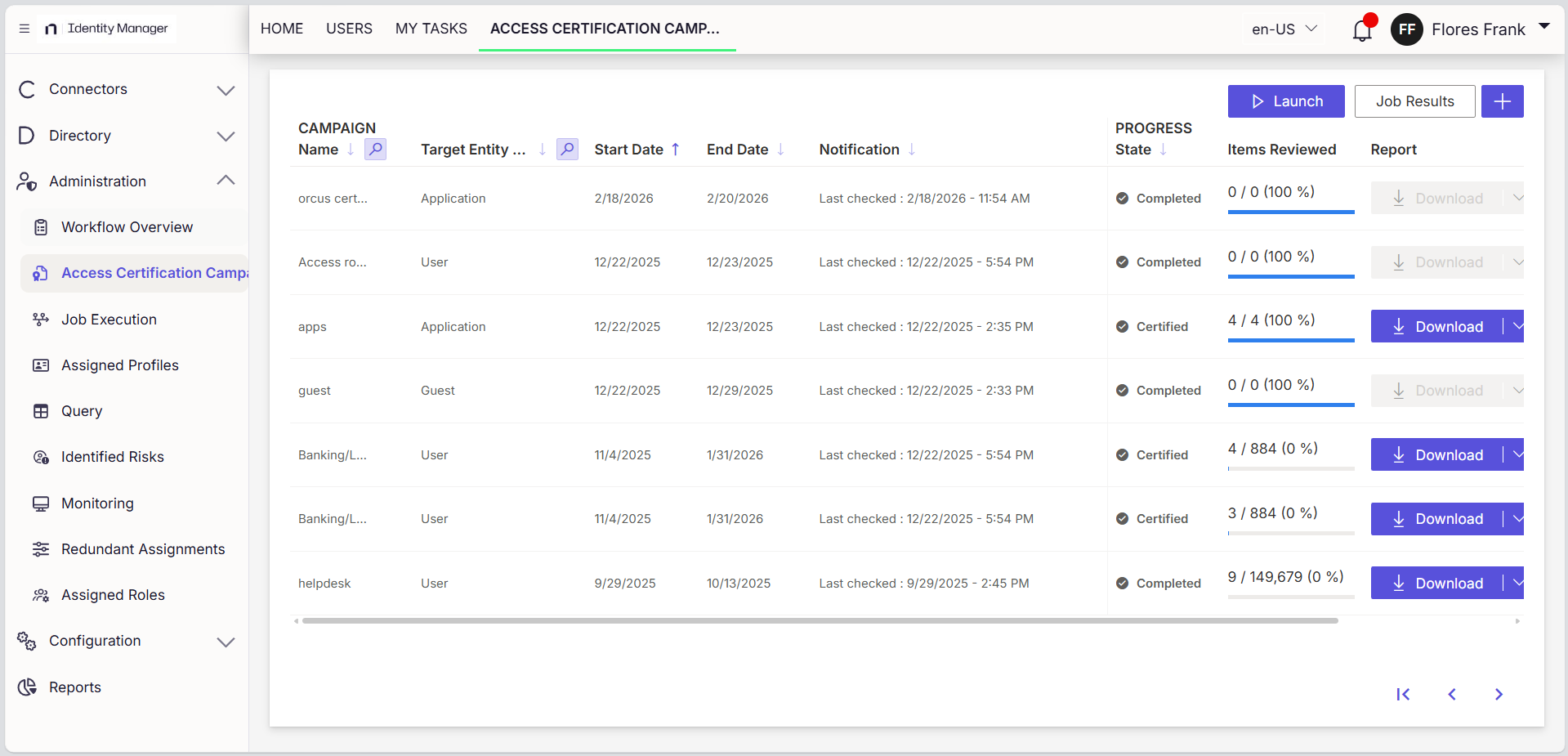
Netwrix Identity Manager is an identity governance and administration platform that automates access certification, provisioning, and the full joiner-mover-leaver lifecycle across hybrid Active Directory and Entra ID. Codeless workflow configuration means operations teams can manage access requests, approvals, and deprovisioning without developer involvement.
What stands out:
- Access certification campaigns: Owner-driven campaigns route entitlements to reviewers and capture timestamped approve and revoke decisions as audit-ready evidence for SOX, HIPAA, PCI DSS, and ISO 27001. Campaigns scope to groups, users, or individual resources, and revoking access triggers automatic deprovisioning instead of just flagging it for cleanup.
- Automated joiner-mover-leaver lifecycle: Role assignments are triggered on hire, updated on transfer, and revoked on termination via HRIS sync with Workday and SAP SuccessFactors. Provisioning reaches target systems through native LDAP, SQL, and SCIM connectors, a REST API, and a PowerShell extension framework, without the custom Java development some competitors require.
- Codeless workflow configuration: Provisioning, deprovisioning, access requests, and approval chains are configured visually rather than coded, including Power Automate hooks for external orchestration, so governance workflows adapt to organizational changes without developer involvement.
- Role-based access control and SoD enforcement: Role mining and RBAC enforcement keep entitlements aligned with current job functions through coarse- and fine-grained role models, while configurable exclusion rules block toxic access combinations before provisioning occurs, rather than flagging them after the fact.
- Native AD and Entra ID governance: Active Directory and Entra ID are treated as first-class identity stores, so applying certification results in access being revoked in both on-premises AD groups and Entra ID assignments from a single platform.
What to consider:
- Optimized for hybrid Microsoft environments; organizations that use non-Microsoft identity providers as their primary directory should confirm the connector depth before evaluating.
- Visibility into on-premises file servers, SharePoint, and NAS requires a separate data governance layer beyond Identity Manager's provisioning scope.
Credit Agricole's infrastructure division manages access for 5,000 employees across 17 French sites and needed to replace manual, incident-prone rights management while meeting the requirements of the French Military Programming Law.
Netwrix Identity Manager gave the team a centralized identity repository and a role-centric access framework, and the team's product owner reported gains "very quickly in the treatment of anomalies around not only incidents but also identities."
Best for: Hybrid organizations that govern AD and Entra ID access and have compliance evidence needs.
2. Microsoft Entra ID Governance
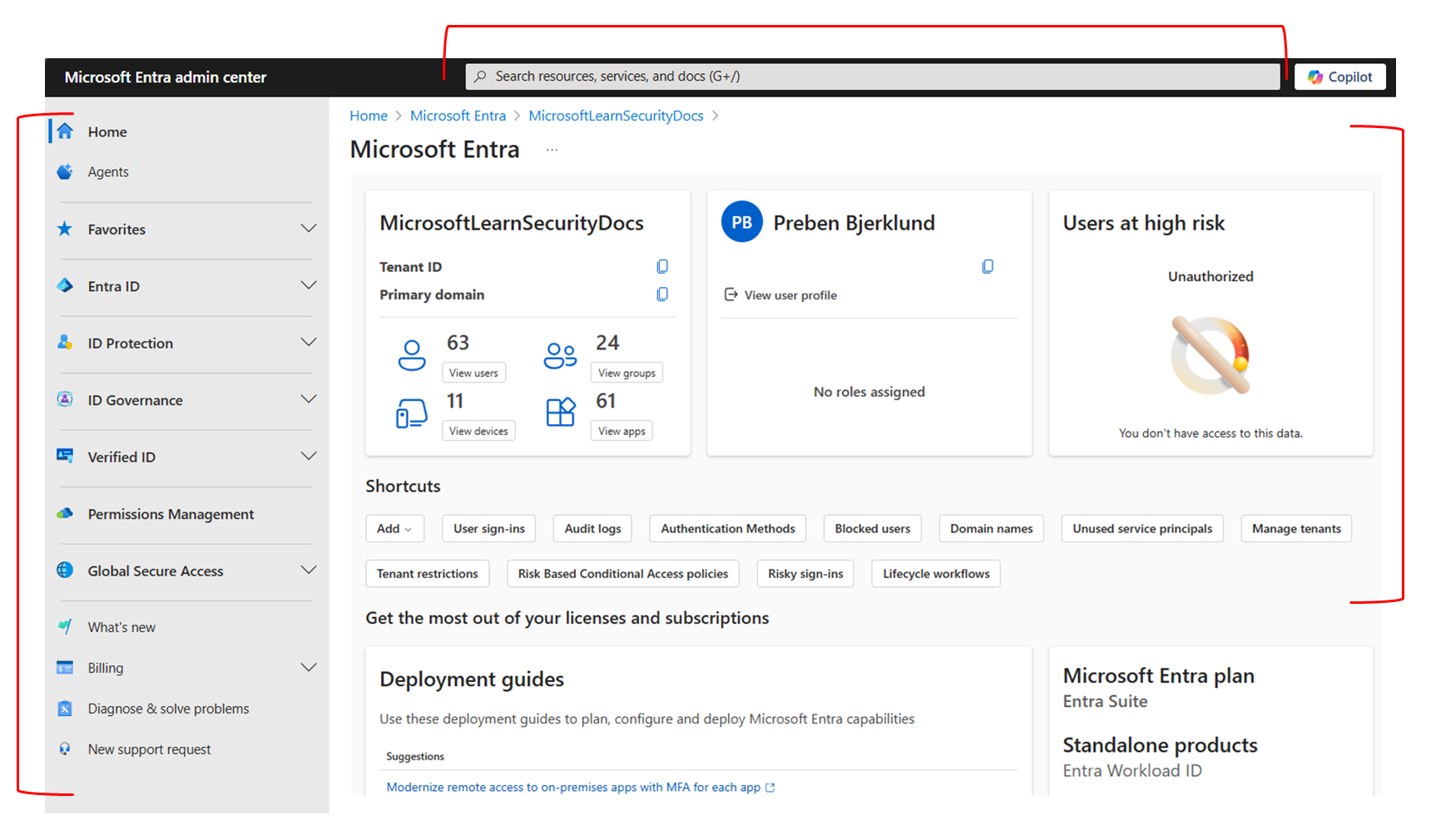
Microsoft Entra ID Governance is Microsoft's native identity governance module for Entra ID, delivering access reviews, entitlement management, and lifecycle workflows for Microsoft-first organizations.
Source: learn.microsoft.com
What stands out:
- ML-driven review recommendations surfacing inactive, high-risk, and peer-outlier accounts for revocation.
- Entitlement management for access package creation, approval workflows, and lifecycle policies across Entra ID.
- Lifecycle workflows for Entra ID and Microsoft 365 JML phases, triggered by HR system events.
- Native privileged identity management (PIM) providing time-limited Entra ID role elevation with approval and activation logging.
What to consider:
- Certification results have no effect on on-premises Active Directory groups, a hard limit for hybrid environments.
- File-server, NAS, and on-premises SharePoint governance falls outside documented scope, leaving on-premises access paths unreviewed.
Best for: Microsoft-first cloud organizations accepting the on-premises AD group limitation.
3. Saviynt
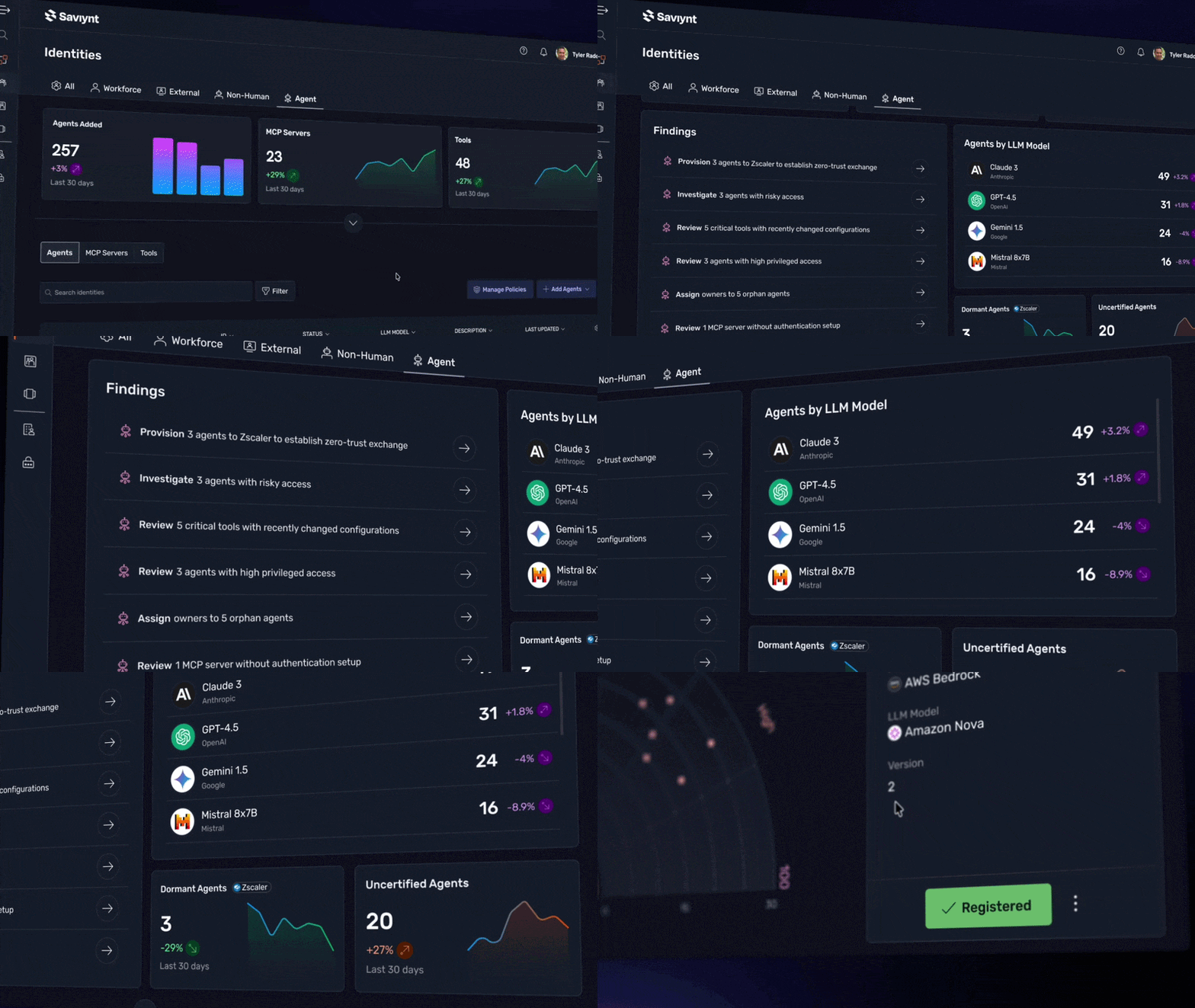
Saviynt Identity Cloud is a native SaaS platform that combines identity governance and administration with privileged access management on a single platform. Over 300 pre-built connectors and AI/ML-driven certification features position it in the enterprise IGA market for organizations seeking to consolidate both disciplines under a single vendor.
source:saviynt.com
What stands out:
- AI-driven certifications using peer insights and trust scores to flag high-risk access.
- Over 300 connectors spanning cloud, SaaS, and on-premises applications via Saviynt Exchange.
- Combined IGA and PAM from a single console covering provisioning, session vaulting, and certification.
- Automated compliance reporting for SOX, HIPAA, PCI DSS, CMMC, ISO 27002, and FISMA.
- AI agent governance extending identity controls to AI service accounts and non-human identities.
What to consider:
- PAM depth trails dedicated PAM specialists; advanced vault or session recording requirements warrant a focused platform alongside.
- A SaaS-only architecture means there is no documented file-server or NAS-level data governance for regulated on-premises unstructured data.
- Organizations with limited identity engineering staff report needing significant in-house expertise at rollout.
Best for: Enterprises wanting IGA and privileged access management on a single platform.
4. ConductorOne
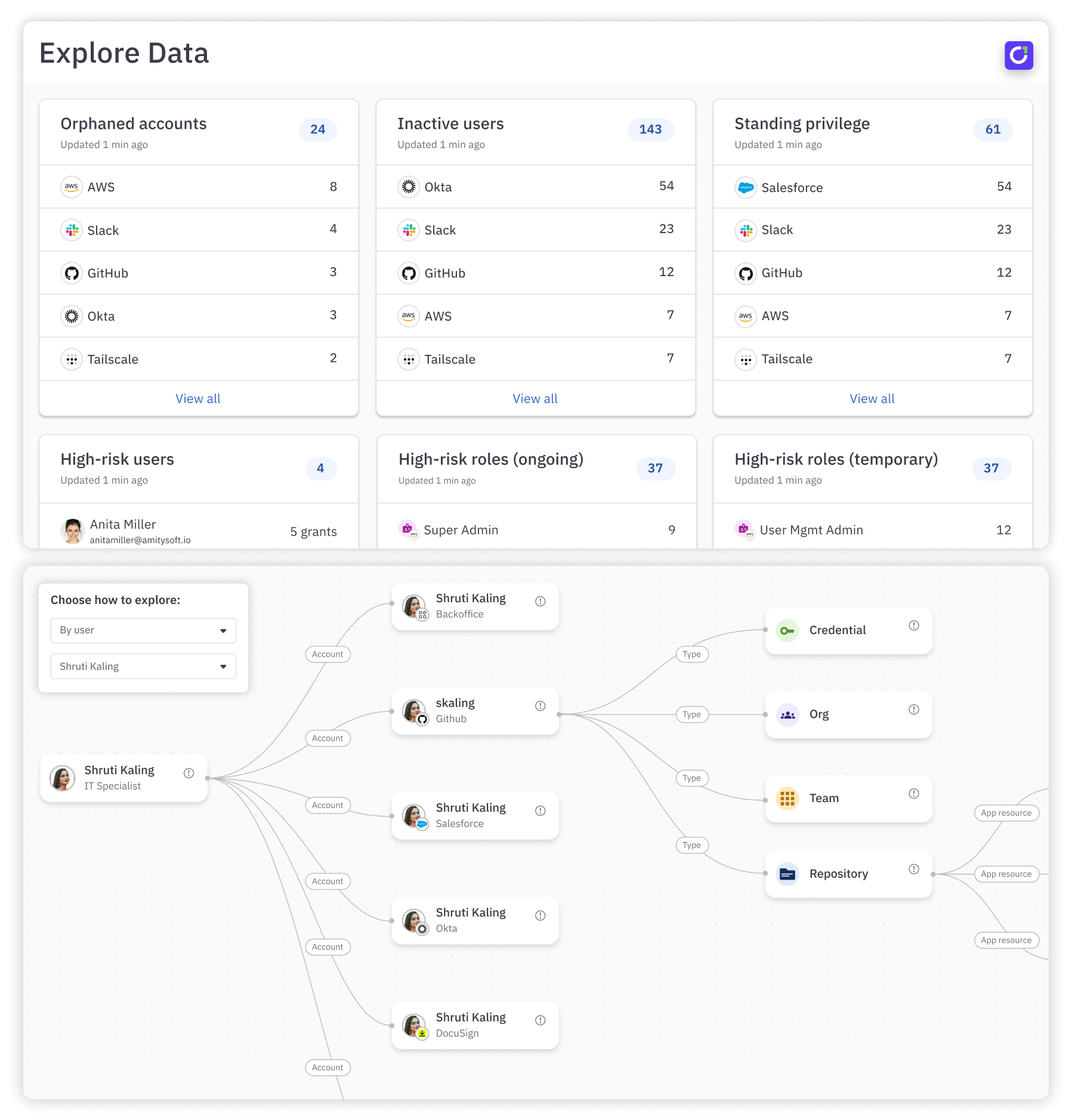
ConductorOne is a standalone user access review platform focused on fast deployment, a Slack-native reviewer experience, and agentless connectors. Organizations that have outgrown spreadsheet-based certification and aren't yet ready for enterprise IGA find a focused UAR platform here.
Source: conductorone.com
What stands out:
- Campaign builder for entitlement-, application-, or scope-level certifications with a Slack-native reviewer interface.
- Over 300 agentless connectors plus AI-built custom connectors for rapid deployment without agent installation.
- Immutable audit reports mapped to SOC 2, ISO 27001, FedRAMP, and SOX for direct use by auditors.
- AI reviewer recommendations surfacing outliers, risk signals, and inactive accounts to reduce rubber-stamp approvals.
What to consider:
- The Okta connector doesn't support automatic deprovisioning; revocation decisions require manual action in Okta after reviewers submit decisions.
- Provisioning, role modeling, and SoD enforcement require a full IGA suite alongside this platform.
Best for: SaaS-first mid-market teams needing fast, low-overhead access certification.
5. YouAttest
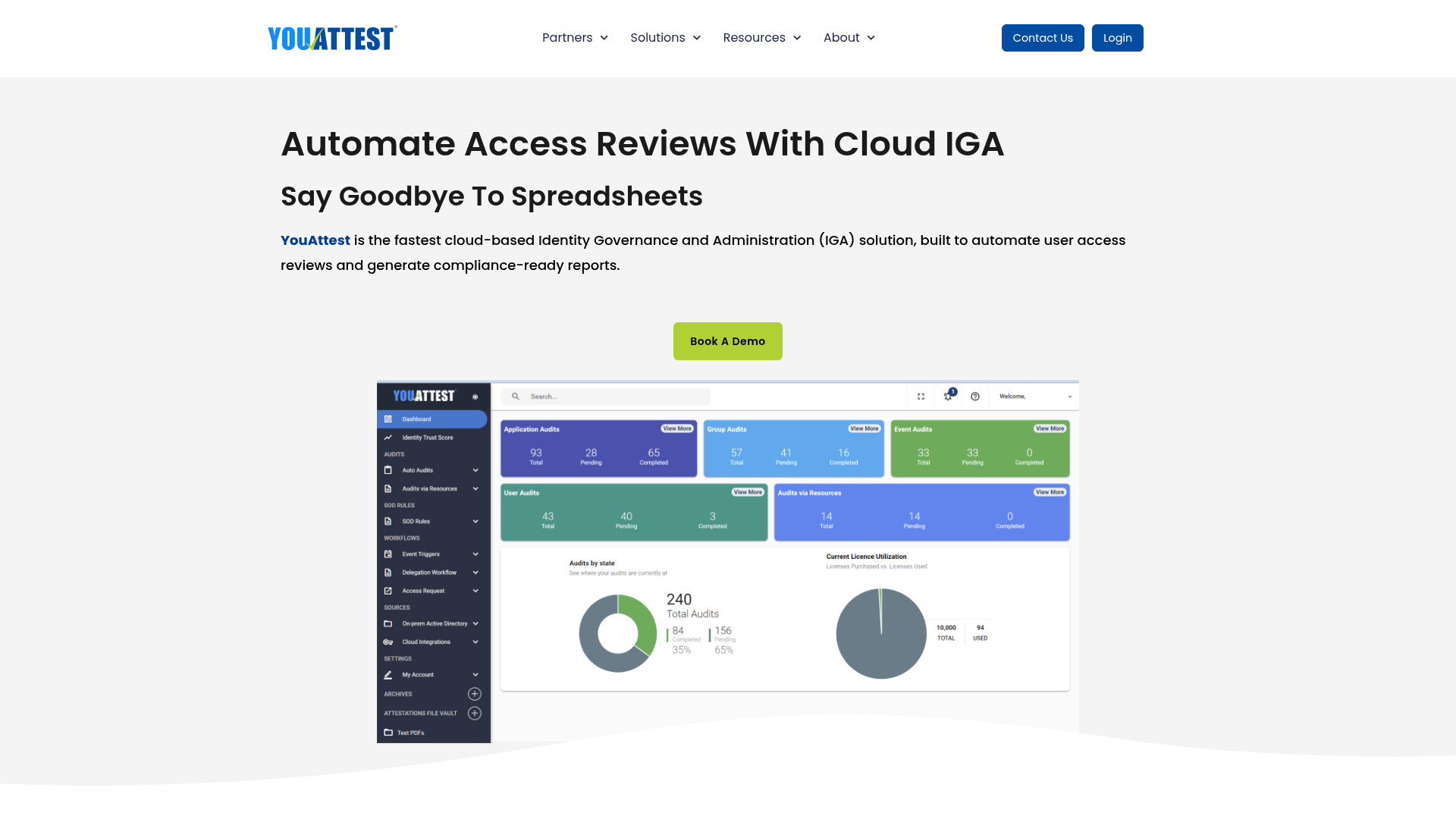
YouAttest is a cloud-based, no-code access certification platform targeting organizations without dedicated IGA implementation resources. The platform focuses on the CMMC/NIST 800-171 market, with controls-specific attestation workflows for CUI access in DoD contractor environments.
source: youattest.com
What stands out:
- No-code certification configurable in minutes for teams without dedicated identity engineering resources.
- CMMC/NIST 800-171 attestation workflows with documentation output for DoD contractor reviews.
- Orphaned and dormant account detection surfacing stale access before campaigns begin.
- Identity store integrations for Azure AD, Okta, Entra ID, JumpCloud, PingOne, AWS, and Salesforce.
What to consider:
- Platform scope is access review and attestation; user lifecycle management, including provisioning and deprovisioning, requires additional tools.
- No documented file server, NAS, or on-premises SharePoint governance for environments with regulated on-premises unstructured data.
Best for: Mid-market DoD contractors who need no-code, CMMC-aligned access certification.
6. Console
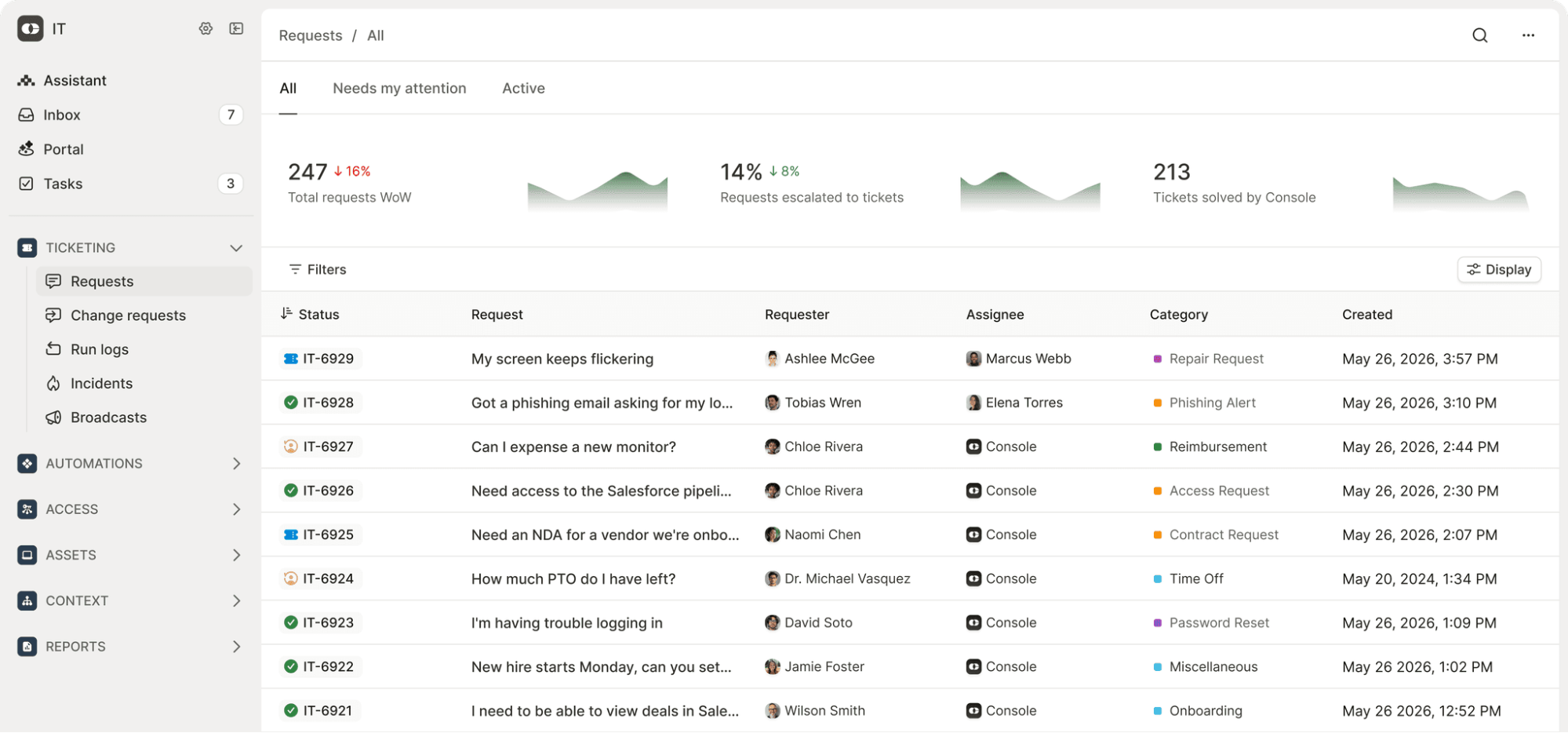
Console is an ITSM platform that adds access review automation to helpdesk and IT operations workflows, folding certification into existing ticketing and messaging tools rather than introducing a separate governance system.
source: console.com
What stands out:
- AI-powered anomaly detection that routes certifications through Slack, Teams, or the native portal.
- Time-bound access policies with auto-revocation integrated into helpdesk ticketing workflows.
- ITSM integration with Jira, Zendesk, and the native ticketing backend for unified IT operations.
What to consider:
- Detailed compliance framework mapping and connector depth documentation is limited at this stage of company maturity.
- Compliance evidence output and on-premises coverage require direct evaluation before comparing them alongside more established platforms.
Best for: IT teams wanting ITSM and helpdesk operations with integrated access reviews.
7. Pathlock
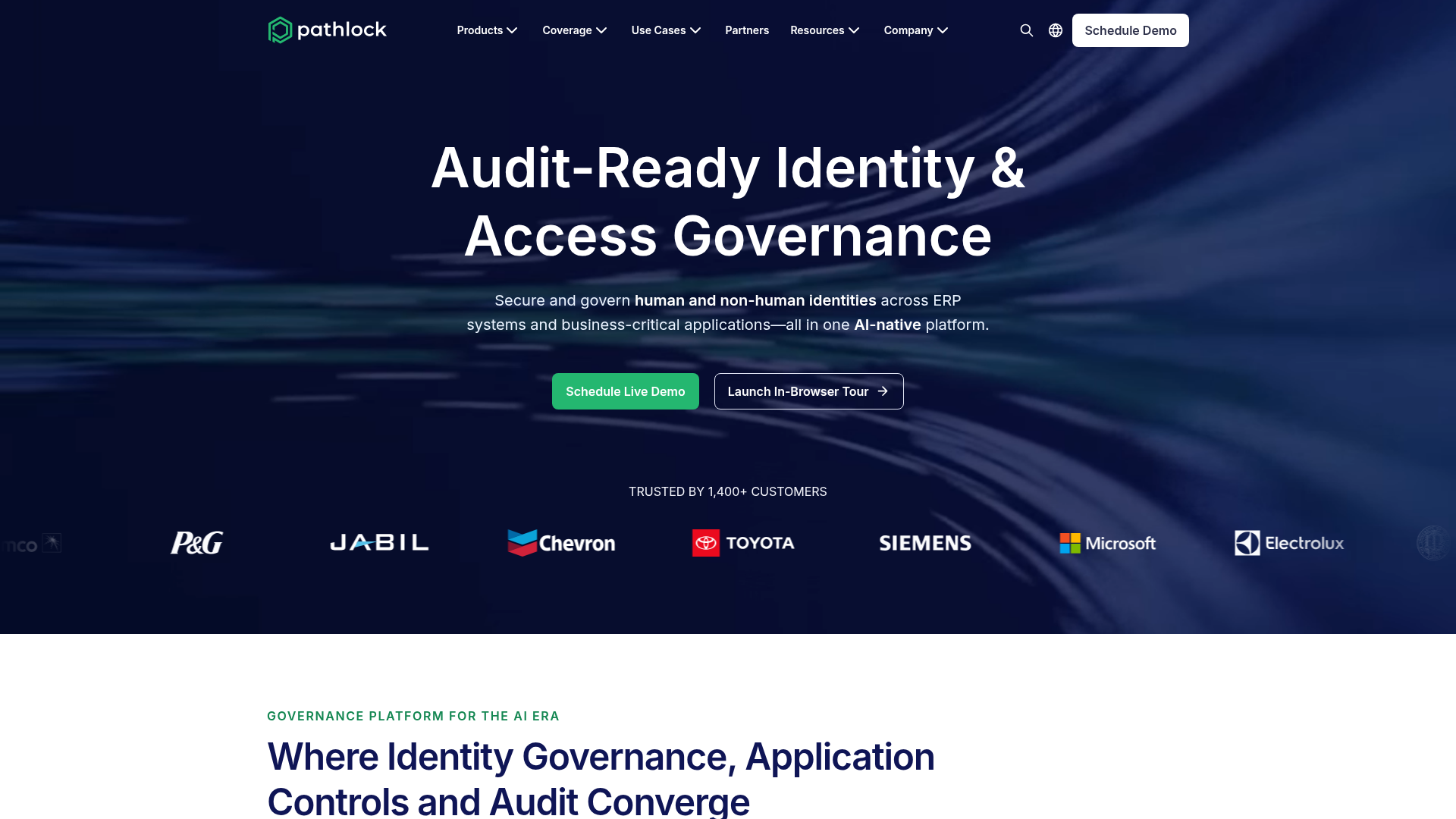
Pathlock Application Access Governance governs human and non-human identities across ERP systems and business-critical applications. Its access review capabilities are built specifically around the segregation-of-duties and transaction-risk requirements that financial auditors apply in ERP environments.
source: pathlock.com
What stands out:
- Over 150 ERP connectors for SAP, SAP S/4HANA, Oracle E-Business Suite, Workday, and Dynamics 365.
- SoD analysis blocks toxic access combinations using customizable rule sets before provisioning or certification.
- Continuous ERP controls monitoring, generating auditor-ready evidence for SOX and PCI DSS.
- Centralized access review automation with timestamped campaigns across all connected ERP applications.
What to consider:
- Platform documentation doesn't describe directory-only environments, SaaS-only stacks without ERP components, or file-layer access governance.
- Best suited to organizations where ERP application risk is the primary governance driver rather than directory-level identity management.
Best for: SAP, Oracle, and Dynamics 365 environments under SOX or PCI DSS.
8. Vanta
Vanta is a compliance-automation platform with an Access Reviews solution designed for ISO 27001, SOC 2, PCI DSS, and HIPAA programs. The platform focuses on consolidating access to evidence for auditors rather than governing the full identity lifecycle.
What stands out:
- Pre-built access review workflows accepted by auditors for ISO 27001, SOC 2, PCI DSS, and HIPAA.
- Live identity data consolidation replacing spreadsheet-based evidence with auto-populated reviewer queues.
- Continuous monitoring flagging terminated employees and department-switched users with reviewer alerts.
What to consider:
- Peer feedback describes the access review module as still maturing; fine-grained entitlement certification and SoD enforcement aren't documented yet.
- Platform scope is compliance evidence consolidation; full provisioning, deprovisioning, and lifecycle management require additional identity tooling.
- CMMC coverage isn't explicitly documented; DoD contractors with CMMC obligations should confirm before evaluating.
Best for: Early-maturity programs building a SOC 2 or ISO 27001 compliance evidence layer.
Choose the right access review tool for your organization
The right tool depends on three variables:
- What compliance obligation is driving the review
- How mature the organization's governance program is
- How far the identity environment extend beyond SaaS into on-premises AD, file servers, and NAS
Compliance-automation platforms are the right starting point for early-maturity SOC 2 and ISO 27001 programs. Standalone certification platforms are a good fit for organizations that have outgrown spreadsheets but aren't ready for full lifecycle management. Full IGA is the right fit when certification needs to connect to provisioning, role modeling, and SoD enforcement.
For mid-market organizations managing hybrid Active Directory and Entra ID, Netwrix Identity Manager directly addresses the compliance and governance maturity variables.
Certification campaigns revoke access in both directories automatically rather than just flagging it. HRIS-driven lifecycle automation updates roles on hire, transfer, and termination. Audit evidence also maps to SOX, HIPAA, PCI DSS, and ISO 27001.
For the third variable, identity environment breadth, Identity Manager covers the AD and Entra ID layers, but teams whose environments also extend to file servers and NAS can add the same certification and audit coverage with Netwrix Access Analyzer.
Request a demo to see how Netwrix handles access certification across your environment.
Competitor information current as of July 2026. Product capabilities, roadmaps, and pricing may change. Verify directly with each vendor before procurement.
Frequently asked questions about the best access review tools
Share on
Learn More
About the author