
7 Best PAM Solutions in 2026
Sep 4, 2026
PAM solutions in 2026 must cover non-human identities, enforce zero standing privilege, and deploy in days, not quarters. Legacy vault-centric tools leave standing accounts in place between rotations, giving attackers persistent targets across service accounts and machine workloads. Evaluating modern PAM requires testing JIT access depth, AD/Entra ID integration, and real-world deployment timelines against your hybrid environment.
Non-human identities (NHIs), including service accounts, API keys, and machine workloads, outnumber human users in most enterprise environments. Attackers know it. Ransomware operators harvest service account credentials just as readily as admin passwords.
Yet most Privileged Access Management (PAM) solutions still treat privileged access as a human-admin problem, leaving non-human accounts with elevated privileges between password rotations. The Netwrix 2026 Data and Identity Security Report found that 76% of organizations cannot immediately revoke standing access when it's no longer needed.
Newer PAM tools take a different approach. Instead of managing standing accounts, they remove them entirely, create temporary credentials scoped to a specific task, and revoke them when the session ends. That shift from password rotation to zero standing privilege is the biggest change in how PAM solutions work today.
Whether you're choosing your first PAM solution or replacing one that no longer fits, the following evaluation criteria, a side-by-side comparison, and profiles of seven solutions are built for mid-market and enterprise teams.
How we evaluated the best PAM solutions
We assessed each solution against criteria aligned with real buyer concerns, including:
- Identity and system coverage: Human admins, service accounts, API identities, and machine workloads across on-prem, cloud, and SaaS. We weighted breadth specifically across non-human identities, since that's where most coverage gaps appear.
- Depth of privileged controls: Vaulting, rotation, JIT elevation, privilege elevation and delegation management (PEDM), and zero standing privilege enforcement. The key question: does the tool remove persistent access, or just log and rotate it?
- Session visibility: Recording, live oversight, command-level policies, and session termination, with particular attention to searchability and live termination.
- Identity and security stack integration: Native connectors to AD, Entra ID, SSO/MFA, SIEM/SOAR, ITSM, and cloud/DevOps tools. Fewer integration gaps mean less deployment friction.
- Deployment and operational fit: SaaS vs. on-prem, agent vs. agentless, and realistic rollout timelines from install to first policy enforcement.
- Compliance and audit readiness: Pre-built reports mapped to specific frameworks (NIST, PCI-DSS, HIPAA, SOX) rather than generic log exports.
Netwrix Privilege Secure replaces standing admin accounts with just-in-time privileged sessions that revoke automatically. Download a free trial
The best PAM solutions at a glance
These vendors approach the same standing-privilege problem from different starting points, some built around a central vault, others around eliminating the vault's job entirely.
The table below shows where each one sits on focus and deployment model before the full breakdowns get into how, and how well, each actually pulls that off.
Vendor | Primary focus | Deployment | Best for |
|---|---|---|---|
|
Mid-market, identity-centric |
On-prem, hybrid, cloud DB |
Mid-market Microsoft hybrid environments |
|
|
CyberArk |
Enterprise PAM |
SaaS, on-prem, hybrid |
Large enterprises with dedicated security teams |
|
BeyondTrust |
Converged PAM |
SaaS (Azure), on-prem, hybrid |
Organizations consolidating remote access and endpoint privilege |
|
Delinea |
Mid-market usability |
SaaS, on-prem, hybrid |
Teams prioritizing usability and rapid deployment |
|
ManageEngine PAM360 |
IT ops-integrated |
On-prem, cloud |
ManageEngine ecosystem customers |
|
WALLIX Bastion |
European-certified PASM |
On-prem, hybrid, SaaS |
European regulated organizations |
|
Microsoft Entra PIM |
Native Microsoft controls |
Cloud (Entra ID) |
Microsoft-only environments or a complement to dedicated PAM |
The profiles below get into how each one handles JIT elevation, non-human identity coverage, and how much of a deployment project you're signing up for.
1. Netwrix Privilege Secure
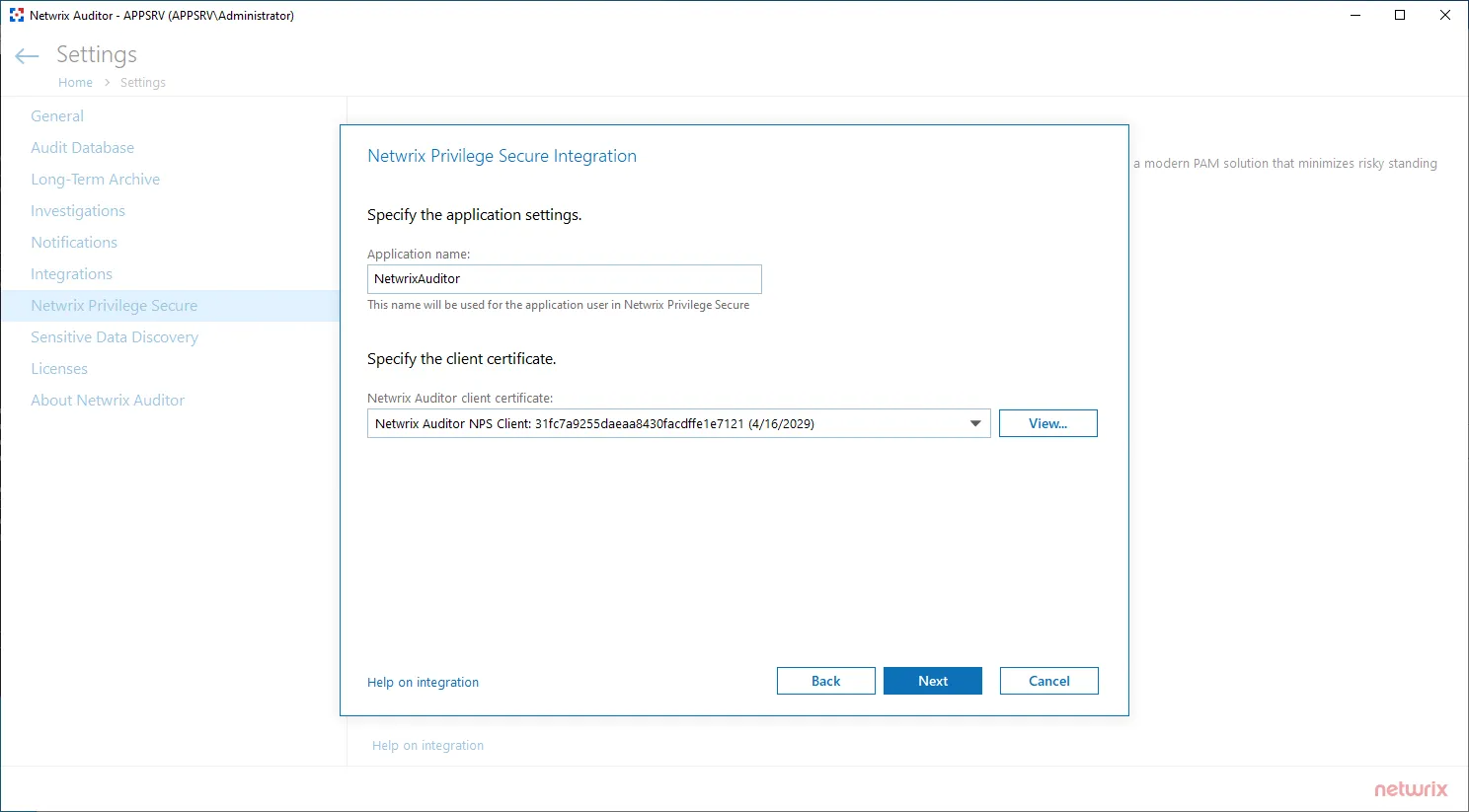
Netwrix Privilege Secure is a PAM platform that eliminates persistent privileged accounts by creating temporary, task-scoped credentials instead of vaulting standing ones. Activity Token login accounts generate ephemeral credentials on demand, scoped to the specific task, and revoke them automatically when the session ends, integrating natively with AD, Entra ID, PIM, LAPS, and Intune through agentless discovery.
Source: docs.netwrix.com
Key features:
- Zero standing privilege through ephemeral account generation and automatic rights revocation.
- JIT access workflows with granular approval policies and time-bound elevation.
- Session logging with keystroke search through Netwrix Auditor integration.
- Bring-your-own-vault flexibility and native Microsoft integration via PowerShell remoting.
- Vendor-reported deployment in days with agentless discovery.
- Competitive pricing relative to vault-centric enterprise vendors.
- Automatic enforcement of authorized local group membership and elimination of standing domain admin exposure.
- Secure, VPN-less privileged access for employees and third parties with isolated, proxy-based session control.
What to consider:
- Coverage is deepest in Microsoft-centric hybrid estates, so teams that are heavily AWS-native or GCP-first should validate connector depth during evaluation.
- Bring-your-own-vault flexibility means that teams that keep an existing vault must confirm the integration depth with their specific vault vendor during a proof of concept.
In practice, the difference shows up quickly. Eastern Carver County Schools, a district that protects data for 9,300 students, removed standing privileges entirely after penetration testers repeatedly exploited over-provisioned admin accounts.
They implemented Netwrix Privilege Secure in days, not months, replacing standing privileges with just-in-time access that's automatically revoked after each session.
Best for: Mid-market regulated organizations (100 to 5,000 employees) with Microsoft-centric hybrid infrastructure wanting identity-centric PAM with low switching friction from existing vaults.
2. CyberArk
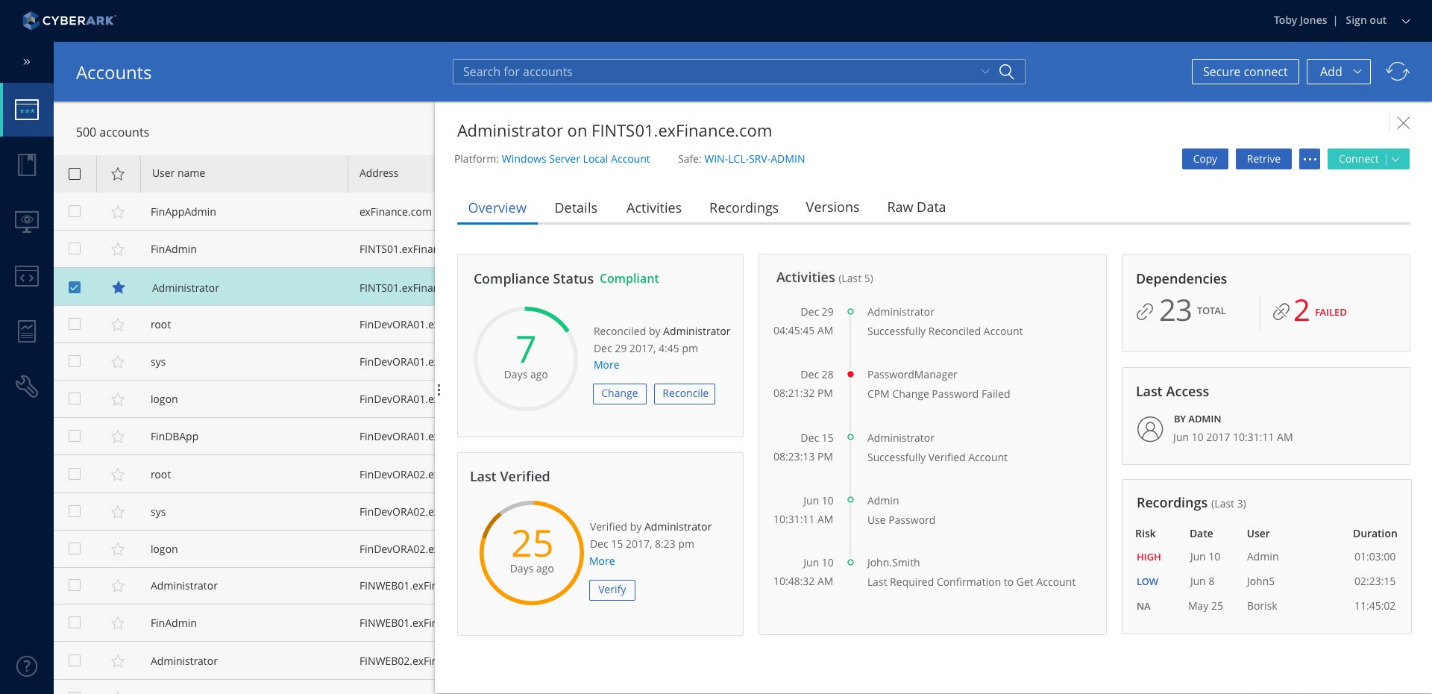
CyberArk is a vault-centric enterprise PAM platform covering credential discovery, rotation, session isolation, and endpoint privilege management across on-prem and multi-cloud environments. Palo Alto Networks acquired CyberArk in February 2026, and CyberArk remains the default choice for enterprises seeking the safety of an established brand, even at the cost of a longer rollout.
Source: cybersecurity-excellence-awards.com
Key features:
- Enterprise Digital Vault with AES-256 encryption, discovery, and automated rotation.
- Session monitoring with isolation, recording, and playback.
- Zero standing privilege with JIT across on-prem and multi-cloud (AWS, Azure, GCP).
- Endpoint Privilege Manager removing local admin rights on Windows, Mac, and Windows Server.
What to consider:
- Full enterprise implementations typically span 12 to 18 months before delivering value.
- Complex architecture requires dedicated staff to configure, maintain, and scale.
- Now part of the broader Palo Alto Networks portfolio, which adds platform lock-in considerations for buyers evaluating a standalone PAM purchase.
Best for: Large enterprises with dedicated security teams and a professional services budget willing to accept longer implementations and higher TCO.
3. BeyondTrust
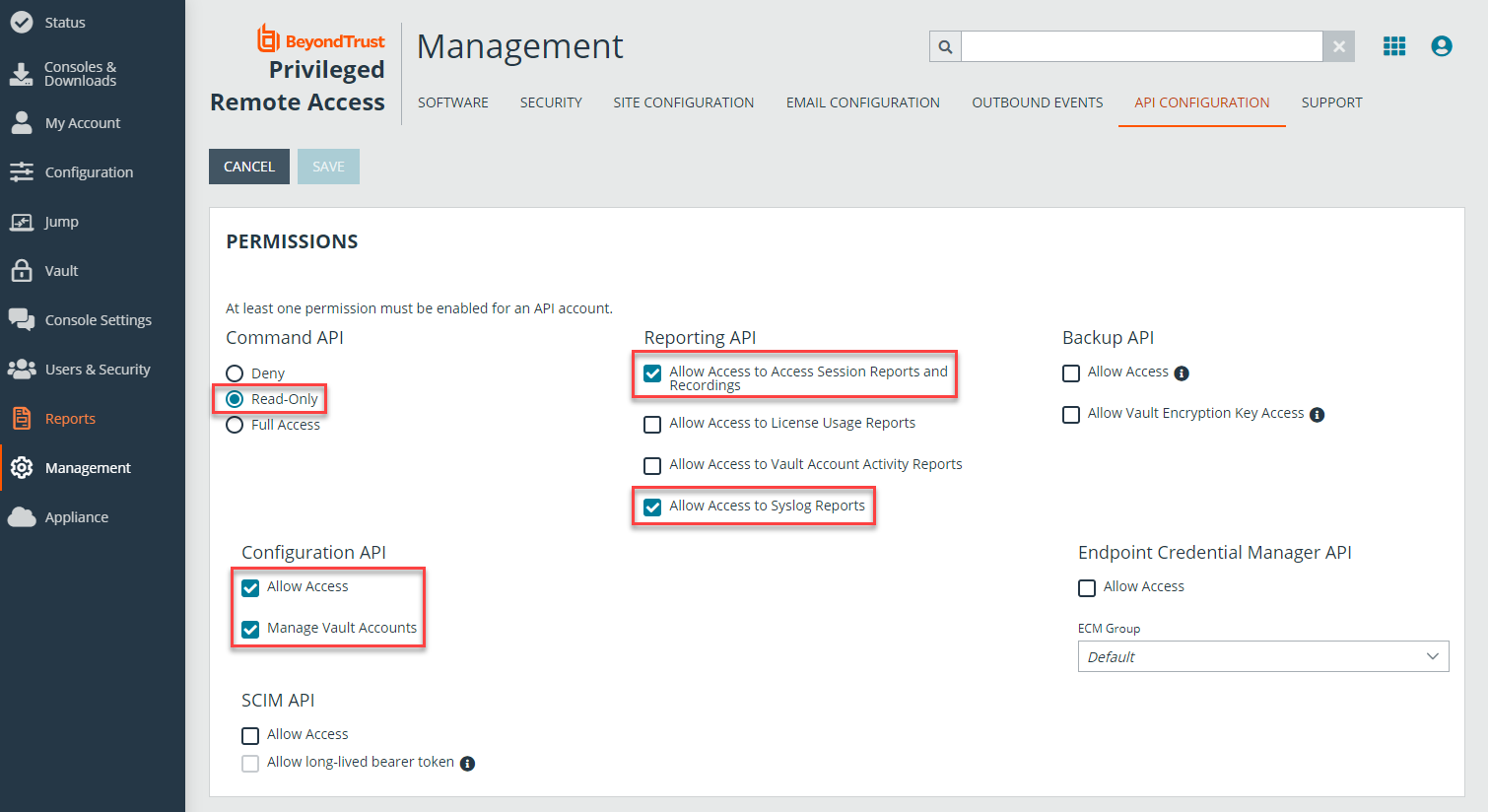
BeyondTrust is a converged PAM platform for organizations seeking to consolidate remote access, endpoint privilege management (EPM), and credential vaulting under a single vendor. The portfolio spans Password Safe, Privilege Management, and Privileged Remote Access, unified through an AI-driven Pathfinder platform.
Source: beyondtrust.com
Key features:
- Password Safe with automated discovery, credential injection, and secrets management.
- EPM removes local admin rights across Windows, Mac, and Linux.
- Privileged Remote Access with VPN-less access and session recording.
- True Privilege Graph mapping hidden privilege relationships.
What to consider:
- EPM setup requires professional services and technical expertise.
Best for: Organizations consolidating remote access, endpoint privilege, and credential management under one vendor, particularly those prioritizing session management depth.
4. Delinea
Delinea is a mid-market PAM platform built around usability and speed for teams that want privileged access controls without enterprise-grade complexity. The underlying architecture remains largely vault-centric, managing standing privileged accounts rather than removing them, though Delinea's March 2026 acquisition of StrongDM is starting to change that.
Source: docs.delinea.com
Key features:
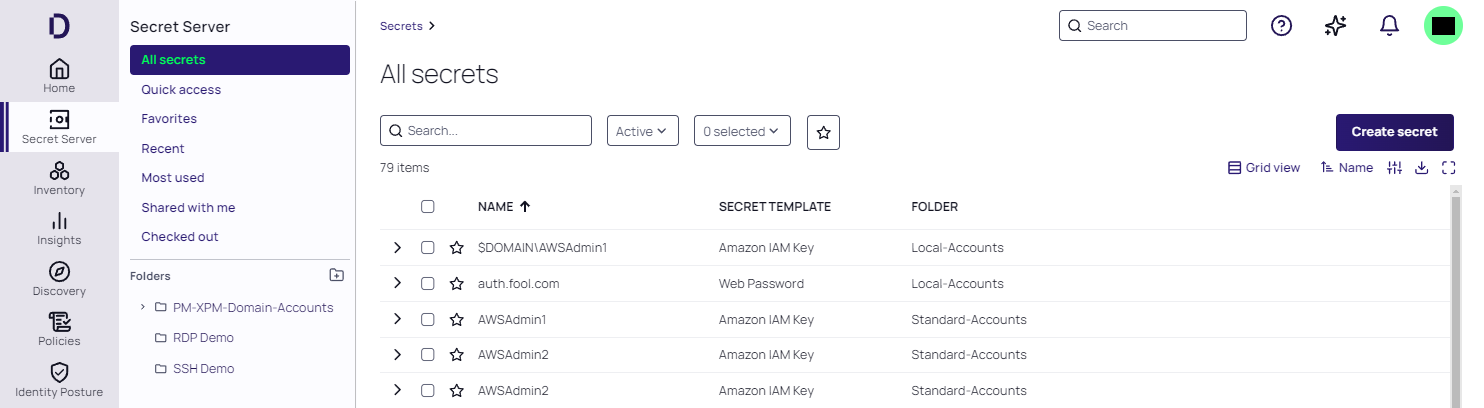
- Secret Server manages privileged accounts across human, machine, and service identities with AES-256 encryption.
- Privilege Manager removes local admin rights on Windows and macOS with MFA enforcement.
- Server PAM with JIT and just-enough privilege elevation for Windows, Linux, and Unix.
- Multi-directory brokering across AD, OpenLDAP, Ping Identity, and Entra ID.
What to consider:
- Core vault-centric architecture still manages standing privileges in most modules rather than removing them by default.
- StrongDM's Cedar-based JIT runtime authorization currently applies to specific modules rather than the full product line, so buyers evaluating zero standing privilege should confirm exactly which modules carry it today.
- Integration friction, particularly during the Secret Server to Delinea Platform migration.
- Complex technical problems can exceed support team capabilities.
- Initial AD connector setup requires specialized expertise.
Best for: Teams prioritizing usability and quick adoption, particularly mid-market organizations that prioritize managed credential rotation over zero standing privilege.
5. ManageEngine PAM360
ManageEngine PAM360 is a PAM platform built for IT teams already running the ManageEngine ecosystem. It delivers credential vaulting, session monitoring, and compliance reporting with native integration across ManageEngine's broader IT ops toolset.
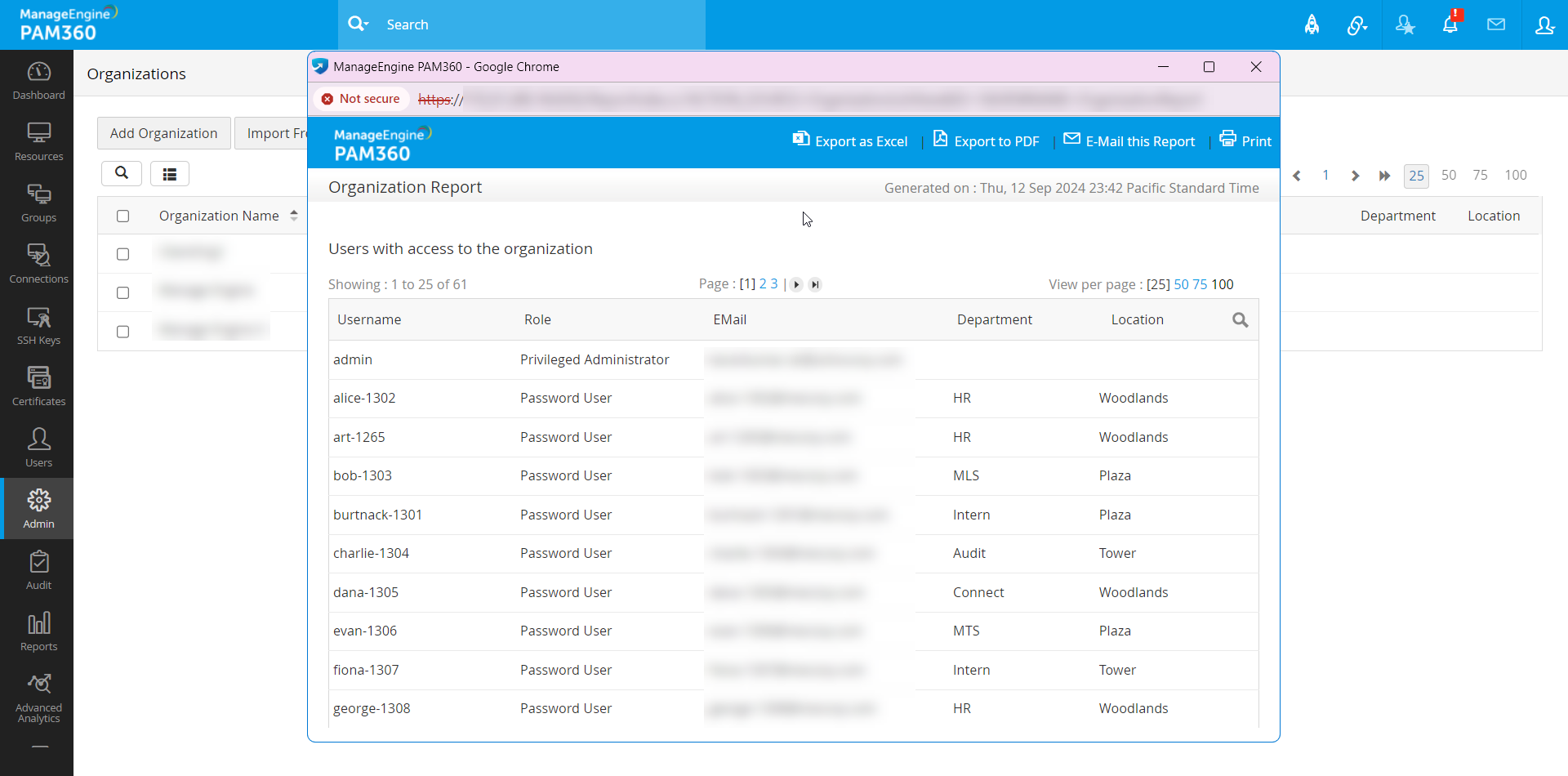
Source: manageengine.com
Key features:
- Credential vaulting with automated password rotation and discovery.
- Session recording and real-time monitoring for privileged access.
- JIT privilege elevation with approval workflows.
- Native ManageEngine ecosystem integration plus 800+ app connectors via Zoho Flow.
- Compliance reporting for PCI-DSS, HIPAA, and SOX.
What to consider:
- Limited native MFA support, which may require external integration for certain use cases.
- Documented Linux integration issues and Windows password sync problems.
- Built for the ManageEngine ecosystem; less flexible outside it.
Best for: IT teams standardized on ManageEngine seeking cost-effective PAM within their existing ecosystem.
6. WALLIX Bastion
WALLIX Bastion is a European-focused PAM platform with dual certifications from the Bundesamt für Sicherheit in der Informationstechnik (BSI) and the Agence nationale de la sécurité des systèmes d'information (ANSSI). It's built around regional compliance and data sovereignty requirements, particularly GDPR, the Network and Information Security Directive (NIS2), and the Digital Operational Resilience Act (DORA), with reach outside EMEA more limited.
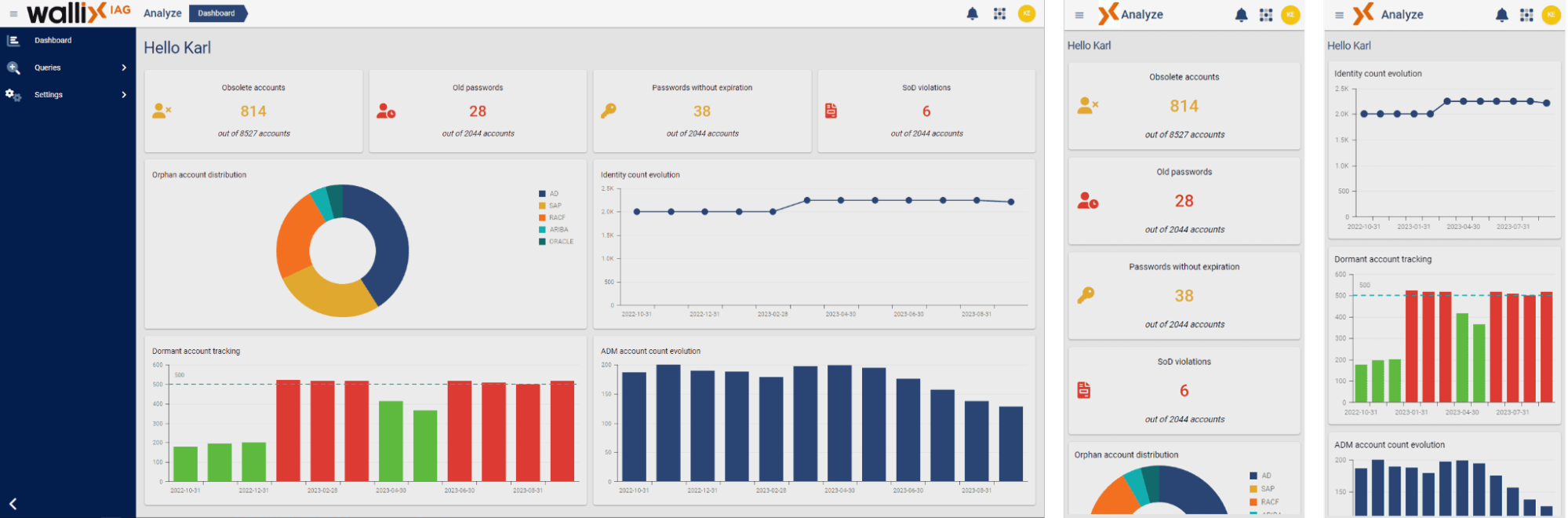
Source: wallix.com
Key features:
- Credential vaulting and rotation with AES-256, SHA2, and ECC encryption.
- Session management with real-time monitoring and OCR-searchable audit trails.
- Agentless web-based session management with no endpoint installation.
- Native protocol support for RDP, SSH, HTTP, HTTPS, VNC, Telnet, and SFTP.
What to consider:
- Limited behavior analytics for on-premises deployments.
- Smaller partner and integration ecosystem than global vendors.
Best for: European organizations needing regional compliance (GDPR, NIS2, DORA) and data sovereignty.
7. Microsoft Entra PIM
Microsoft Entra PIM is a native Microsoft PAM capability providing JIT access, approval workflows, and access reviews for Azure resource roles, Microsoft 365 admin roles, and Entra ID permissions. It's included with Entra ID P2, Entra ID Governance, or Microsoft 365 E5 licensing at no extra cost, but coverage stops at Microsoft environments and extends to no extensions to on-prem AD, Linux servers, or databases.
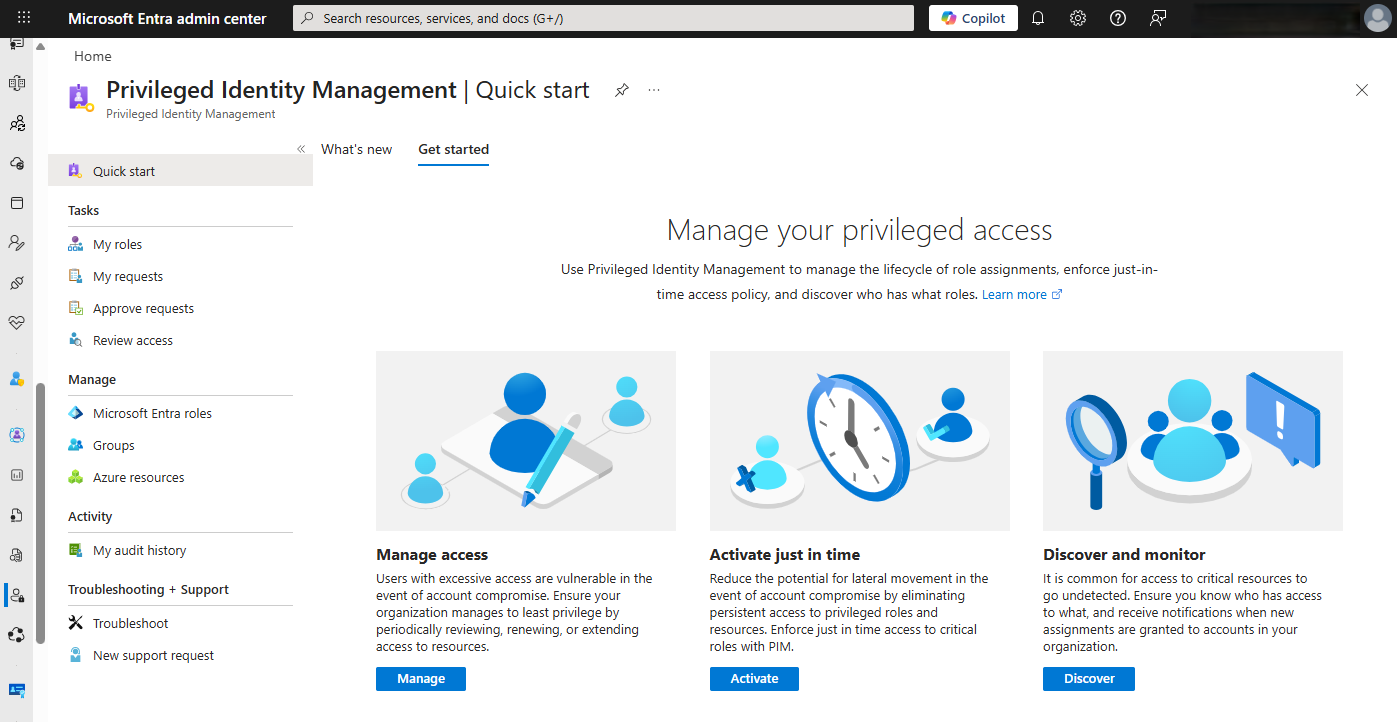
Source: learn.microsoft.com
Key features:
- Time-bound eligible role assignments requiring explicit activation with mandatory MFA.
- Configurable approval workflows with business justification and full audit logging.
- Access reviews with periodic scheduling and automated remediation.
- Coverage of 120+ Entra ID built-in roles, Azure resource roles, and Microsoft 365 roles.
What to consider:
- No coverage for non-Microsoft infrastructure (AWS, GCP, Linux servers, databases, network devices).
- No session recording or keystroke logging capabilities.
- No credential vaulting or automated rotation for service accounts.
- Entra Permissions Management retirement limits cloud entitlement features.
Best for: Microsoft-only environments, or as a complement to dedicated PAM for broader hybrid coverage. Entra PIM handles Azure and Microsoft 365 roles, while a dedicated tool covers on-prem, databases, and non-Microsoft systems.
How to choose the right PAM solution in 2026
The PAM market is shifting from vault-centric credential rotation toward architectures that remove standing accounts entirely.
That shift changes the evaluation: the priority question becomes which tool removes the persistent access attackers target, rather than which tool manages passwords best.
Work through this before committing to a vendor:
- Audit standing privilege before comparing features: An assessment of your environment's privileged account attack surface tells you which accounts, human and non-human, currently have always-on elevated access. That inventory, not a vendor's feature checklist, should drive what you evaluate for.
- Test whether the tool removes standing access or just rotates it: Run a proof of concept and confirm no persistent admin account remains for an attacker to discover between password changes. This is the actual line between legacy vault-centric PAM and the zero-standing-privilege architectures gaining ground.
- Confirm the vault migration path: If you're already running a credential vault, check whether the new platform requires a rip-and-replace or supports bring-your-own-vault, since that decision affects both switching costs and the rollout timeline.
- Validate session visibility against your compliance framework: Confirm that the platform's audit trail links blocked or elevated sessions to the identities behind them and maps them to the specific framework (NIST, PCI-DSS, HIPAA, SOX) your auditors will ask about.
- Weigh a converged platform against your team's capacity: A standalone tool that operates in isolation from identity governance can add more overhead than it removes for teams already stretched thin. A privileged access management best practices framework helps separate must-have controls from nice-to-have ones.
For teams that need privileged access controls that remove standing accounts rather than vault them, Netwrix Privilege Secure deploys in days, provides activity-centric session monitoring, and supports hybrid environments across Microsoft and non-Microsoft systems.
It's part of the broader Netwrix 1Secure™ Platform, which combines PAM, data security posture management (DSPM), identity threat detection and response (ITDR), and compliance reporting under a single vendor.
Netwrix Privilege Secure closes the gaps left by standing-account PAM and native Microsoft tools, without requiring a dedicated PAM team to operate.
Request a demo to see how eliminating standing privileges compares to vaulting them in your environment.
Disclaimer: The information in this article is current as of August 2026; verify details with each vendor for the latest updates.
Frequently asked questions about PAM solutions
Share on
Learn More
About the author

Netwrix Team
Learn more on this subject
Govern the AI agent as the identity it is
Convergence of ITDR, PAM and IGA. Which of the three is standing there when the attack lands?
Endpoint management system breach: why privileged access management (PAM) is now critical
Using Windows Defender Credential Guard to Protect Privileged Credentials
What is Microsoft LAPS: How Can You Enhance Its Security?