
Varonis vs Veza: Data security vs access graph
Jul 22, 2026
Varonis and Veza answer different access questions. Varonis is data-centric security: it classifies sensitive data, watches who touches it, and trims excess permissions at the file layer. Veza is an access graph that maps what every identity can do across connected systems. Varonis is moving to SaaS-only by December 31, 2026, and Veza is now part of ServiceNow. The fit depends on whether the primary gap is data-layer exposure or authorization sprawl.
According to The Netwrix 2026 Data and Identity Security Report, 75% of incident exposures begin with compromised identity or misconfigured permissions. Closing that gap means answering two questions at once: where sensitive data is stored and who can access it.
Varonis works the first way, from the data outward at the file layer, while Veza works the second way, from the identity inward, mapping what every account can do across systems.
The two platforms approach the same problem from opposite directions: one classifies content and tracks behavior at the file layer, the other computes effective permissions and scores identity risk across systems. Neither covers what the other does, which is why teams evaluating one often pull the other into the evaluation.
Each vendor is also mid-transition: Varonis to a SaaS-only model, and Veza into ServiceNow.
Quick comparison: Varonis vs Veza vs Netwrix
The table below maps each platform across the dimensions that matter most for this evaluation: data security depth, access intelligence, deployment continuity, and compliance evidence.
Dimension | Varonis | Veza from ServiceNow | Netwrix |
|---|---|---|---|
|
Current status |
Moving to SaaS-only; on-premises support ends December 31, 2026 |
Acquired by ServiceNow (March 2026), now integrating into Autonomous Security & Risk |
On-premises, SaaS, and hybrid, with a sustained commitment to all three |
|
Primary discipline |
Data-centric security: discover, classify, monitor, and remediate at the file layer |
Access graph: map what every identity can do across connected systems |
Data and identity security via Access Analyzer, Auditor, and Identity Manager |
|
Data security depth |
Very strong: classification, UEBA, automated permission cleanup |
Moderate: maps access to data systems, no content classification or behavioral detection |
Strong for Microsoft: file and SharePoint access visibility, classification and auditing |
|
Access and identity depth |
Limited: surfaces over-privileged identities in the data context only |
Strong: effective-permission mapping, access reviews, posture scoring, non-human identity governance |
Strong: access certifications and joiner-mover-leaver lifecycle via Netwrix Identity Manager |
|
Deployment and continuity |
SaaS-only after 2026, with a hard migration deadline |
SaaS, with a ServiceNow platform dependency forming |
On-premises, SaaS, and hybrid, with no forced migration |
|
Threat detection |
UEBA and behavioral detection at the data layer |
Limited: posture and visibility-focused, no behavioral analytics |
Real-time alerting and response for AD and Entra privilege changes |
|
Compliance evidence |
Strong at the data layer: GDPR, HIPAA, PCI DSS, SOX |
Strong at the identity layer: access certifications and posture findings |
Strong across both: AD and Entra auditing, plus certification evidence for SOX, HIPAA, PCI DSS, and CMMC |
|
Best for |
Teams chasing data exposure and insider risk at the file layer |
Teams needing cross-system access intelligence, especially ServiceNow customers |
Microsoft-centric teams needing data and identity security from one vendor |
Why buyers compare Varonis and Veza
These two reach the same evaluation through different doors, and a pair of platform changes is accelerating it.
One question, approached from two sides
The shared question is simple: who can reach sensitive data, and should they? Varonis answers it using data, showing what's sensitive and who can access it. Veza answers it from the identity, computing what any account can do across every connected system. Both get filed under access risk, so they surface together even though they work different layers.
Two transitions land at once
Varonis is retiring its self-hosted platform, and ServiceNow acquired Veza in March 2026. A team scoping one vendor during its transition often pulls the other in while the stack is already under review.
Standalone visibility versus platform consolidation
Buyers weighing Veza now have to weigh ServiceNow alongside it, and buyers weighing Varonis have to weigh a forced move to SaaS. Continuity, as much as capability, drives the decision.
Netwrix Access Analyzer resolves nested AD groups and SharePoint inheritance to surface overexposed sensitive data. Request a free trial
Varonis
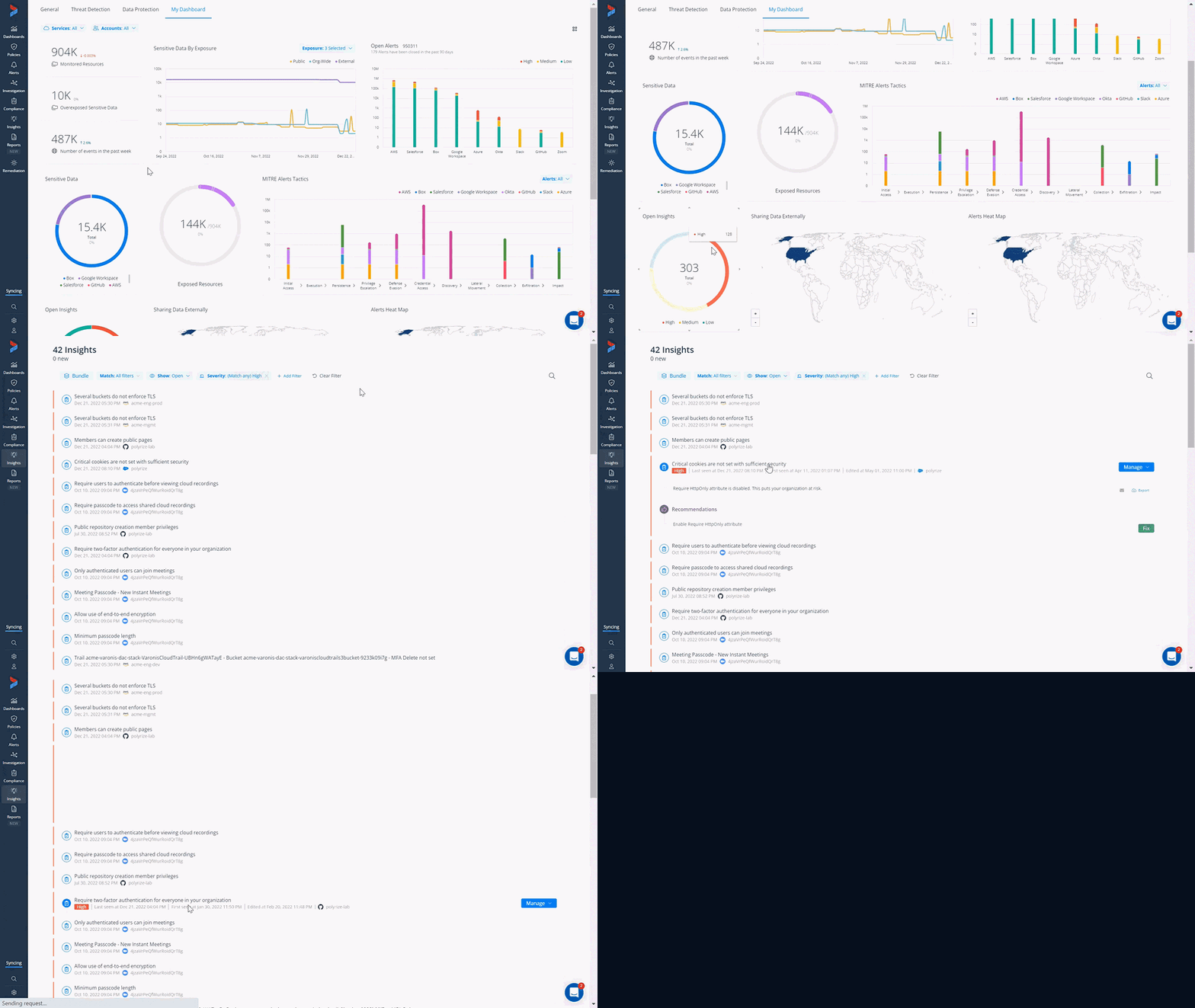
Varonis is a data security platform built around the data itself. It runs sensitive data discovery and classification across file servers, network-attached storage (NAS), SharePoint, OneDrive, and cloud stores.
It also baselines how people interact with it through user and entity behavior analytics (UEBA) and automatically walks excess access back toward least privilege.
Its engine resolves nested groups and inheritance to answer who can actually open a given file. With most of its revenue already on SaaS, Varonis has set December 31, 2026, as the close of its self-hosted era.
source: varonis.com
What stands out
- Discovery and classification of PII, PHI, and PCI across on-premises and cloud file repositories.
- Behavioral baselining through UEBA that flags abnormal file access, mass downloads, and permission changes.
- Automated permission cleanup that clears excess access, stale groups, and open shares without folder-by-folder work.
- Identity-aware detection that ties Entra ID and Active Directory signals to how data is actually being used.
- Framework dashboards for GDPR, HIPAA, PCI DSS, and SOX built on data-access evidence.
What to consider
- Self-hosted support ends December 31, 2026, so data-residency-bound or air-gapped estates need a migration or replacement plan, even with the regional and collector options Varonis offers.
- It reviews access to data rather than identities, so lifecycle, app-wide certifications, and segregation of duties (SoD) need a separate platform.
- Value tracks the number and messiness of data sources, so wide estates should plan for scoping and tuning.
Veza from ServiceNow
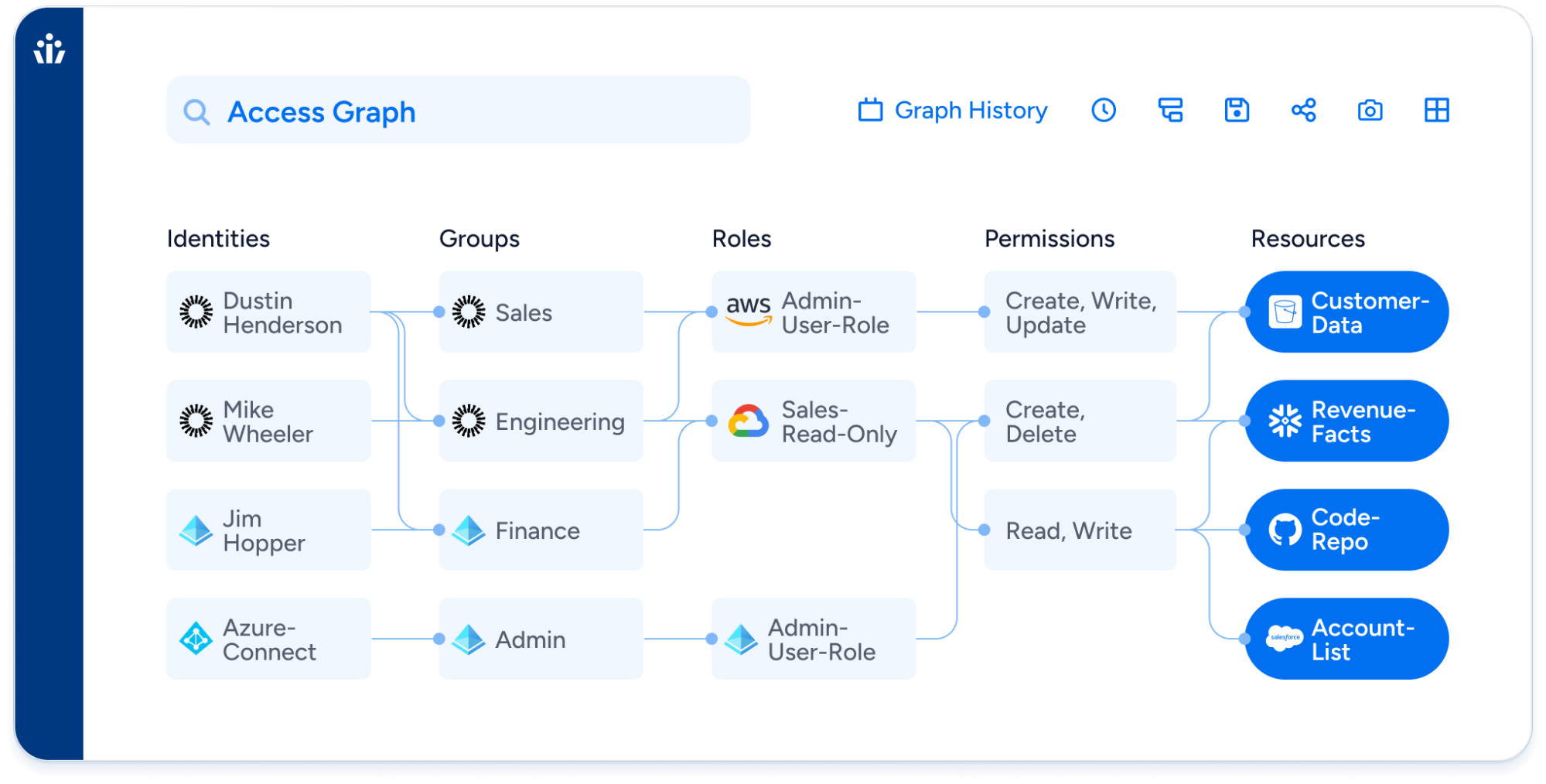
Veza is an access-graph platform that maps what every identity, human or non-human, can actually do across connected systems, translating tangled entitlements into plain create, read, update, and delete terms.
It computes effective permissions, scores identity risk, and governs access at scale. ServiceNow completed its acquisition of Veza in March 2026, folding it into Autonomous Security & Risk.
The standalone product will continue for now under the Veza from ServiceNow name, with deeper platform integration as the direction.
Source: veza.com
What stands out
- Access graph ingesting permissions across hundreds of integrations, spanning cloud platforms, SaaS, databases, and data systems.
- Identity security posture management (ISPM) with continuous risk scoring, dormant account detection, toxic combination and SoD flagging.
- Non-human identity (NHI) governance that inventories service accounts, keys, and secrets and assigns ownership.
- Native access revocation and remediation through Veza Actions and auto-revocation, with ServiceNow, Jira, and Slack as additional channels.
- Access reviews and certification campaigns integrated into ServiceNow workflows, with AI-assisted review recommendations.
What to consider
- The platform now runs within ServiceNow's roadmap, so organizations not committed to ServiceNow should weigh consolidation and lock-in against the value of a single control plane.
- Pricing and packaging are in active transition after the acquisition, so confirm standalone availability and which capabilities are bundled versus add-ons.
- It maps access rather than data: there's no content classification, file-layer UEBA, or insider threat detection at the data level.
Head-to-head: Varonis vs Veza
Both work the access problem, but from opposite starting points, so each axis tends to belong cleanly to one of them.
Data-layer security and least-privilege remediation
This is where Varonis goes deep. It classifies content, baselines behavior against it, and cleans up excess access at the file and collaboration layer, work that requires reading the data itself. Veza maps access to data systems like Snowflake, AWS, and SharePoint accurately, but it reads entitlements rather than content, so it can't tell you whether a file is sensitive or that its access just became anomalous. On "what data is exposed and is this behavior normal," Varonis answers, and Veza doesn't reach.
Access intelligence across systems
This is Veza's home ground. Its access graph computes what any identity, including service accounts and AI agents, can effectively do across hundreds of connected systems, then flags toxic combinations and stale entitlements. Varonis can surface over-privileged identities, but only within data access, stopping short of a general authorization map. On "what can every identity do across the whole estate, and where is that dangerous," Veza handles this question natively, and Varonis is adjacent to it.
Deployment continuity
Here, the contrast comes down to risk more than features. Varonis forces a decision with its self-hosted end-of-life, stranding estates that can't migrate cleanly to SaaS by the deadline. Veza removes a different kind of certainty, shifting from an independent platform to a ServiceNow-bundled capability, with the roadmap and pricing still settling. Buyers who need hybrid flexibility without tying their governance to one vendor's platform direction get neither from these two.
Compliance evidence
Each produces half the package that auditors increasingly want together. Varonis generates data-layer evidence: who can reach regulated files and how that maps to GDPR, HIPAA, PCI DSS, and SOX. Veza generates identity-layer evidence: access certifications, permission histories, and posture findings. SOX IT general controls, HIPAA, and CMMC programs now test access certification and data-access evidence side by side, and running one tool leaves the other half to assemble by hand.
How to choose between Varonis and Veza
Both platforms work the access risk question from opposite ends, so the choice typically follows the primary gap.
Choose Varonis if:
- The pressing risk is the exposure of sensitive data across files, collaboration platforms, and unstructured stores.
- You want content classification, behavioral detection, and automatic permission cleanup at the data layer.
- Your infrastructure already runs on, or can move to, Varonis SaaS by December 31, 2026.
Choose Veza if:
- The pressing risk is authorization sprawl: too many identities, too many permissions, across too many systems.
- You need an effective-permission map that covers human, service, and AI-agent identities.
- You're already on ServiceNow or comfortable consolidating governance there.
The tie usually breaks on two questions: is your core gap data or authorization, and can you accept each vendor's transition, a forced SaaS move or a ServiceNow dependency.
When to choose Netwrix over Varonis or Veza
Netwrix fits the buyer who needs both halves of infrastructure that isn't mid-transition.
When the data layer and the access view belong together
Netwrix Auditor captures the identity-layer evidence Varonis doesn't produce: before-and-after change and access evidence for AD and Entra ID, agentless, in a searchable audit trail that investigators can query directly.
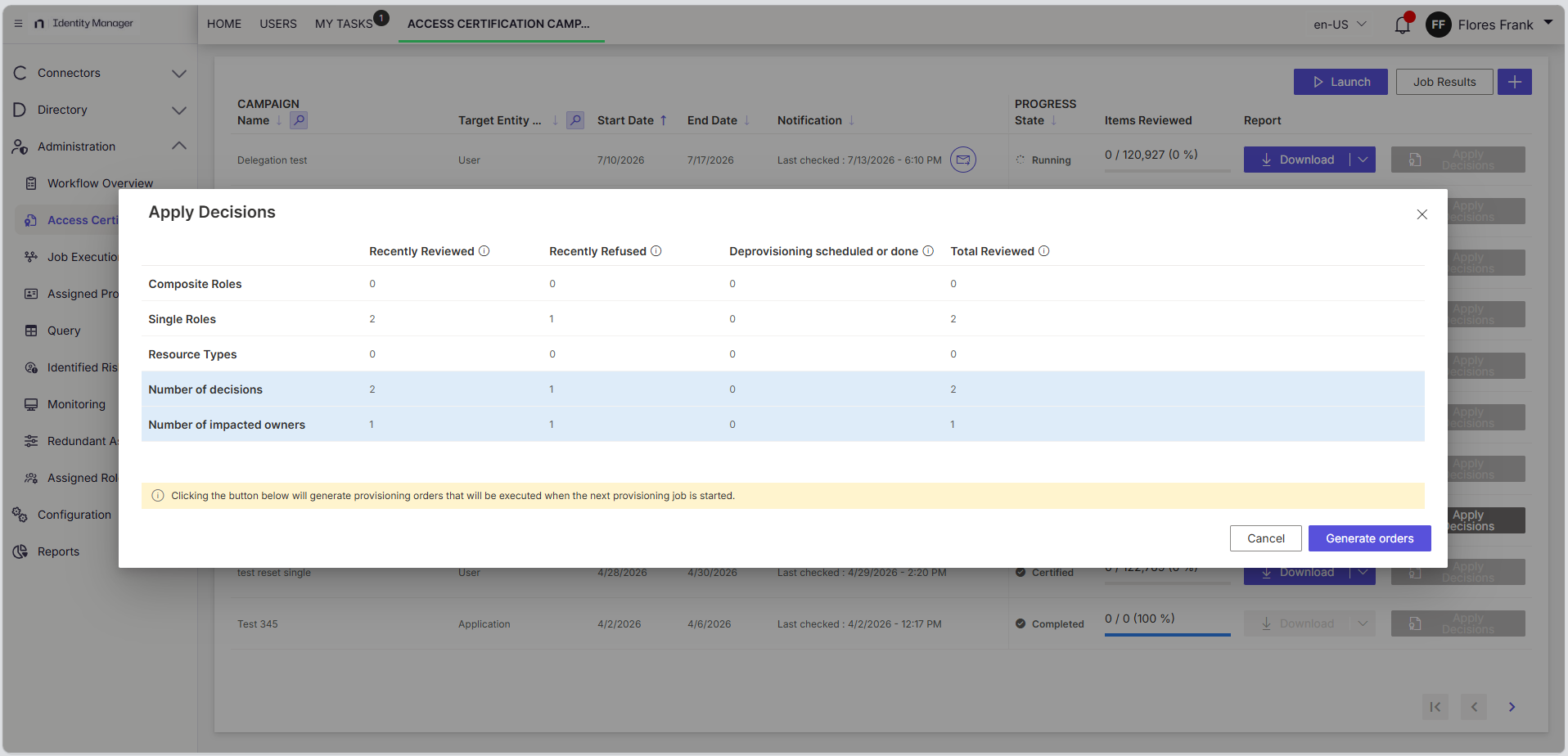
Netwrix Access Analyzer extends that into the data layer, resolving nested AD groups and SharePoint inheritance to show who can reach a file, then remediating overexposed data access across file servers, SharePoint, and Microsoft 365.
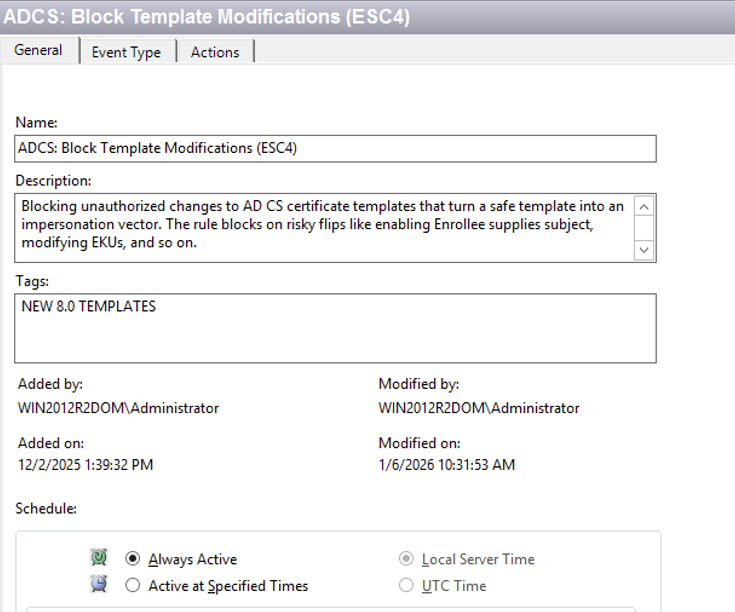
Netwrix Threat Prevention blocks AD attacks such as DCSync and LSASS injection in real time, rather than just detecting them after the fact. Netwrix Identity Manager runs identity governance and administration (IGA) certifications and the joiner-mover-leaver lifecycle.
The Netwrix 2026 Data and Identity Security Report found 74% of organizations can't get a single view of where sensitive data is and which identities can reach it, which is the gap this stack closes.
When platform continuity matters as much as features
Both comparison vendors are changing shape. Netwrix supports on-premises, SaaS, and hybrid deployments with no forced migration, so a team can govern identity and access risk across on-premises and cloud environments without betting on one vendor's roadmap or a single platform's lock-in.
When auditors want identity and data evidence together
HIPAA, SOX, IT general controls, and CMMC increasingly require access certifications and evidence of data access to be included in the same audit. Netwrix produces both from one platform, with reporting pre-mapped to those frameworks, plus PCI DSS and ISO 27001.
First National Bank Minnesota used Netwrix Auditor to rebuild its Active Directory in three weeks, instead of the six-month estimate, discovering and securing sensitive customer data along the way.
Teams that need the data-layer depth and the identity-layer breadth together, without picking a side in either vendor's transition, get both from a single Netwrix deployment instead of stitching two platforms together.
Request a demo to see how Netwrix Access Analyzer, Auditor, and Identity Manager cover data and identity governance across hybrid Active Directory and Entra ID.
Disclaimer: The information in this article was verified as of July 2026. Please verify current capabilities directly with each provider.
Frequently asked questions about Varonis vs Veza: data security vs access graph
Share on
Learn More
About the author