
Who owns your AI agents? Probably no one
Oct 15, 2026
AI agents are multiplying faster than most organizations can track, let alone govern. IDC predicts there will be 1.3 billion agents by 2028.
Every team that adopts one is also, often without meaning to, creating a new identity. And it’s one that can access systems, move data, and act on someone's behalf. The rush right now is to get ahead of that before it spirals, and the first step is to answer a basic question: whose job is this?
Is it Legal, since someone needs to write the rules for how an agent processes data? Is it the identity team, who watches the identity count climb as employees spin up agents without filing access requests? Or is it the manager whose team built the thing, on the theory that whoever created it should be accountable for it?
If you can't cleanly say who, then the honest answer is probably no one. That ambiguity is how access goes unreviewed, permissions outlive their purpose, and orphaned agents stay live.
A recent Ivanti study found 85% of IT professionals claim every AI agent has a named owner, but only 42% say it’s clear who that owner is. That’s a 43-point gap between the story IT tells about itself and what's true on the ground. It’s what happens when "someone should own this" never gets resolved into "this specific role owns this, and here's how we'd know if they stopped."
Ownership is a title. Responsibility is a workflow
The answer to "who owns this agent" isn't only a person. It's also whichever process re-checks that access on a schedule, revokes it when it's no longer justified, and proves that both happened. If that process doesn't exist, ownership is fiction: a title without the accountability behind it. You can’t assign responsibility once and trust it. You have to keep proving it, on a cadence, with a workflow that runs whether or not the original owner is paying attention.
What this looks like when it's missing
Take developers who run autonomous coding agents on their own endpoints: IT never signed off on those tools and often can't see them. But the instinct shouldn't be to shut them down. It should be to build a workflow that keeps pace with how real work happens.
In practice, that’s one-time authorization tied to a specific person, paired with a recurring reattestation cycle. Start by instituting a 30-day reattestation cycle. It's short enough that a finished project can't keep access for a full quarter. This forces someone to re-confirm the access is still justified, rather than assuming last quarter's approval still holds.
That’s the case for governance over ownership charts. The chart lists a name. The cycle checks that the name still matches reality and revokes access when it doesn't.
How Netwrix Identity Manager turns a named owner into a proven one
Netwrix Identity Manager is an identity governance and administration solution that has governed non-human identities since 2018, years before AI agents became a concern. It applies the same certification and lifecycle model to agents as it does to service accounts and machine identities.
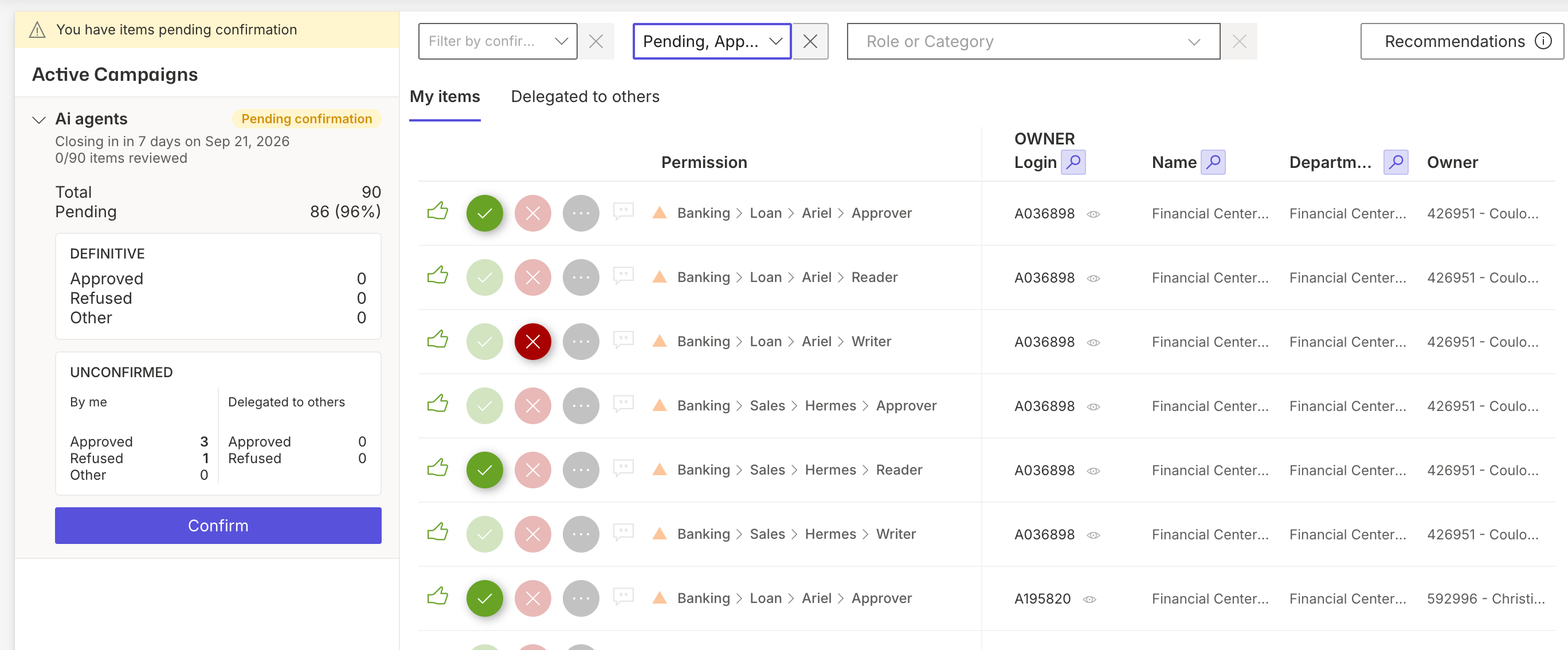
Identity Manager handles this through certification-driven automatic deprovisioning. Access granted to an AI agent is scheduled for periodic certification, the same way a human user's access would be. If the project ended, the owner left, or the access is no longer justified, the certifier won’t re-approve it, and Identity Manager deprovisions the permission automatically instead of leaving it live. It doesn't matter whether 100% of agents have a name attached if nothing forces that name to be re-verified. An unverified or abandoned agent loses access on its own.
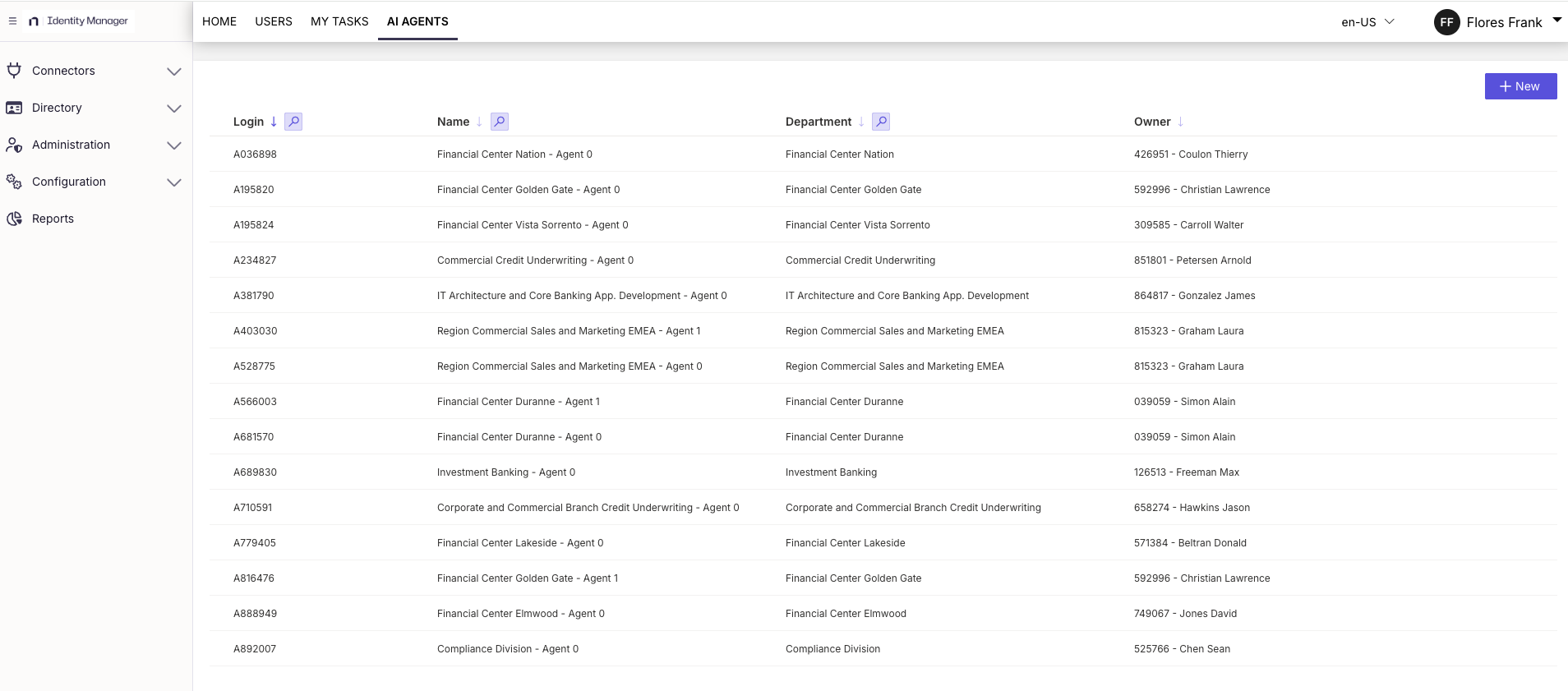
Assign owners to your agents
Certify permissions through scheduled campaigns
The bottom line
Bring every AI agent into your identity program and assign it an owner who can verify its access. Then schedule certification campaigns that require that owner to recertify on a set cadence. Where an owner needs input, activate delegation so they can pull recommendations from collaborators closer to the work, without handing off the responsibility.
The owner still signs, and access still gets reviewed by someone who decides whether it stays, not renewed by default.
Naming an owner answers the question once. Governance answers it continuously, so ownership still holds long after the org chart has changed.
Share on
Learn More
About the author

Kate Fleming
Product Manager
Insights from a security professional dedicated to breaking down today’s challenges and guiding teams to protect identities and data.