
Data masking explained: techniques, use cases, and limits
Oct 20, 2026
Data masking limits unnecessary exposure when teams copy sensitive production values into testing, analytics, and sharing workflows. It replaces those values with realistic substitutes, but weak implementations still permit inference, linkage, or reversal. Effective programs select techniques based on downstream use and test each output against its intended workflow.
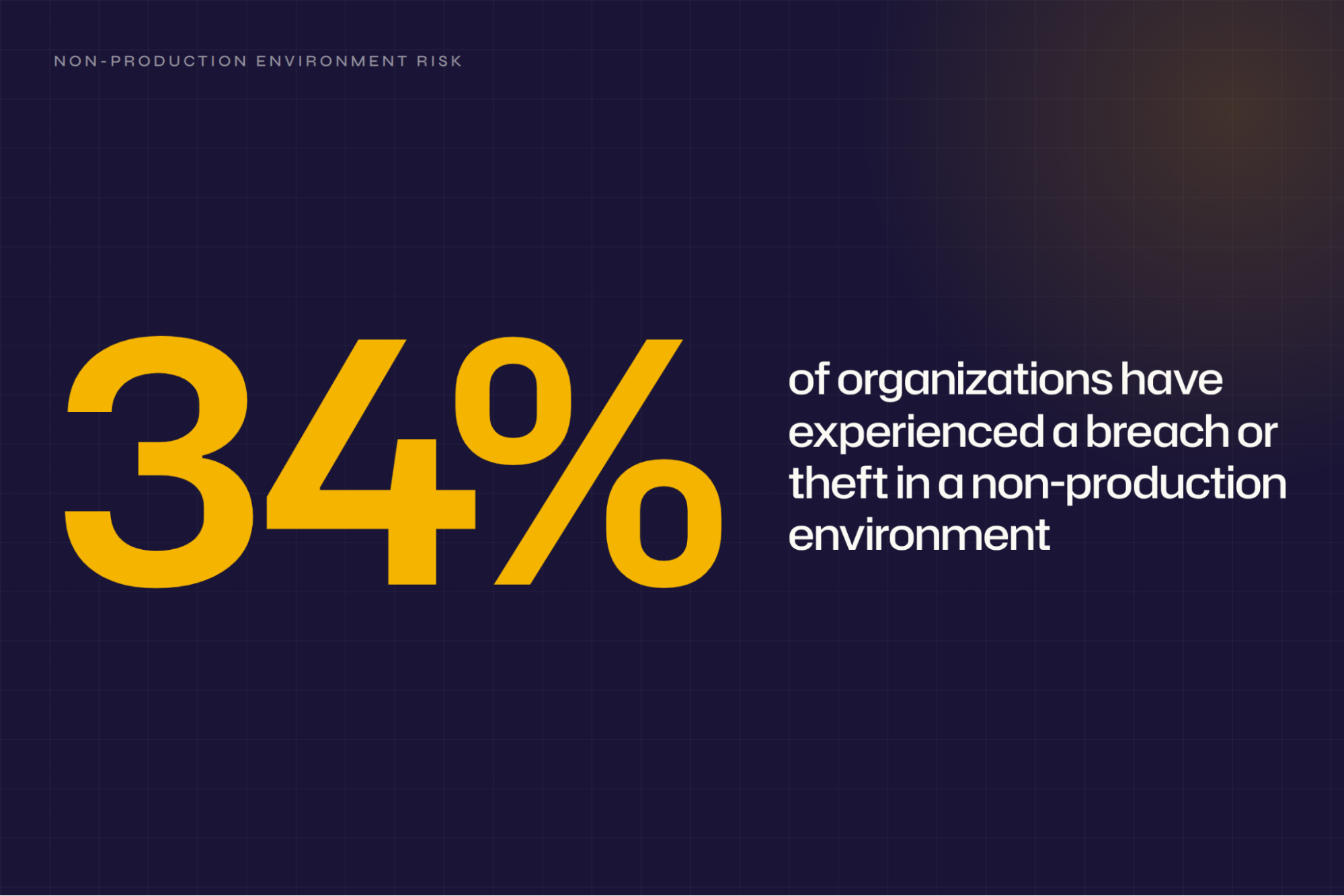
A data masking mandate exists in 99% of organizations, yet 84% still allow exceptions, and 34% have experienced a breach or theft in a non-production environment, according to Perforce Delphix's 2026 State of Data Compliance and Security Report.
That distance between policy and practice weakens otherwise sound controls, because a formal requirement satisfied on paper says nothing about whether the selected technique protects the data.
Masked data can still expose sensitive information through surrounding context. A user with query access may infer the underlying values behind a dynamic mask by comparing results from different queries.
The right approach accounts for those weaknesses before teams create lower-environment copies or expose masked production views, and it starts with matching the masking type and technique to what each field has to do once it leaves production.
What is data masking?
Data masking is a data protection technique that replaces sensitive values with realistic, non-sensitive substitutes so the data stays usable without exposing the real values. A masked field keeps its format and data type, so a masked Social Security number still passes a nine-digit validation check and a masked salary still behaves like a number a report can sum.
That combination, a substitute that looks and behaves like the original without revealing what the original was, is what lets development, analytics, and support teams work with production-quality data without the exposure that comes from the real thing.
Masking differs from data encryption, which anyone holding the decryption secret can reverse, and from data redaction, which deletes the value outright and leaves testers without a usable substitute.
Why is data masking important?
Masking supports several operational and compliance goals when teams apply it to the right data and environment:
- Non-production environments stop being a liability: Development, test, and quality assurance (QA) teams get realistic data while production personally identifiable information (PII) stays out of database dumps.
- Compliance programs get evidence they can point to: Masking maps directly to the pseudonymization and data-minimization controls that auditors already recognize under major data protection and payment regulations.
- Analytics and AI move faster: Analysts and models learn from realistic patterns while identifiable records remain protected.
- Lower-trust environments carry less blast radius: If someone gains access to a vendor's test system or an organization's own QA cluster, properly masked data gives them nothing real to take.
- Support teams troubleshoot without touching raw records: A help desk rep can reproduce a customer's issue against a masked copy instead of pulling up the real account.
What are the types of data masking?
Data masking takes a different shape depending on when and where it happens. Picking the right type determines who sees an unmasked value and how many masked copies of the data end up scattered across the environment.
Static data masking
Static masking is the default for anything your team hands off. You pull a copy from production, permanently mask it, and ship it to dev, test, or QA. The result is irreversible, since you can't recover the original values from the copy and there's no decryption key sitting somewhere that needs its own protection.
Microsoft previewed static data masking in SQL Server Management Studio (SSMS) 18 in 2018, then removed it before general availability (GA). A Microsoft employee confirmed in a February 2023 Tech Community reply that it isn't on the roadmap.
The underlying technique remains standard across most extract, transform, and load (ETL) and database migration toolchains regardless of what any single vendor supports natively.
The harder problem is referential integrity, since masking a customer ID in one table requires assigning that same substitute value to every other table that joins on it, or the joins silently break.
Dynamic data masking
Dynamic data masking (DDM) supports environments where teams must query the production dataset directly instead of working from a separate copy. It masks sensitive values in query results for nonprivileged users while leaving the stored data itself unchanged.
A support rep querying production sees XXXX where the Social Security number (SSN) sits, while an administrator with elevated privileges sees the real value. This approach keeps one secured production copy instead of a separate masked one, but anyone with elevated database roles, and anyone who can construct a narrow enough query, still gets at the original value.
A query like WHERE Salary > 99999 and Salary < 100001 confirms a masked salary without the mask ever showing it, which is why DDM suits accidental exposure rather than a determined attacker.
It stops a casual query from returning a value it shouldn't, but nothing about the approach stops someone who deliberately narrows their query until the mask gives up the answer anyway.
Netwrix DSPM finds and protects sensitive data across on-premises, hybrid, and cloud environments. Request a demo.
On-the-fly and deterministic masking
On-the-fly masking, also called in-flight masking, runs inside a migration or extract, transform, and load (ETL) job that reads from the source and writes only masked values to the target, so every staging copy contains protected values. These pipelines require throughput planning for large volumes.
Deterministic masking maps the same input to the same output every time, across tables, databases, and jobs, so joins and referential relationships keep working.
Data masking techniques
Teams should choose only the techniques their workflows require. Match each technique to what the field does after it leaves production.
Substitution
Substitution swaps a real value for a realistic fake one drawn from a lookup table or dictionary. Substitution can also run deterministically, giving the same customer ID the same fake value every time it appears, so joins across HR, payroll, and benefits databases keep working.
That lookup table is also the weakness. If it leaks, it exposes the entire original-to-masked mapping, and OWASP guidance lists storing cryptographic secrets or mapping data alongside pseudonymized data as an insecure pattern.
Use substitution in dev and QA datasets when testers need names, addresses, and account numbers that look and behave like real ones, since format validation, user interface rendering, and cross-table joins still work.
Shuffling
Shuffling rearranges column values so each row gets another row's value. Oracle Data Safe notes that shuffling preserves the column's overall data distribution, and Oracle's group shuffle variant keeps swaps inside a category, such as salaries within one job category. Each real value remains in the dataset but on a different row, so teams should decide whether that provides enough protection.
If related quasi-identifiers such as ZIP code, date of birth, and gender stay unshuffled, or get shuffled separately, someone can re-link rows. Shuffle them together instead, and reserve the technique for analytics datasets where a column's distribution matters more than which record holds each value.
Redaction and nulling out
Redaction removes or blanks a value entirely. SQL Server's default mask, for instance, turns strings into XXXX and numbers into 0. A default mask is easy to configure, but it destroys the field's utility for testing or analytics. Reserve it for fields that serve no downstream purpose in a lower environment, such as a full SSN, a full card number, or a free-text notes column nobody downstream needs to see.
Tokenization and format-preserving encryption
Tokenization replaces a primary account number (PAN) with a surrogate token, while format-preserving encryption (FPE) preserves the ciphertext's format and length. Both are reversible by design, which changes the risk model. Vault-based tokens rely on a lookup; vaultless tokens derive from the PAN cryptographically, so the system stores only a cryptographic secret.
Whoever holds the cryptographic secret or vault can recover every protected value, so managing those secrets and vaults determines residual risk, and PCI SSC warns that compromising the data vault could compromise the entire tokenization system.
Choose tokenization or FPE when payment and financial data must keep its original format or remain reversible for an authorized workflow; segmenting a token-only system from the tokenization environment can even move it outside PCI DSS cardholder-data scope.
Noise addition and variance
Noise addition adds or multiplies a random amount into a numeric value so the aggregate holds while individual figures blur. Numeric variance in Informatica, a Salesforce company, works this way.
Informatica documents that an input of 66 with a symmetric 50% variance lands anywhere between 33 and 99. Use noise addition in reporting and model training when the trend or distribution matters more than any single record, such as salary bands, age cohorts, and transaction amounts.
Where data masking falls short
Masking reduces exposure, but it is not a complete answer to data risk on its own. Each limitation below determines how much additional control a masking program still needs, from what happens when someone joins the masked data against something else to whether regulators consider the result safe at all.
Re-identification risk when datasets are combined
Anyone holding a second dataset can unmask masked data by joining against it. Combinations such as ZIP code, gender, and date of birth can distinguish individuals when an attacker has suitable auxiliary data.
A February 2026 arXiv preprint, Large-scale online deanonymization with LLMs, reported up to 68% recall at 90% precision for LLM-based re-identification of pseudonymous online users, against near 0% for the best non-LLM method.
The study covered online profiles rather than masked tables, but the mechanism is the same: leftover attributes matched against outside data.
It doesn't protect the original data at rest
Masking produces a safe copy or a safe view. The production system holding the real values still needs its own access controls, encryption, and visibility.
Some techniques are only as strong as their weakest link
A lookup table, token vault, or hashing scheme can expose every mapping at once. Small or predictable input sets also allow attackers to test candidate values until they reproduce a stored hash. The Federal Trade Commission's (FTC's) July 2024 guidance is titled "No, hashing still doesn't make your data anonymous."
Regulators don't treat masked data as automatically safe
Under GDPR pseudonymization rules, pseudonymized data remains personal data. Recital 26 of the same regulation covers any data someone could attribute to a person using additional information, and the EDPB's Guidelines 01/2025 say pseudonymization always needs further measures.
On September 4, 2025, the Court of Justice of the European Union (CJEU) ruled in EDPS v SRB (C-413/23 P) that pseudonymized data may fall outside personal-data status for a recipient who can't re-identify the individuals, but the controller's obligations remain, including telling data subjects who receives their data.
Under HIPAA, the U.S. Department of Health and Human Services Office for Civil Rights (HHS OCR) requires either Expert Determination or Safe Harbor.
How to decide if masking is enough for your data
The real decision covers which type, which technique, for which data, and what else supports it. The considerations below walk through the inventory, downstream use, regulatory obligations, and access controls that determine whether a masking approach is defensible.
Start with knowing what you have
Build and maintain a live inventory of where sensitive data lives and what type it is before you configure any masking rule. A masking rule is only as good as the inventory that told you which tables to point it at.
The Netwrix 2026 Data and Identity Security Report found that 57% of organizations don't maintain such an inventory continuously, and NIST CSF 2.0 names it as a subcategory (ID.AM-07). Run automated discovery and classification against every database, file share, and cloud store, then feed the results directly into your masking configuration.
Match the technique to what the data needs downstream
Trace each sensitive field to its downstream consumers, then pick the technique that keeps those consumers working. Google transformation guidance recommends redaction, replacement, or masking when downstream use doesn't need the original value or stable joins, and cryptographic tokenization when it does. For analytics where sequence and distribution matter, apply data bucketing or date shifting instead. Dev and test copies that only need to look real point toward substitution; payment fields a processor must validate point toward tokenization or FPE.
Check what your regulatory framework requires
Identify which standard applies to the dataset before you pick a technique, because GDPR's pseudonymization standard and PCI DSS storage requirements set different bars.
PCI DSS Requirement 3.5.1 accepts one-way hashes of the entire PAN based on strong cryptography, truncation, index tokens, or strong cryptography with secure secret management. It warns that storing both truncated and hashed versions can allow reconstruction of the original PAN.
GDPR requires separate reversal information, such as mapping tables and cryptographic secrets, held under technical and organizational controls. HIPAA Safe Harbor, by contrast, is a checklist of 18 identifiers and requires no knowledge that what remains could identify someone, so it never asks for a reversal path.
Pair masking with access governance
Review who can reach the original data and revoke access that is no longer justified, then repeat that review on a defined cadence. The Netwrix 2026 Data and Identity Security Report found that 75% of sensitive data exposures begin with compromised identities or misconfigured permissions.
That's why masking alone can't close the risk, since exposure lives at the intersection of what's sensitive and the identities, roles, and privileges that can reach it. Connect that discovery work to the controls that act on it, such as dynamic masking, encryption, tokenization, and access governance, so finding sensitive data doesn't stop at building an inventory.
How Netwrix helps you get data masking right
Most of the work above, from building the inventory to matching techniques to regulatory frameworks, applies regardless of the tools a team uses. Netwrix packages the discovery, access context, and compliance evidence that most masking programs still assemble by hand into one platform.
Knowing what to mask before you mask it
Netwrix DSPM finds and classifies sensitive data across hybrid environments, identifies excessive or open access, and prioritizes risks that require remediation.
Netwrix Access Analyzer powers Netwrix DSPM, discovering and classifying sensitive data and analyzing who can access it across more than 40 supported data sources.
That output should drive the masking decisions above, since it tells you which fields hold sensitive data and which technique fits how each field is used once it leaves production.
Seeing risk beyond the masked copy
Netwrix DSPM takes classification as an input and adds the access context that masking can't supply. Classification tells you what the data is. DSPM tells you who can reach it and what to fix.
Netwrix DSPM identifies stale user access, open access, and high-risk permissions on sensitive data, so a masking program addresses who can reach the original alongside what the copies expose.
Producing evidence auditors accept
Netwrix Access Analyzer maps discovered and classified data to frameworks including GDPR, HIPAA, and PCI DSS. It also reports who has access to data and supports access review workflows, giving teams evidence of the governance controls around masking.
Netwrix Auditor provides broader predefined compliance reporting and audit trails across infrastructure and data systems.
With Netwrix Auditor, First National Bank and Trust of Beloit prepares for Office of the Comptroller of the Currency (OCC) audits in just one hour, instead of one week.
Put data masking to work in your data protection strategy
Masking reduces exposure in test copies, analytics extracts, and support views, but only when the type and technique fit how each field gets used downstream.
Nearly every organization already has a masking mandate; what separates a working program from a policy on paper is whether that mandate reaches the data teams copying out of production every day.
Start with an accurate inventory, because every downstream decision about type, technique, and regulatory bar depends on knowing what the data is and where it lives, and revisit that inventory as often as the underlying schemas change.
Request a demo to see how Netwrix can help you discover and classify sensitive data, govern access and produce the compliance evidence a masking program depends on.
Frequently asked questions about data masking
Share on
Learn More
About the author