
Top AI cybersecurity companies in 2026
Apr 11, 2026
AI cybersecurity companies in 2026 fall into two categories: platforms using AI to automate detection, investigation, and response ('AI for Security'), and platforms built to secure the AI systems organizations are now deploying ('Security for AI'). Evaluating them requires looking beyond marketing claims to what the AI actually does, how it is governed, and whether it addresses the specific areas of risk exposure your environment faces.
Microsoft Copilot, autonomous agents, and LLM-based workflows now operate as identities in your environment, inheriting existing access, and most security programs don't yet govern them with real visibility or control.
AI also helps attackers scale phishing, accelerate lateral movement, and shrink the window available for manual triage. The Netwrix 2025 Cybersecurity Trends Report quantifies both: 60% of organizations already use AI tools in their IT infrastructure, and 37% say AI-driven threats have forced them to adjust their security approach.
This guide evaluates nine companies leading AI-powered security in 2026, organized around what each platform's AI actually does, whether it governs AI agent and Copilot access to sensitive data, and how it fits a broader security architecture.
What makes a company a genuine AI cybersecurity company?
An AI cybersecurity company uses AI, machine learning, or agentic automation as a core mechanism of its security product. The AI does operational work: detecting threats, triaging alerts, governing access, or automating response.
These are the categories of AI cybersecurity platforms:
AI-powered security for traditional domains
These platforms use AI to enhance detection, investigation, and response across endpoint, network, email, identity, cloud, and SOC environments. AI processes signals at machine speed, reduces alert fatigue, and automates tasks that previously required analyst intervention.
Security for AI systems
These platforms help organizations secure the AI they deploy: LLM applications, AI agents, model pipelines, and agentic workflows. Capabilities include shadow AI discovery, prompt injection prevention, agent behavior monitoring, and governing what AI systems can access. Some vendors specialize in AI governance tools and platforms; others fold this into a broader suite. Most large vendors now straddle both categories, and most organizations need both.
Netwrix 1Secure governs what AI agents can access and tracks every AI-driven data interaction. Get a demo
How to evaluate an AI cybersecurity company
Before shortlisting any AI security vendor, apply five consistent criteria that separate operational substance from marketing claims. Use the questions below in the vendor call and the demo.
- What can its AI agents and Copilot reach? Ask the vendor to show, live, how it flags an over-permissioned AI agent or GenAI connector, and whether it enforces least privilege on machine identities the same way it does on human ones.
- What type of AI is actually running? Behavioral analytics, deep learning, NLP-based alert triage, and agentic workflows are far more mature than a generative summary layer bolted onto an existing SIEM. Ask for a specific threat the AI caught that a rules-based system would have missed.
- Does it explain itself, and can a human override it? Any AI taking autonomous action on production infrastructure needs a defined override path, and an analyst should be able to see, in actionable terms, why it flagged something.
- Does it cover where you're actually exposed? An AI-powered endpoint platform adds little if your real exposure sits in SaaS, collaboration, or identity. Ask directly what the product doesn't cover.
- Does it fit your existing stack? AI security tools deliver the most value when they feed into and pull from the SIEM, SOAR, ITSM, and IAM you already run. Ask for a reference customer on a similar stack.
Top AI cybersecurity companies in 2026
The companies below represent leading AI-powered security vendors across detection, response, identity, data, network, email, and AI governance. This is an evaluation guide, and the right company depends on your risk exposure and the security outcomes you need to achieve.
Company | Category | Deployment model | Standout AI capability | Best fit |
|---|---|---|---|---|
|
1. Netwrix |
AI-for-security and security-for-AI |
SaaS (Netwrix 1Secure) and on-premises (Netwrix Auditor) |
AI agent access governance tied to identity and data exposure |
Microsoft-heavy hybrid organizations governing what AI agents and Copilot can reach |
|
2. CrowdStrike |
AI-for-security and security-for-AI |
Cloud-native, single agent |
Falcon AIDR for AI system security, Charlotte AI for SOC automation |
Mature SOC teams standardizing on one endpoint-to-cloud agent |
|
3. Palo Alto Networks |
AI-for-security and security-for-A |
Cloud and on-premises hybrid |
Cortex XSIAM agentic SOC, Prisma AIRS for AI application security |
Large enterprises consolidating network, SOC, and AI application security |
|
4. Microsoft Security |
AI-for-security and security-for-AI |
Cloud (Microsoft 365 and Azure native) |
Entra Agent ID governs AI agent identities across the ecosystem |
Organizations standardized on Microsoft 365 E5 |
|
5. SentinelOne |
AI-for-security and security-for-AI |
Cloud-native, with on-premises and air-gapped options |
Purple AI Athena autonomous investigation and response |
SOC teams that want autonomous AI-driven response beyond the endpoint |
|
6. Fortinet |
AI-for-security and security-for-AI |
On-premises hardware (SPU) plus cloud |
FortiAI-SecureAI defends against prompt injection and data poisoning |
Enterprises standardized on Fortinet Security Fabric |
|
7. Zscaler |
Primarily security-for-AI |
Cloud-only (Zero Trust Exchange) |
AI Asset Management inventories the shadow AI and GenAI footprint |
Organizations needing consistent AI traffic policy enforcement without on-premises inspection |
|
8. Abnormal Security |
AI-for-security (email and collaboration) |
Cloud-only, API-based (Microsoft 365 and Google Workspace) |
Behavioral baselining detects BEC and vendor impersonation |
High email and collaboration risk, particularly business email compromise |
|
9. Vectra AI |
AI-for-security (network) |
Hybrid (network sensors plus cloud analytics) |
Attack Signal Intelligence for lateral movement detection |
Complex hybrid networks needing NDR-depth behavioral detection |
Match the table to your immediate priority:
- Governing AI agent and Copilot access to sensitive data in a Microsoft-heavy environment: Start with Netwrix or Microsoft Security.
- Consolidating endpoint, SOC, and AI system security under a single agent: Start with CrowdStrike or SentinelOne.
- Catching lateral movement across a complex hybrid network that endpoint tools miss: Start with Vectra AI.
- Reducing the risk of business email compromise and vendor impersonation: Start with Abnormal Security.
- Enforcing a consistent AI traffic policy across a cloud-only, zero-trust environment: Start with Zscaler.
- Extending AI security across an existing Fortinet or Palo Alto Networks footprint: Start with Fortinet or Palo Alto Networks.
1. Netwrix: AI agent access governance for identity and data security
Netwrix is an identity and data security platform that gives security teams visibility into how identities, including AI agents and assistants, access sensitive data across hybrid environments. The platform spans two pillars, data security and identity security, connected through Netwrix 1Secure™ and Netwrix Auditor.
In March 2026, Netwrix expanded the Netwrix 1Secure Platform with capabilities that give organizations visibility and control over how AI systems, including Microsoft Copilot, access sensitive data across hybrid environments.
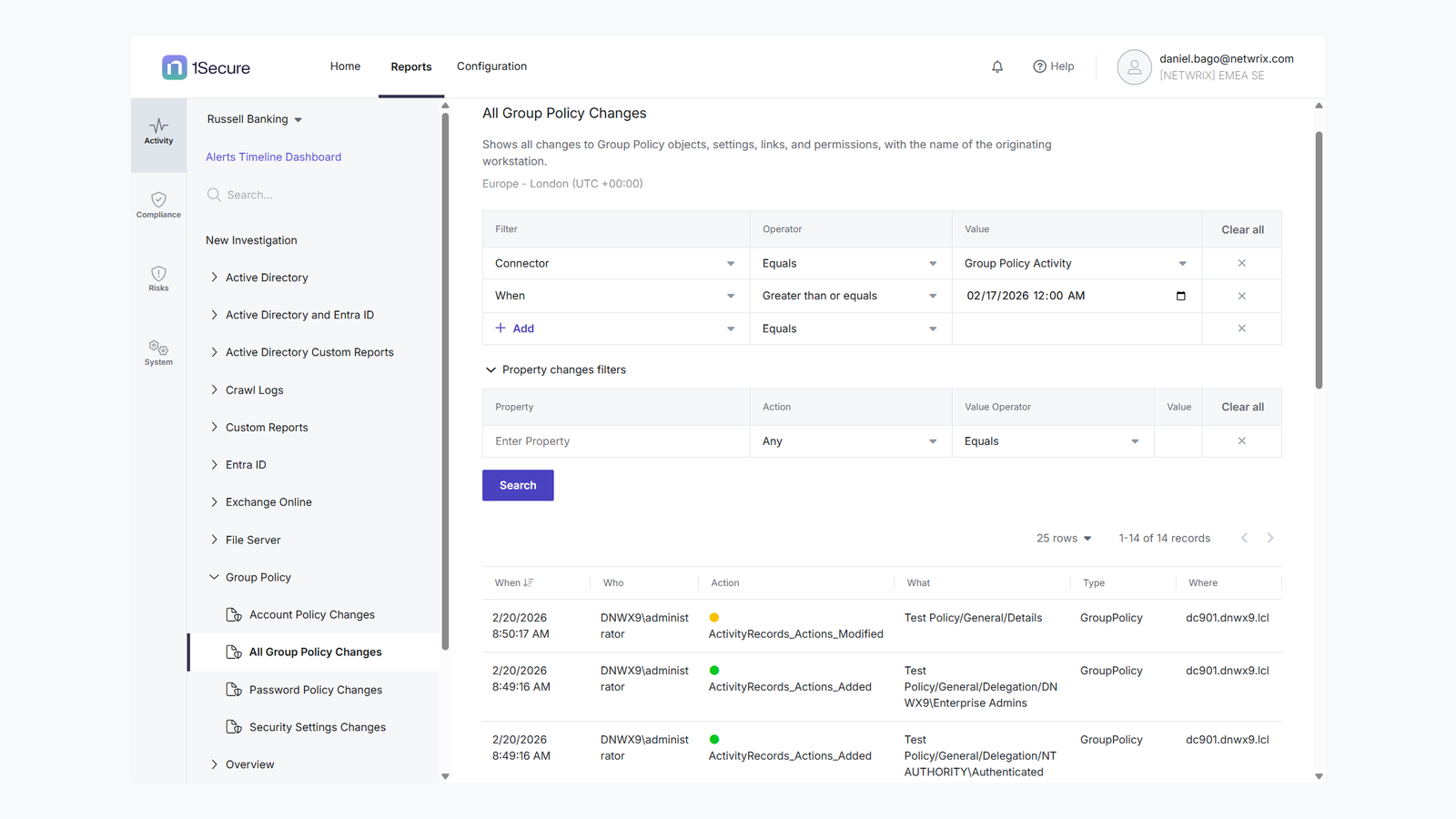
AI agents operate as identities in the environment and inherit whatever permissions already exist, so an overly permissive model lets an agent surface sensitive data that users technically had access to but would never have found manually.
That's a harder claim than assigning an agent an identity and logging its behavior, which several platforms do now. Netwrix can make it because identity and data security are the platform's foundation, not a bolted-on module.
What stands out
- AI-driven identity risk detection: Netwrix Identity Security Posture Management runs 170+ MITRE ATT&CK-mapped risk checks to surface hidden identity risks and flag unusual behavior faster than manual analysis allows.
- AI agent access governance: Netwrix 1Secure and Netwrix Access Analyzer provide visibility into how AI agents inherit identity permissions and access sensitive data, including excessive permissions and hidden access paths.
- AI governance for GenAI and Copilot: Netwrix 1Secure and Netwrix Auditor track what sensitive data Microsoft Copilot and other GenAI tools access and surface, supporting informed rollout decisions instead of after-the-fact cleanup.
- Machine identity and service account security: Netwrix Threat Manager's ML-powered service account dashboard identifies risky configurations, excessive permissions, and behavioral anomalies across automated identities and agentic workflows.
- Data security posture management with AI classification: ML-powered sensitive data discovery and classification runs across Microsoft 365 and on-premises repositories, connecting data exposure to identity access paths.
- Privileged access management with zero standing privilege: Netwrix Privilege Secure replaces standing admin accounts with just-in-time, ephemeral sessions, eliminating persistent access that AI agents and attackers can exploit.
- Identity and data security in one platform: Netwrix connects who can access sensitive data to what data is at risk, reducing manual cross-platform correlation.
Deployment: Netwrix 1Secure deploys as SaaS with no infrastructure to provision. Netwrix Auditor supports on-premises, cloud, and hybrid deployments, which matters for organizations that cannot yet move identity and audit data to the cloud.
What to consider
- Netwrix is strongest in Active Directory and Microsoft Entra ID environments; organizations on non-Microsoft identity providers may need supplemental tooling for full coverage.
- Teams with mature, active threat-hunting programs should confirm that the detection scope covers their specific attack scenarios before replacing existing tooling.
- The platform spans 18 products across two pillars; most mid-market teams start with a subset of modules rather than the full portfolio at once.
Best for: Microsoft-heavy hybrid organizations that need to govern what AI agents and assistants can access and expose, alongside identity and data security across PAM, ITDR, IGA, and DSPM.
2. CrowdStrike: Unified endpoint-to-cloud AI detection and response
CrowdStrike is a cloud-native cybersecurity platform covering endpoint, cloud, identity, and security operations from a single agent and data model. Falcon AIDR extends that coverage to securing the enterprise AI systems organizations deploy.
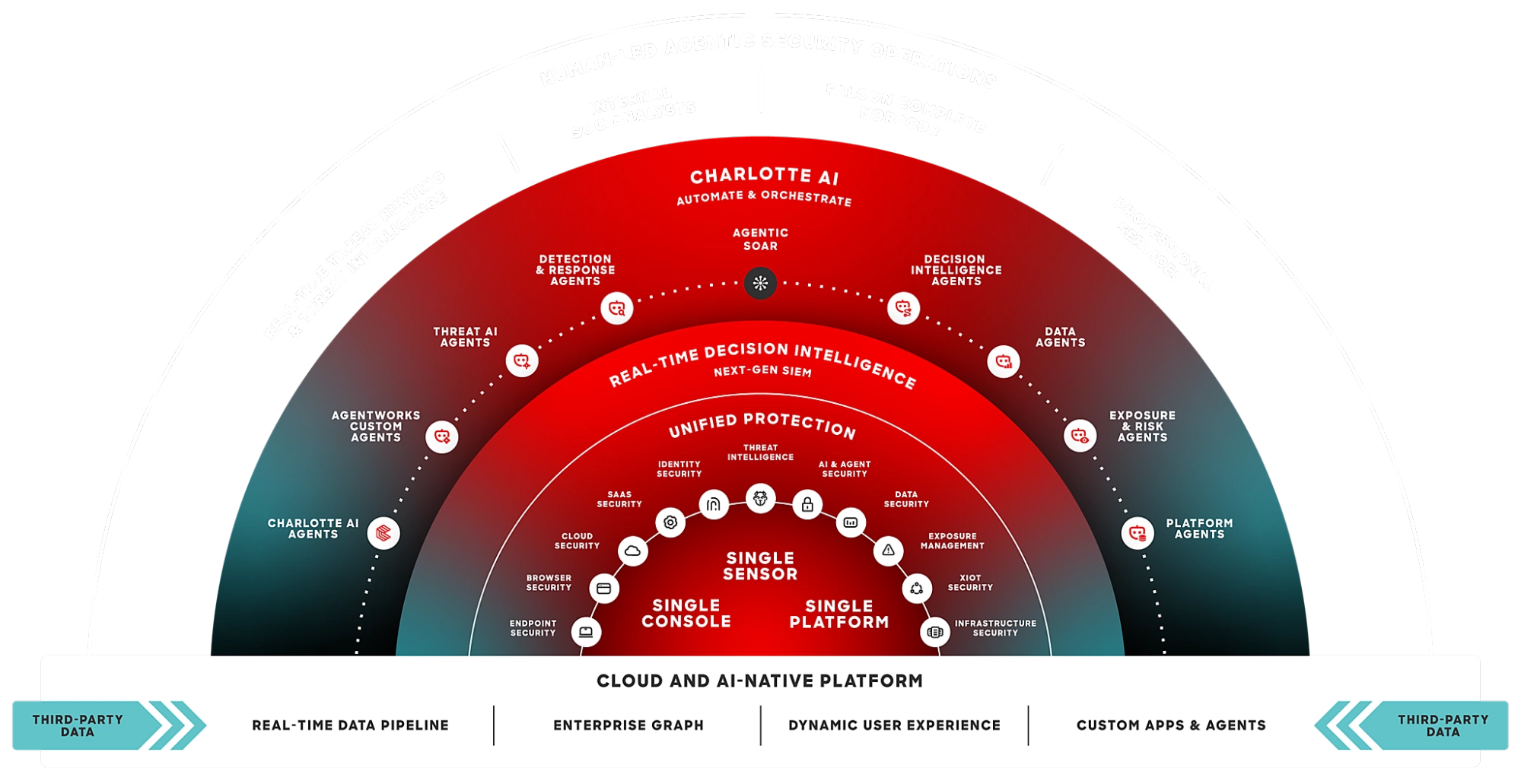
Source: https://www.crowdstrike.com/
What stands out
- Falcon AIDR secures enterprise AI across model pipelines, agent behavior monitoring, prompt injection defense, and shadow AI discovery.
- Charlotte AI AgentWorks lets teams build AI agents without code, with integrations for Anthropic, OpenAI, AWS, and Salesforce.
- Falcon Data Protection covers sensitive data across browsers, local apps, shadow AI, and cloud data flows.
Deployment: Cloud-native SaaS, delivered through a single lightweight agent across endpoint and cloud.
What to consider
- CrowdStrike is not a primary SIEM replacement for organizations that require full log-management depth.
- Multiple acquisitions in 18 months create integration execution risk across the portfolio; ask how recently acquired capabilities interoperate with Falcon today.
Best for: Mature SOC teams that need unified AI-powered detection, response, and AI system governance at the endpoint.
3. Palo Alto Networks: Consolidated network, SOC, and AI application security
Palo Alto Networks is consolidating network, cloud, SOC, AI application security, and identity into a single platform. Cortex XSIAM serves as its unified SOC engine, and Prisma AIRS addresses AI application security.
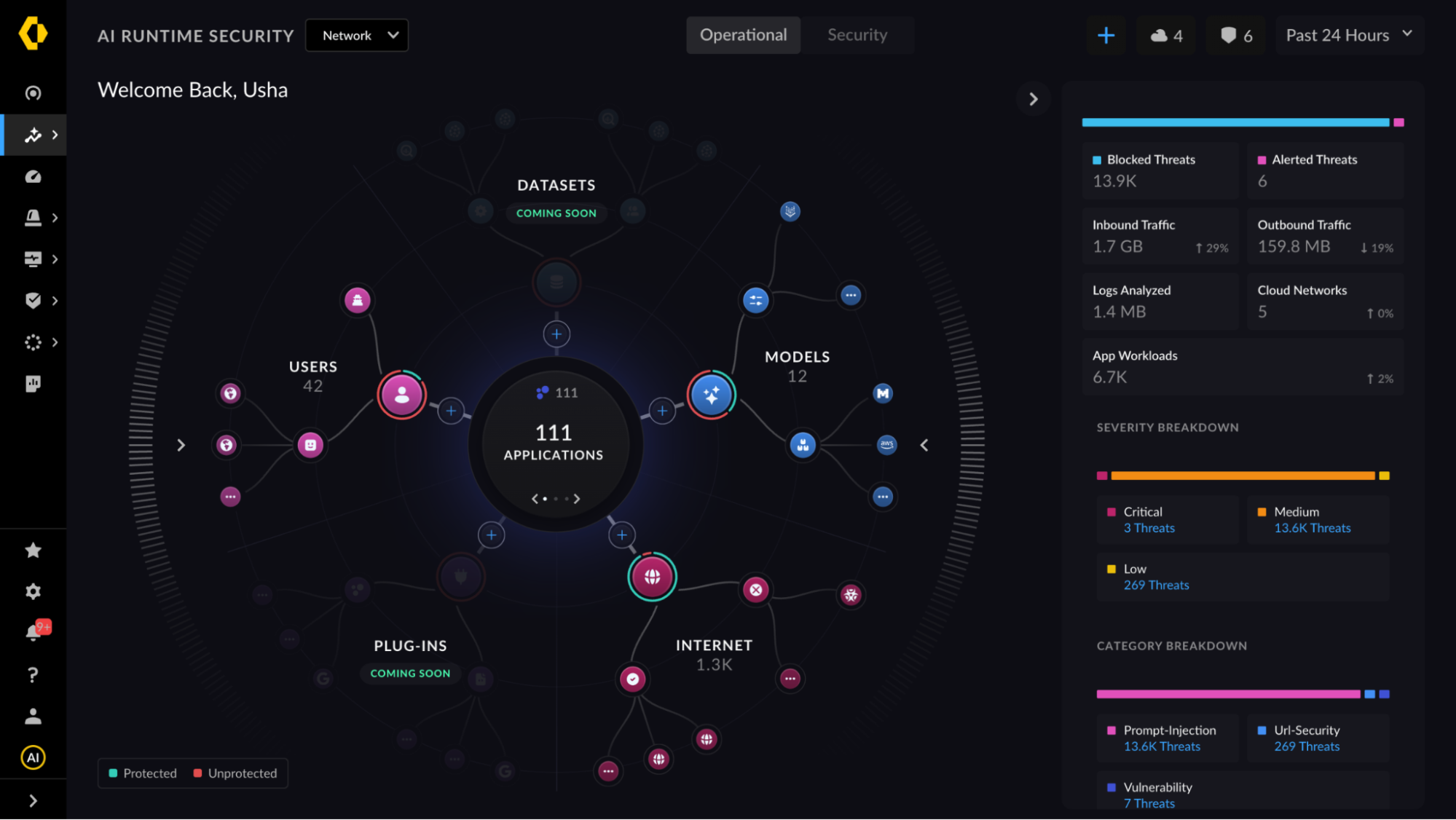
Source: paloaltonetworks.com
What stands out
- Cortex XSIAM unifies SIEM, SOAR, EDR, NDR, and CDR with an agentic AI workforce and more than 13,300 built-in detections.
- Prisma AIRS covers AI posture management, runtime defense, agent security, red teaming, and model scanning.
- CyberArk's identity and privileged access management capabilities became part of Palo Alto Networks following the February 2026 acquisition, with integration into Cortex and Prisma now underway.
Deployment: Cloud-native core (Cortex XSIAM, Prisma) with on-premises and hybrid options across the broader network security portfolio.
What to consider
- Five major acquisitions in 18 months mean integration maturity varies across the portfolio; ask specifically how CyberArk's PAM capabilities integrate with Cortex today versus on the roadmap.
- CyberArk now sits within the broader Palo Alto Networks portfolio, which may raise platform lock-in concerns for buyers seeking PAM without being tied to Palo Alto's broader network and SOC stack.
- Broad platform scope requires significant implementation investment across all five pillars: network, cloud, SOC, AI security, and identity.
Best for: Large enterprises pursuing platform consolidation across network, cloud, SOC, AI application security, and identity.
4. Microsoft Security: Agentic AI embedded across Microsoft 365 and Azure
Microsoft Security is the AI security layer across the Microsoft enterprise ecosystem. Security Copilot is bundled with Microsoft 365 E5, and Entra Agent ID governs AI agent identities across the environment.
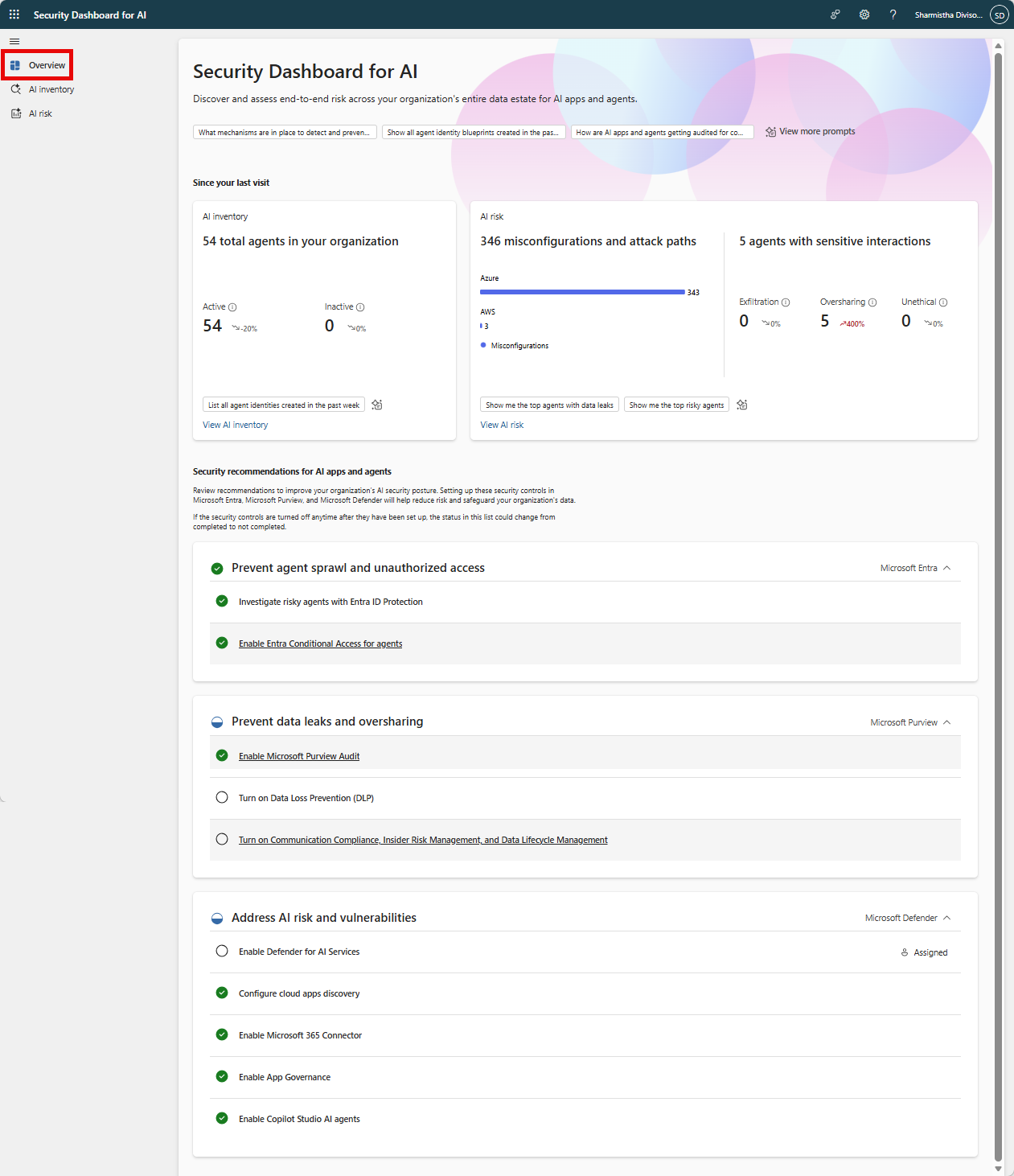
Source: learn.microsoft.com
What stands out
- Security Copilot in Microsoft 365 E5 includes 12 agentic agents covering threat detection, identity protection, data protection, and compliance auditing.
- Entra Agent ID tracks AI agent identities, assigns permissions, and logs behavior across the ecosystem; AI agents built in Microsoft Foundry receive an Entra Agent ID automatically as part of platform onboarding.
- OWASP-aligned Defender detections cover prompt injection, sensitive data exposure, and wallet abuse.
Deployment: Cloud-native, built into Microsoft 365 and Azure; deepest value for organizations already licensed for E5.
What to consider
- Cross-platform Sentinel disruption requires routing all data through Microsoft's data plane.
- Coverage outside the Microsoft ecosystem depends on third-party integrations that vary in depth.
Best for: Organizations on Microsoft 365 E5 that want agentic AI embedded in existing tools, strongest when paired with tools that fill hybrid visibility gaps.
5. SentinelOne: Autonomous AI-driven investigation and response
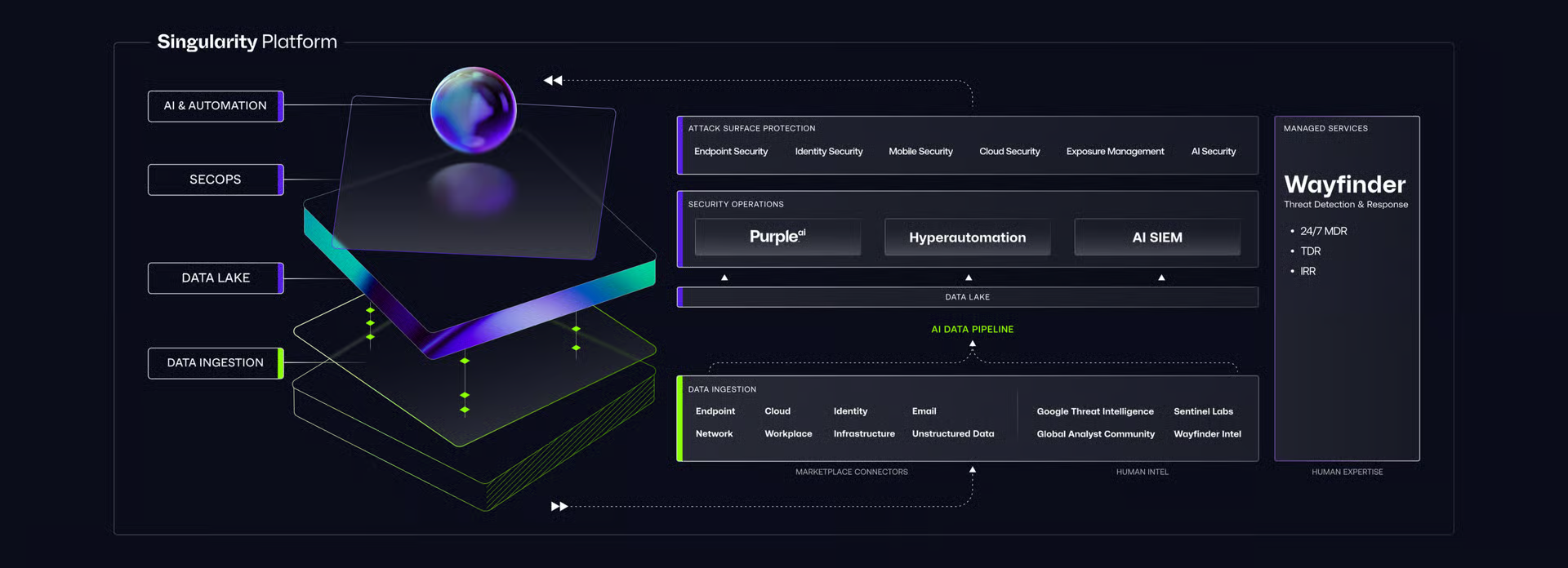
SentinelOne is a cloud-native autonomous security platform. Purple AI Athena delivers agentic investigation, autonomous response, and hyperautomation across third-party security information and event management (SIEM) tools and data lakes.
Source: sentinelone.com
What stands out
- Purple AI Athena investigates threats and orchestrates multi-step responses across third-party SIEMs and data lakes without manual triage.
- SentinelOne's AI agent security covers agent visibility, control, and proactive vulnerability testing.
- On-premises and air-gapped deployments extend AI-driven security to regulated environments that cannot run entirely in the cloud.
Deployment: Cloud-native by default, with on-premises and air-gapped options for regulated environments.
What to consider
- Full AI-SIEM features require data centralization in the Singularity Data Lake.
- On-premises AI capabilities are newer; verify production maturity with a reference customer before committing.
Best for: SOC teams that want autonomous AI-driven investigation and response across endpoint, cloud, and third-party SIEM environments.
6. Fortinet: AI embedded across network security and SOC operations
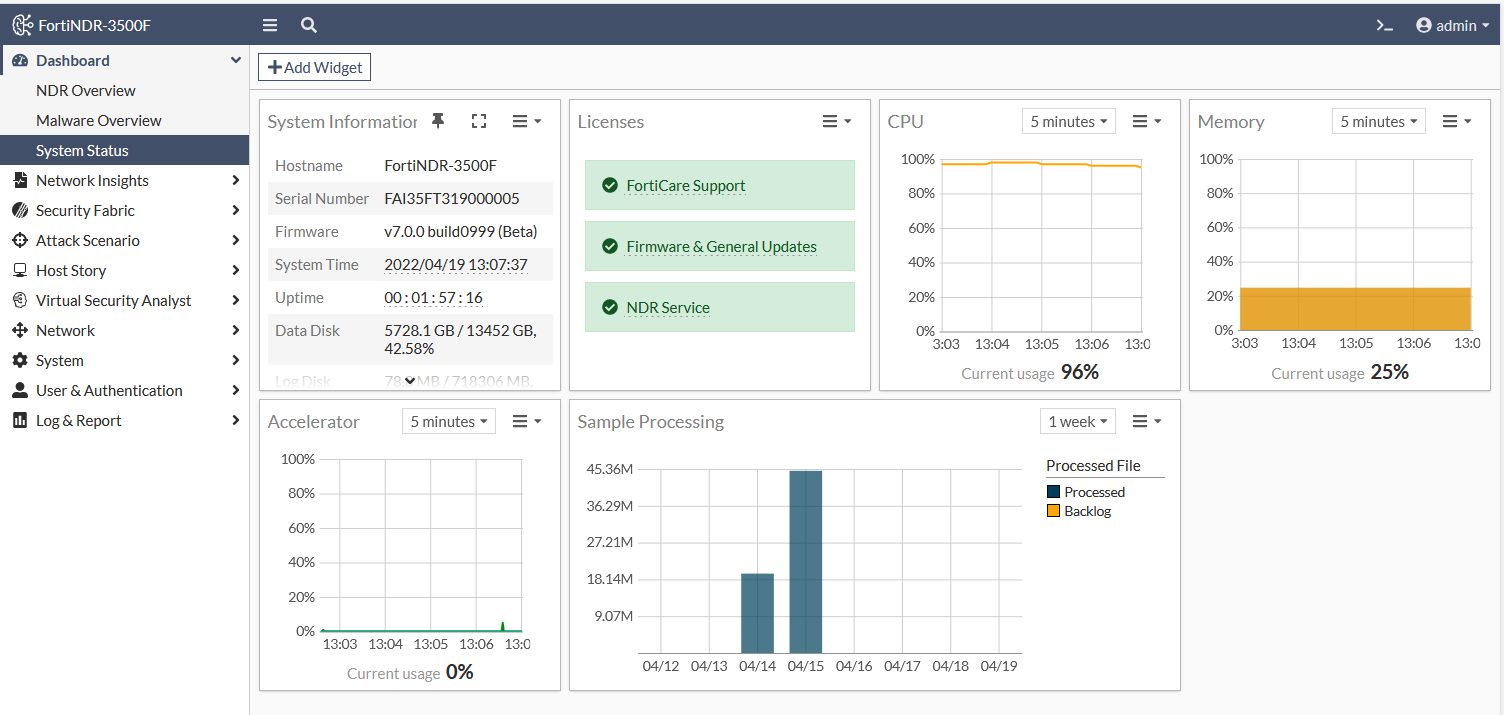
Fortinet is a security platform built on a single operating system and proprietary Security Processing Unit silicon. Its FortiAI strategy spans threat detection, agentic SOC operations, and securing enterprise AI deployments.
Source: fortinet.com
What stands out
- FortiAI-Protect delivers AI-driven threat detection with inline inspection and GenAI application access controls.
- FortiAI-Assist supports SOC and NOC alert triage and network troubleshooting through generative and agentic AI.
- FortiAI-SecureAI protects enterprise AI against data poisoning, prompt injection, and shadow AI.
Deployment: On-premises SPU-based hardware appliances plus cloud-delivered Security Fabric services; hybrid by design.
What to consider
- Proprietary SPU hardware creates a refresh-cycle dependency and limits its fit for fully cloud-native environments.
- Security Fabric AI performs best on intra-Fortinet telemetry; multi-vendor environments add integration friction.
Best for: Enterprises with established Fortinet infrastructure that need AI embedded natively across network security and security operations.
7. Zscaler: AI traffic policy enforcement through Zero Trust
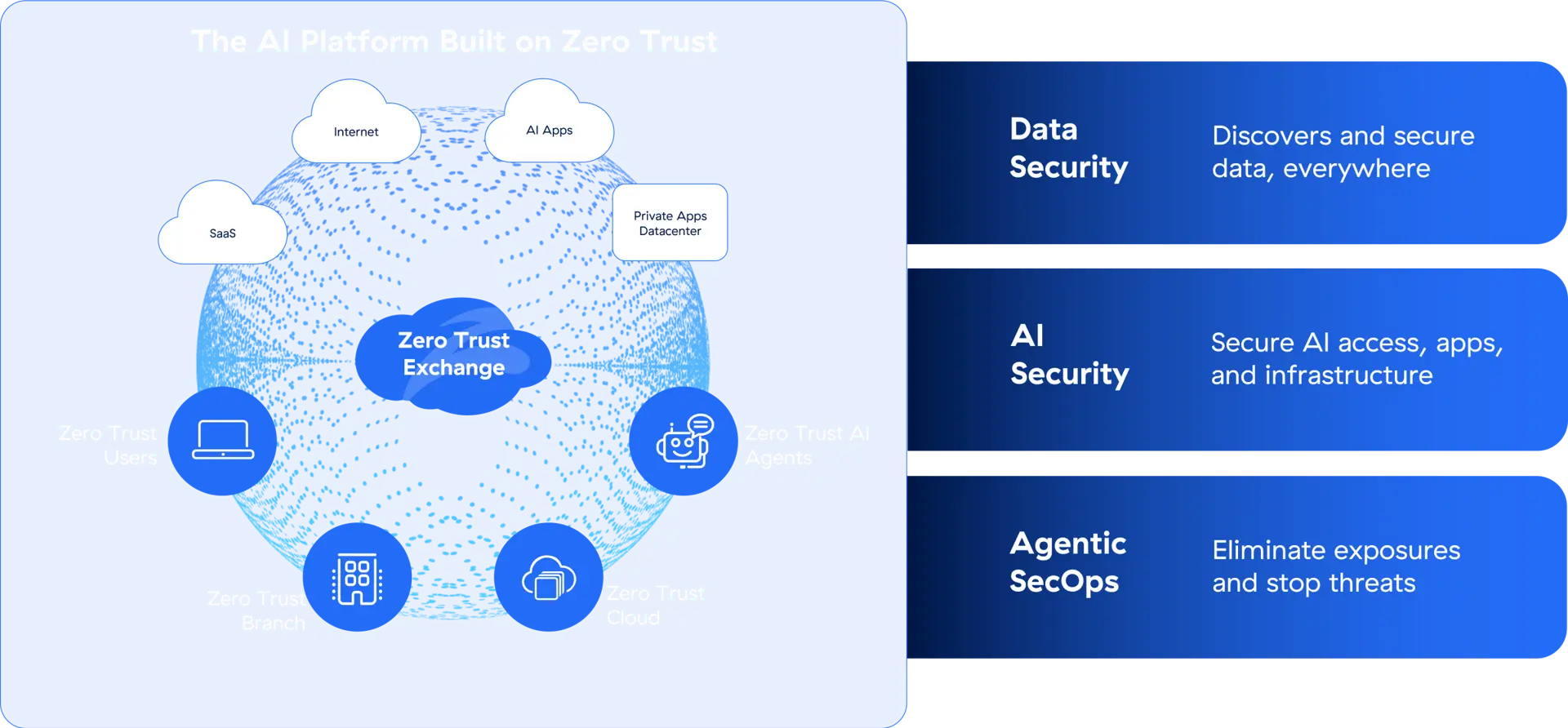
Zscaler is a cloud-native zero trust platform that routes all traffic through its Zero Trust Exchange. Its AI Security Suite provides AI asset inventory, access policy enforcement, and red teaming for enterprise AI.
Soucre: zscaler.com
What stands out
- AI Asset Management inventories the full enterprise AI footprint, including GenAI services, embedded SaaS AI, and shadow AI.
- AI Access Security enforces real-time, risk-based policy and data protection for GenAI tools.
- Entra Agent ID integration extends zero trust policy controls to AI agent identities.
Deployment: Cloud-only, with no on-premises inspection option.
What to consider
- Cloud-only architecture is not well suited to air-gapped or data-sovereignty environments that require on-premises inspection.
- AI governance only covers traffic that traverses the Zero Trust Exchange, so AI usage outside that path stays out of view.
Best for: Organizations that need consistent policy enforcement and shadow AI governance across all enterprise AI traffic.
8. Abnormal Security: Behavioral AI for email and collaboration
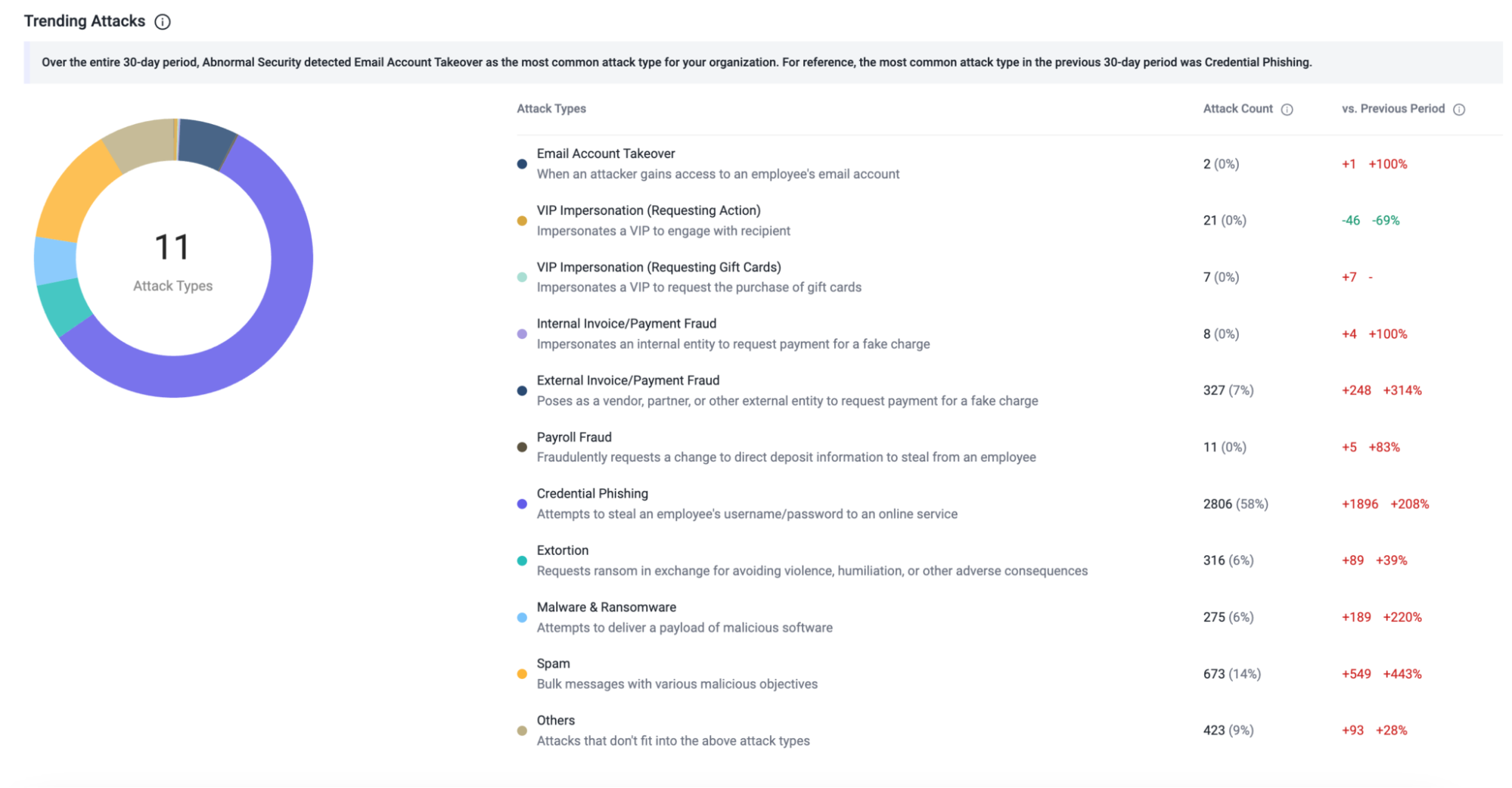
Abnormal Security is a behavioral AI platform for email and collaboration security. It models known-good behavior for every employee and vendor, then flags anomalies that signature-based gateways miss.
Source: abnormal.ai
What stands out
- Behavioral baseline detection models communication patterns, authentication activity, and relationship history using NLP, NLU, and computer vision.
- Behavioral detection extends to Microsoft Teams, Slack, and Workday, in addition to email.
Deployment: Cloud-only, API-based, with no on-premises email support.
What to consider
- Abnormal covers email and collaboration only; it does not inspect endpoints, firewalls, or network traffic.
- Cloud-only architecture depends fully on Microsoft 365 and Google Workspace APIs.
Best for: Organizations with high email-based risk, particularly business email compromise and vendor impersonation.
9. Vectra AI: Behavioral detection of network lateral movement
Vectra AI is a network detection and response platform built on Attack Signal Intelligence. It focuses on attacker behaviors, lateral movement, and east-west traffic that endpoint tools do not see.
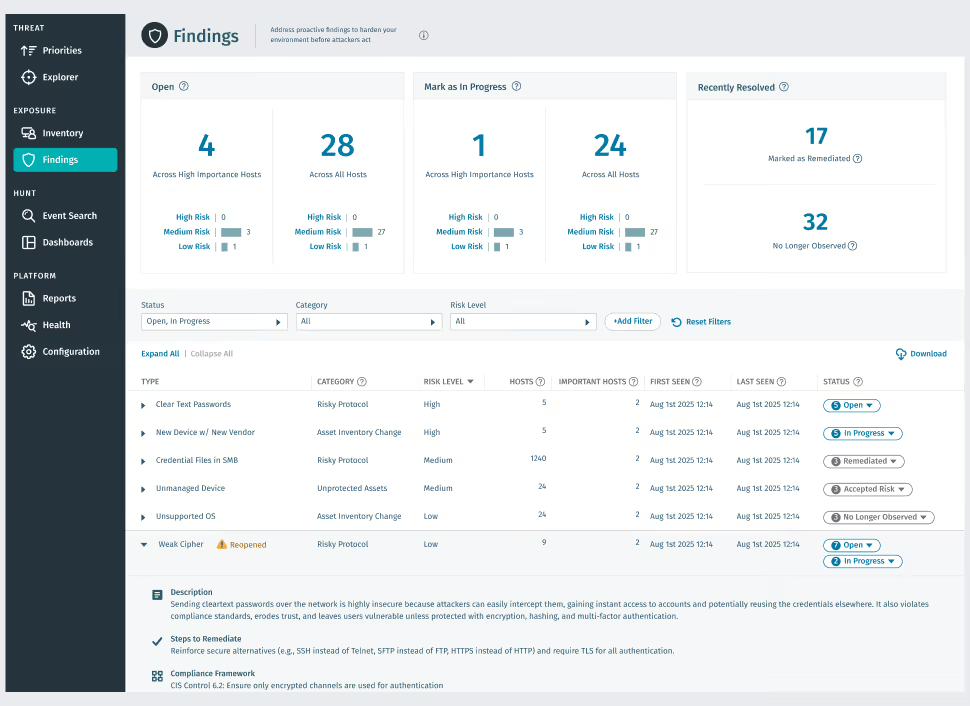
Source: vectra.ai
What stands out
- Attack Signal Intelligence covers behavioral detection across cloud, SaaS, identity, network, endpoint, and IoT/OT, with a focus on post-compromise lateral movement.
- Vectra treats AI agents as first-class identities within its detection framework and is actively researching agentic AI attack patterns.
Deployment: Hybrid, combining physical or virtual network sensors with cloud-hosted analytics.
What to consider
- Vectra is NDR-focused and requires a separate EDR solution for complete endpoint coverage.
- AI agent observability lives inside existing behavioral monitoring rather than as a standalone product.
Best for: Organizations with complex hybrid network environments that need behavioral AI detection of lateral movement.
How to choose the right AI cybersecurity company
Nearly every major security vendor now claims AI capabilities, but what the AI actually does varies enormously, and most organizations evaluate only the detection layer while leaving the governance layer unchecked.
Match each platform to your specific risk exposure using the five questions above, not breadth of features, before any demo or proof of concept begins. That governance layer is where most organizations are underprepared: just 11% consider their AI security fully ready, per the Netwrix 2026 Data and Identity Security Report.
Controlling what AI agents inherit from existing identities, what sensitive data they can access, and whether that access follows a least-privilege model requires a platform purpose-built for identity and data security.
Netwrix 1Secure addresses this layer across hybrid Microsoft environments, connecting data exposure visibility, privileged access controls, and identity threat detection and response without requiring separate tools.
Request a demo to see how Netwrix can help you govern AI agent access, monitor Copilot activity, and close the visibility gaps this guide covers.
Disclaimer: The information in this article was verified as of August 2026. Product capabilities and positioning may change; confirm current features and roadmaps directly with each provider.
Frequently asked questions about AI cybersecurity companies
Share on
Learn More
About the author